



How to Make Preserves | Ask the Expert
Third-generation jam maker Vicky Allard —who owns and runs Blake Hill Preserves in Grafton, Vermont— shares her tips on how to make preserves.
By Ian Aldrich|Aug 07 2015|

Credit: Melissa DiPalma
For Vicky Allard, the search for new preserve flavor combinations is limitless, almost addicting. “I’m always discovering possibilities,” says the English-born Vermonter, who in 2009 founded Blake Hill Preserves with her husband, Joe Hanglin. “It can be a problem.” Allard’s quest began as a young girl, making preserves with her mother and grandmother in their family home. It continues today in a big kitchen set on a quiet dirt road in Grafton, where she produces Blake Hill jams, marmalades, and chutneys, which have earned international accolades and are sold in more than 300 stores across the country.
HOW TO MAKE PRESERVES
Keep It Simple
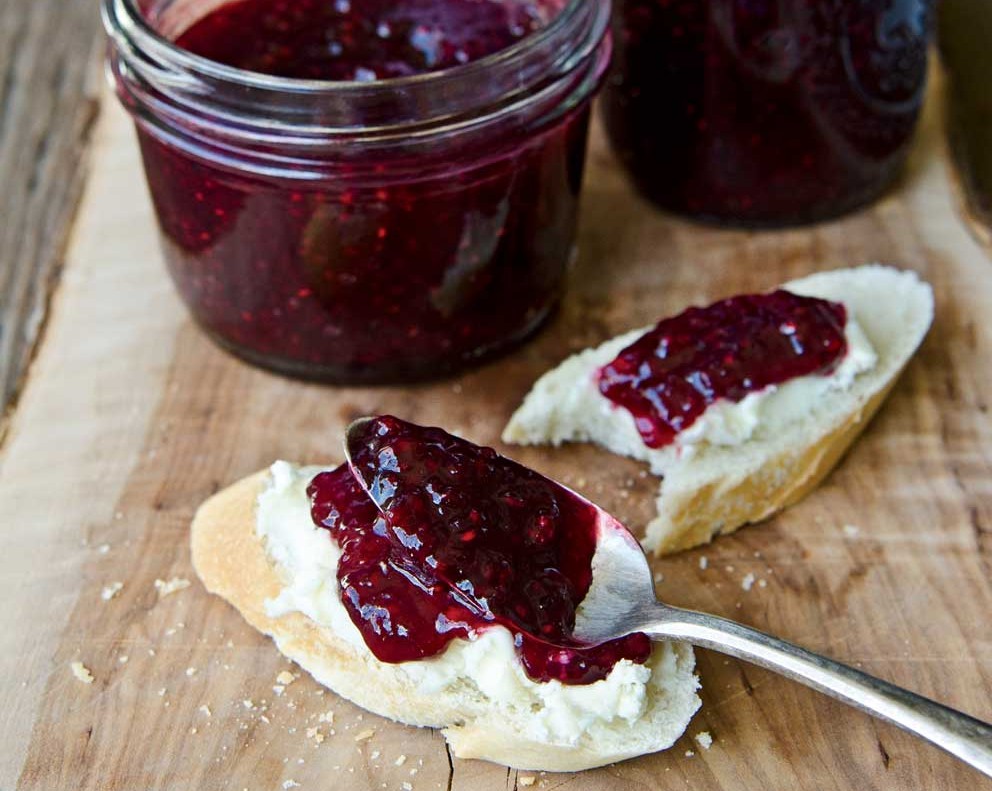
Allard recommends that newbie jam makers go the basic route and get some success under their belts. “Raspberries are a great first option,” she says. “They’re naturally high in pectin, and if you do it right, they’ll keep their deep-red color. The jars of jam will look beautiful.”
The Right Pot
To avoid a boilover, Allard advocates using a wide pot that’s three times as high as the depth of your berries. Begin on low heat to warm the mixture up; then, as soon as it starts to seep juice, add sugar. You want your mixture to be equal parts berries and sweetener. Once the mixture begins to boil, bring the heat down to medium and continue to cook off the excess water.
Set It Right
Jam reaches its perfect set point at 220°. An instant-read thermometer is a must, and you’ll know you’re getting close to that finished point as the mixture’s bubbles begin to get smaller. But Allard, who doesn’t add pectin to her products, also notes that you can employ other methods. For example, start by placing a plate in the freezer when you begin cooking. As you near setting, take it out and place a dollop of the hot jam on the surface. Let it sit for a minute; then run your finger through it. If it’s developed a nice skin, you’re done. If it’s still runny, keep cooking. Another trick: Dip a spoon into the jam, turn it on its side, and hold it over the pot. If the drops cling to the spoon and sheet off, you’re there.
Credit: Melissa DiPalma
Put a Lid on It
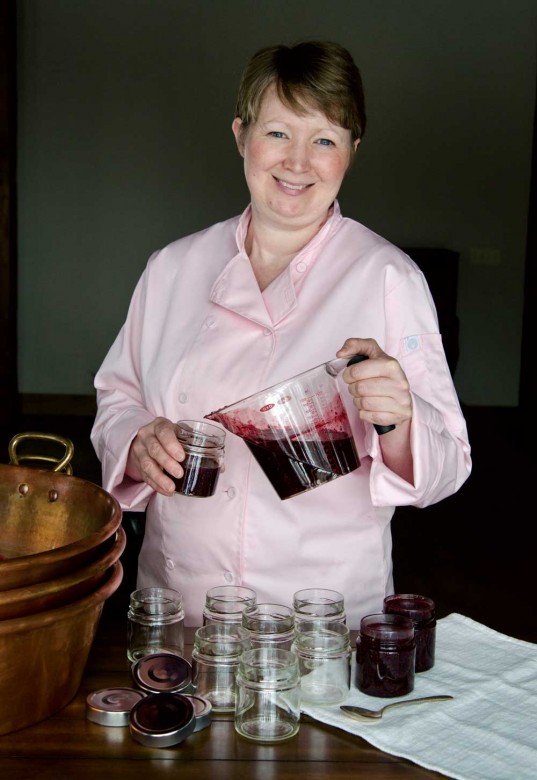
Jam jars must be clean and sterile. “Don’t use anything that has cracks or is compromised,” Allard says. Once they’re clean, run them through the dishwasher without detergent, or place them in the oven at 275° for 15 minutes to bake them. When you’re ready, fill the hot jars with your hot newly made jam, keeping just a quarter-inch of space at the top. Then seal tightly with a new lid. Finish by putting the jars into a hot-water bath—make sure they’re submerged at least two inches—to create a proper vacuum seal.
Let It Grow
As you become more comfortable making and canning preserves, start experimenting. Allard’s suggestion: Follow your senses. “Browse around your local market and explore the herbs and spices,” she says. “Think about what kinds of flavor combinations would work well.” One of her big sellers is a raspberry and hibiscus-flower preserve that she played around with a few years ago. More recently she’s explored ways to do something with chai. Says Allard, “Think about the flavors that you enjoy and love to eat.”
More information at: blakehillpreserves.com



I make fruit butters each year the easy way. I cut up the fruit, then
I understand there are different standards for a commercial kitchen, but I stopped sterilizing clean jars for jams and jellies many, many years ago. Ladling just-finished-boiling hot jam or jelly into jars, sealing lids immediately, and (this is important) turning them upside down for fifteen minutes sterilizes their interiors just fine. I haven’t had a jar spoil for four decades.
Besides, it’s not the processing in a hot water bath that produces the seal, it’s the physics of the thing: when the hot air under the tightly-screwed-on lids cools, it contracts. Then atmospheric pressure snaps the lids down (you can hear them go; always check anyway), indicating the seal is intact. Then you can remove the screw bands and re-use them for the next batch. Thrifty.