



How to Cook Asparagus | Yankee Kitchen
Q: My mother taught me how to cook asparagus by boiling it for half an hour or so with a pinch of baking soda in the water. It got awfully soft, but the color was a nice bright green. I don’t cook my asparagus for nearly so long, but it still turns mushy if I […]
By Leslie Land|Jan 02 2014|

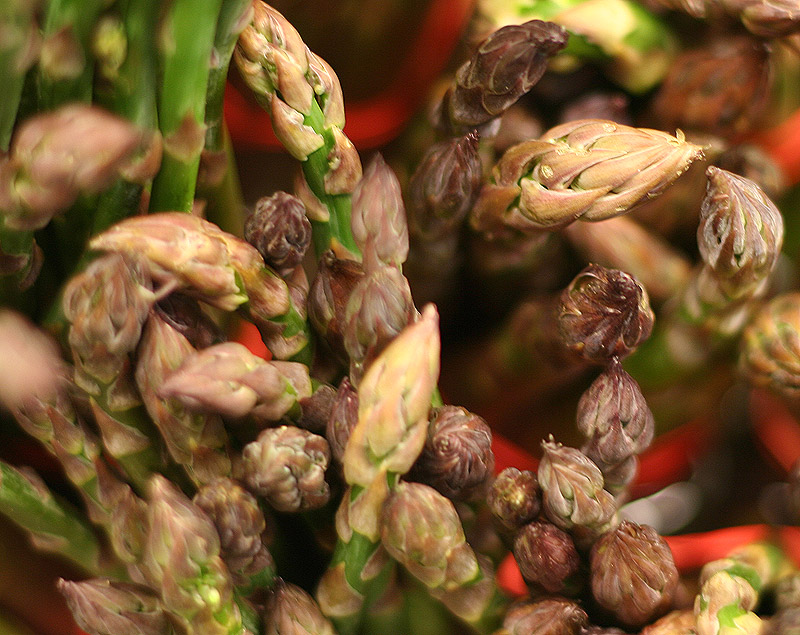
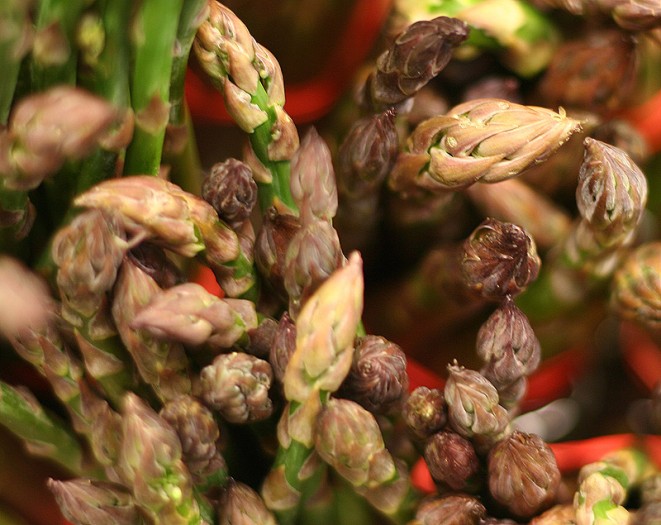
Q: My mother taught me how to cook asparagus by boiling it for half an hour or so with a pinch of baking soda in the water. It got awfully soft, but the color was a nice bright green. I don’t cook my asparagus for nearly so long, but it still turns mushy if I use the baking soda. Is there some other part of the trick that would keep this from happening?
A: Acid changes the bright green chlorophyll to yellow-green and gray-green (think of what happens when you put vinaigrette on those bright green beans). The natural acid in vegetables is liberated by heat, and when cell walls break down, color-destroying enzymes are also turned loose. Boiling green vegetables in a small amount of water means bathing them in a virtual soup of color destroyers. Add something alkaline, such as baking soda, and the chemical reactions are altered so the chlorophyll turns bright green.
Unfortunately, alkalinity also speeds up the breakdown of plant tissues. Cell walls break down, vitamins leak out — it’s not a pretty picture. The most common solution is to drop the cut up asparagus (or broccoli, or green beans, or cabbage, if it comes to that) into a big, uncovered pot full of boiling salted water. Cook only until tender, about 5 to 8 minutes, then drain promptly. Serve at once, or if you’re making salad, plunge into ice water to stop the cooking, then drain again.
This treatment works because the big vat of boiling water dilutes the plant’s acids and rapidly destroys most of the color-damaging enzymes. On the other hand, all that water does remove a little flavor and a lot of vitamins.
The solution to the solution for how to cook asparagus? Stir-fry. Stir-frying isn’t picture-perfect, but because the cooking is speedy, and the enzyme-loaded steam dissipates rapidly, it does produce tasty, reasonably good-looking results. Cut the asparagus into 1-inch pieces, on the diagonal, so the inside is exposed, and it will cook quickly. Stir-fry over high heat until just tender, 2 or 3 minutes and serve at once.



I had a very productive asparagus bed for years on our farm. I sometimes harvested 54 stalks at a time.
Simple boiled asparagus.
Select uniform medium stalks with good “closed” heads.
Snap off the heavy woody part of the stems by bending along the length until you find a soft spot and
‘snap off” the hard coarse part at the lower end of the stem..
Rinse stalks carefully and place in a skillet in a single layer and just cover with cold water.
Bring to a boil, turn down the hear so it just bubbles and cook the stalks 5 to 6 (maybe 7) minutes until stalk pierced by a fork or sharp pointed knife is just tender(not soft).
Turn off heat, drain asparagus. Put in a couple of pats of butter, a few light squeezes of lemon, salt and pepper or Mrs. Dash. Put a lid on the skillet and place skillet on turned off heat burner. Shake gently to melt and spread seasonings evenly. The asparagus will cook a little more in the warm skillet. Ready to serve. Quick, easy and perfect.
If you wish you can save the woody stalks and freeze them until’ you get a good amount; then pressure cook them, sieve thru a food mill and use the pulp for a lovely cream of asparagus soup.