Angels Among Us 2026 | Ordinary New Englanders with Extraordinary Hearts
Yankee’s “Angels Among Us” series returns with inspiring stories of kindness, compassion, and the power of giving back.
By Ian Aldrich|Oct 23 2026|


From feeding neighbors in need to bringing communities together, meet four inspiring New Englanders making a difference in the return of Yankee’s “Angels Among Us” series.
In December 2006, Yankee introduced readers to a handful of ordinary New Englanders making an extraordinary difference in the lives of others. From helping hurricane victims on the Gulf Coast to supporting homeless families in Massachusetts, their efforts inspired what would become an annual series called “Angels Among Us.” Twenty years onward, with the hunger for inspiring stories as strong as ever, we’re bringing back that series—and with it, a new crop of New Englanders you won’t soon forget.
Credit: Nicole Wolf
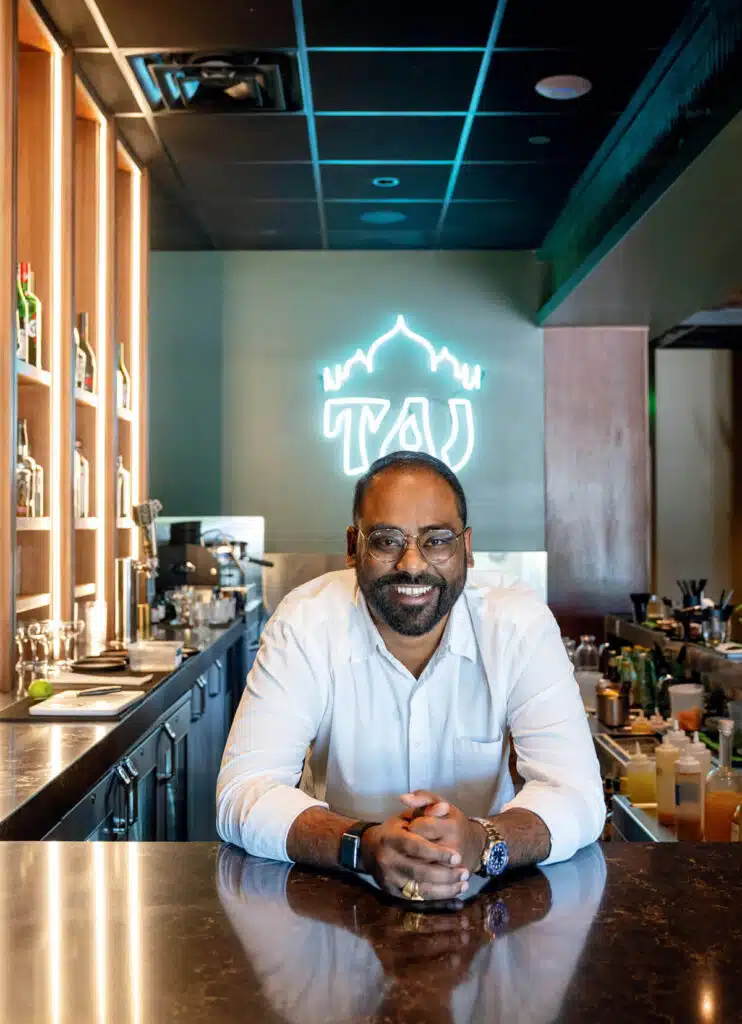
Sai Guntaka: Feeding His Maine Community
A Maine restaurateur sets out to feed his community through ingenious means.
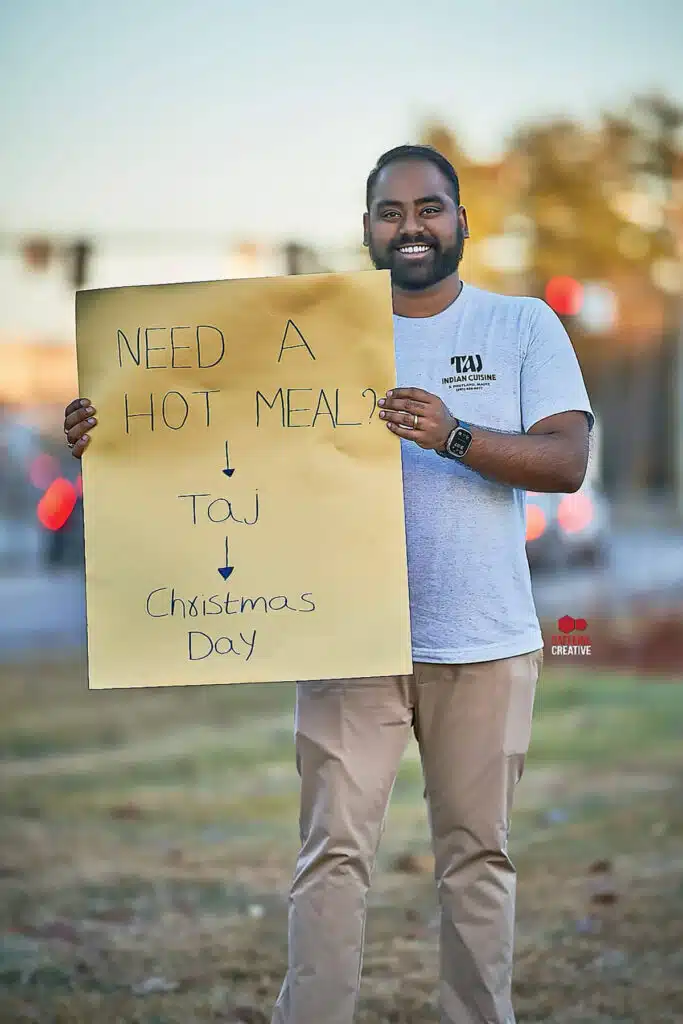
Last fall, Sai Guntaka was at a crossroads. Over the previous five years, his family’s popular South Portland restaurant, Taj Indian Cuisine, had offered free meals every Thanksgiving and Christmas to those who needed it—no questions asked. But seeing its growing popularity had become so heart-wrenching, he felt he had to expand it.
“I was surprised at just how much it was needed,” he says. “A lot of the people who come to us are working, but they just can’t make it.”
After the federal government announced in October that it would temporarily suspend SNAP benefits, he made his move: The free meals became a daily program. But with the costs being borne solely by his family (they refuse outside donations), how to cover the expense of handing out between 100 and 150 meals a day—nearly a third of the kitchen’s total production? Before long, he had hit upon an unlikely solution.
Taj, a 2025 James Beard Award semifinalist for outstanding hospitality, had recently moved into a bigger location, and now the lease was set to end on the original space that had first brought the Guntakas—Sai, his younger brother, and their parents—to the Northeast from Texas nearly 15 years ago. As business there boomed, so did the family’s lives as Mainers. They had made friends and found a sense of home they’d been missing since immigrating from India in 2005. To Sai, leaving that space felt like walking away from all that history.
“I’m attached to it,” he says. “We didn’t even know Maine was a state when we decided to move here. But I love it. I love the people. I love that it’s so community-oriented.”
Credit: Anthony Di Biase (Cobblestone Coffee & Co.)
Supporting community has been a throughline in all of the Guntakas’ businesses, which include the Portland cocktail lounge Silver Street by Taj and another Indian restaurant, Rasa, in Bangor. They pay good wages and provide worker housing for those who need it. But the most generous endeavor has been Taj’s free-meals program, which began during the pandemic to feed first responders but quickly tapped into the hidden poverty in and around South Portland.
As Sai was wrestling with whether to abandon the original Taj, he noticed that the area didn’t have a good brunch spot. So he wondered: What if we built one here, and used its profits to pay for free meals at Taj?
Credit: courtesy of Taj
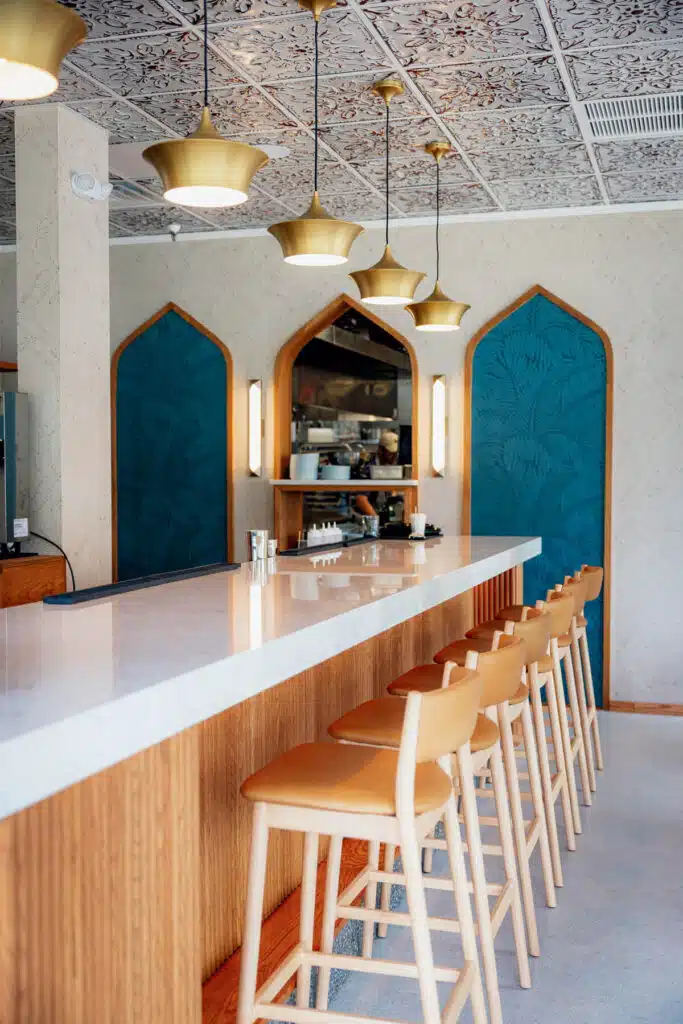
Renovations began in February, and five months later, Cobblestone Coffee & Co. opened its doors. The interior very much bears the Guntakas’ imprint: sleek and modern but also welcoming. The long bar, the plush blue chairs, the big windows—they all create an atmosphere that makes you want to linger. And so does the menu, featuring coffee made from imported beans alongside things like Indian-style crepes, beefy breakfast burritos, egg vindaloo, and house-made croissants infused with cardamom.
“We want this to be a place that means something to you when you visit, that you can come here and feel good about what you’re eating and where your money is going,” Sai says. “I’m doing this so people can have jobs, and so we can feed people—that’s what it’s about. This was a community that accepted and supported us when we were in need, and now we have an opportunity to return that thanks.”
Credit: John Tlumacki/The Boston Globe via Getty Images
Adam Quinn: Building Skills and Second Chances
A former carpenter helps Massachusetts teens build cutting boards and confidence.
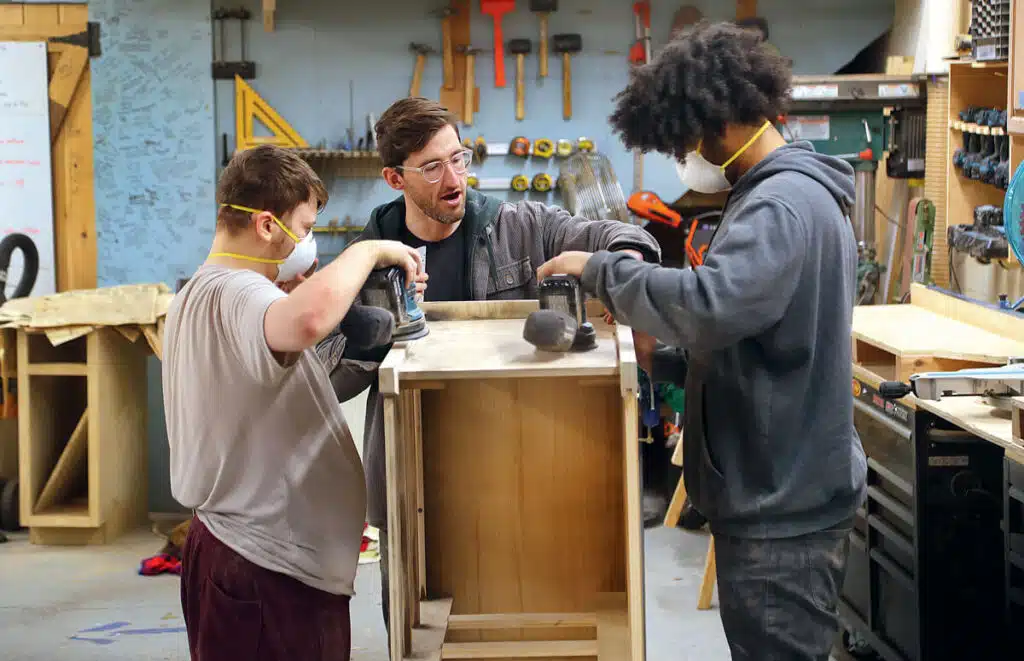
It’s a Tuesday morning in mid-June, and the Dominican hip-hop is already going strong when Adam Quinn steps into his woodshop in downtown Gloucester, Massachusetts. He makes an enthusiastic loop around the equipment-filled space, where a small group of volunteers and students are already well into their day. A hand sander buzzes, the drill press whirs, and on the large center bench, a few cutting boards await a final coating of beeswax.
“We dance a lot in here, don’t we?” Quinn remarks, looking over at Nick Winslow, a 19-year-old from Haverhill, who breaks into a smile. Sometimes it’s reggaeton, other times classic rock—“It just depends on who’s running the iPad,” Quinn tells me. “But it’s always fun and always pretty loud.”
That’s exactly the kind of vibe Quinn was after when he and his wife, Katie, launched The Cornerstone Creative in 2020. A full-time carpenter with a background in education, Quinn wanted to give local teens the chance to learn something about themselves as they learned their way around a woodshop. “I know from my own life that when you keep your hands busy, you’re a lot less likely to be in your head or even be doing things maybe you shouldn’t be doing,” says Quinn. “I thought there was a lot of power in having a communal workspace.”
Four local teens turned up to see what Quinn had created. Under his guidance, they built a bookshelf. Then it was cutting boards, cornhole boards, and skateboard decks. The music blared, the sawdust piles grew larger, and a community began to form. “A lot of the kids didn’t really know each other, but they quickly became buddies,” says Quinn. “The more they worked together, you could see their self-confidence just grow.”
In 2021, Cornerstone’s success caught the attention of Straight Ahead Ministries, a faith-based group in Lawrence that works with youths recently released from juvenile detention. Quinn welcomed nine of its teens to the shop for a test run, and by the time the group piled into the van for the ride home that day, he had decided to quit his job and focus on Cornerstone.
Today, the nonprofit is much more than just a woodshop. Its GED program has helped five young adults complete their high school requirements, while the Straight2Work program offers mentorship in job readiness. Cornerstone spaces include a classroom and retail store; earlier this year, a couple of its members built out a small recording studio. “We want this place to feel like it’s theirs,” Quinn says.
Nick Winslow certainly feels like it does. He’d never stepped foot into a woodshop until he came to Cornerstone last February, having been recently released to house arrest and wanting something to fill his days. In the time since, he’s made several cutting boards, dog bowl trays, and bread knives. He devotes one of his three days a week at Cornerstone to work on completing his GED. As soon as he does, he’d like to find a full-time job at a restaurant and get his own apartment.
“It’s an energetic place,” Winslow says. “You don’t mind being here, because it’s fun and you learn something. If it wasn’t here, I’d have to be home and I just didn’t want to do that. Being here, it’s different. I like it.”
Credit: Seshu Badrinath
Deb Bibbins: Bringing Generations Together
Lonely Connecticut residents have a friend in Deb Bibbins, founder of For All Ages.
In the late 2010s, Deb Bibbins did her best to help an aging family member navigate a world that seemed to be leaving him behind. His friends and relatives had passed, reducing a once-vibrant social life to a flicker. After he, too, was gone, Bibbins wondered: How had loneliness contributed to his death?
She was right to wonder. In a landmark 2023 report, the U.S. surgeon general laid out how America’s growing “loneliness epidemic” has led to increases in not just mental health issues, but also heart disease and dementia. Studies have even shown that the mortality risk of social isolation is akin to smoking nearly a pack of cigarettes daily.
For seniors and young people, this crisis has been especially hard-hitting. As Bibbins—who holds an MBA and forged a successful legal career in the insurance industry—dug into the research, she also began looking for local solutions in her home state of Connecticut. Finding no single organization addressing the issue head-on, she started one of her own. In 2019, For All Ages was born.
The idea was both simple and profound. By creating events that bring people together from across generations, Bibbins aimed to lay the groundwork for the kinds of friendships that her late relative had so needed. “The more I looked into things, the more I began to see that if there had been a place where he could have connected with other people who weren’t his age, his final years would have looked a lot different,” she says.
Bibbins is nothing if not a doer. In her early 30s, she went to law school at night while holding down a demanding day job. After retiring from the insurance world, she threw herself into volunteering. She’s brought that same drive to her own nonprofit. Since its inception, For All Ages has worked with nearly 50,000 individuals to build intergenerational connections.
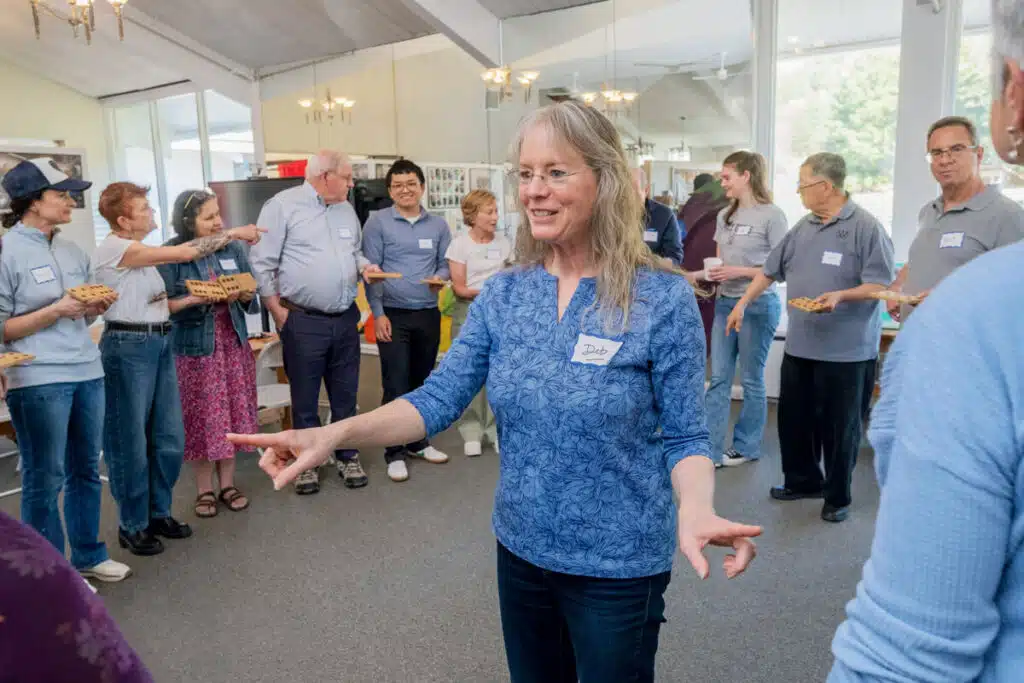
Over the years, the free programming has included craft and woodworking partnerships between retirees and youths, a collaborative fishing derby, and an effort that brings together members from some 30 other groups around the state and beyond to make holiday cards for thousands of Connecticut seniors every year. At the height of Covid, For All Ages built and placed Adirondack chairs around Bibbins’s hometown of Simsbury so that people could safely socialize outdoors.
But its anchor program is Tea @ 3, which pairs college students with seniors for weekly video or phone calls. Participants are matched up by common interests and receive a welcome kit that includes a handmade mug cozy and a list of conversation starters. Often, Bibbins says, people stay connected after the 12-week program ends; many even choose to repeat it.
“I love seeing strangers come together, when the nervousness about being a stranger falls away and a real connection is made. It’s magic, and it’s so important,” says Bibbins. “I’ve done a lot of different things with my life, but I feel like what I’m doing now is what I was supposed to do.”
Credit: Glenn Russell/VTDigger
Andrew and Hannah Christiansen: A Fresh Start for Burlington
How a struggling laundromat became one of Vermont’s most unlikely community centers.
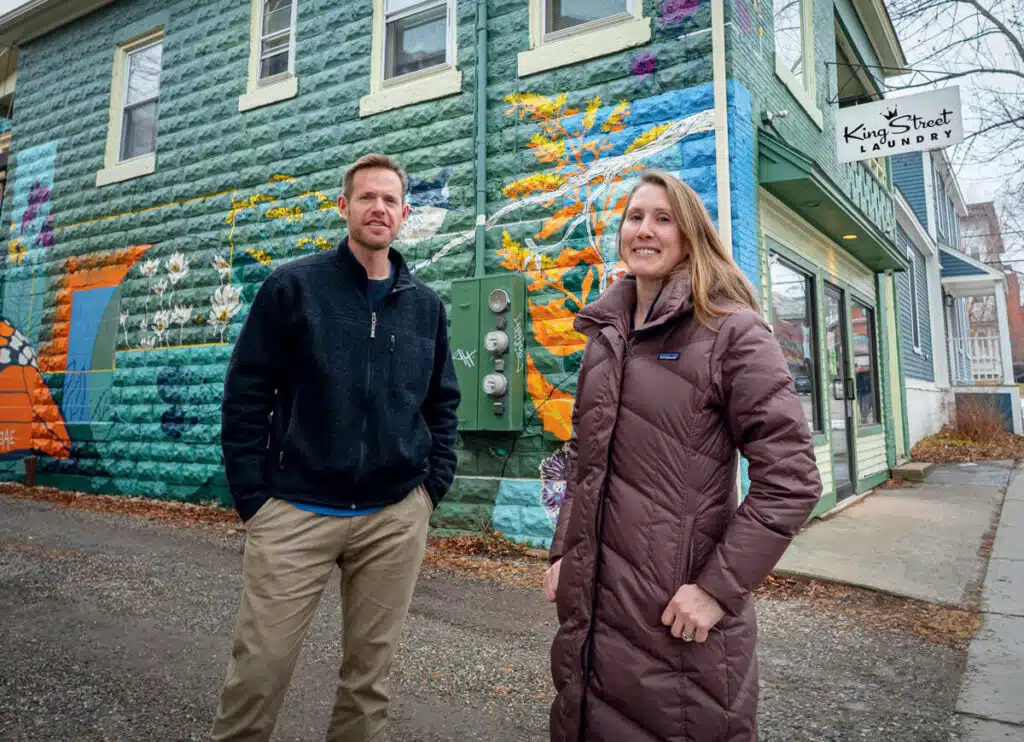
For decades, King Street Laundry was a staple in Burlington’s South End, the only walkable place to wash clothes in a neighborhood where many apartment buildings don’t have laundry facilities. But by December 2021, the laundry, often unattended during its long business hours, had become a haven for drug use. King Street closed, the building was put up for sale, and the property’s tenure as a public space was very much in doubt. It took the unconventional vision of new owners Hannah and Andrew Christiansen—a public school teacher and a marketer for a biotech firm—to reopen its doors in 2022.
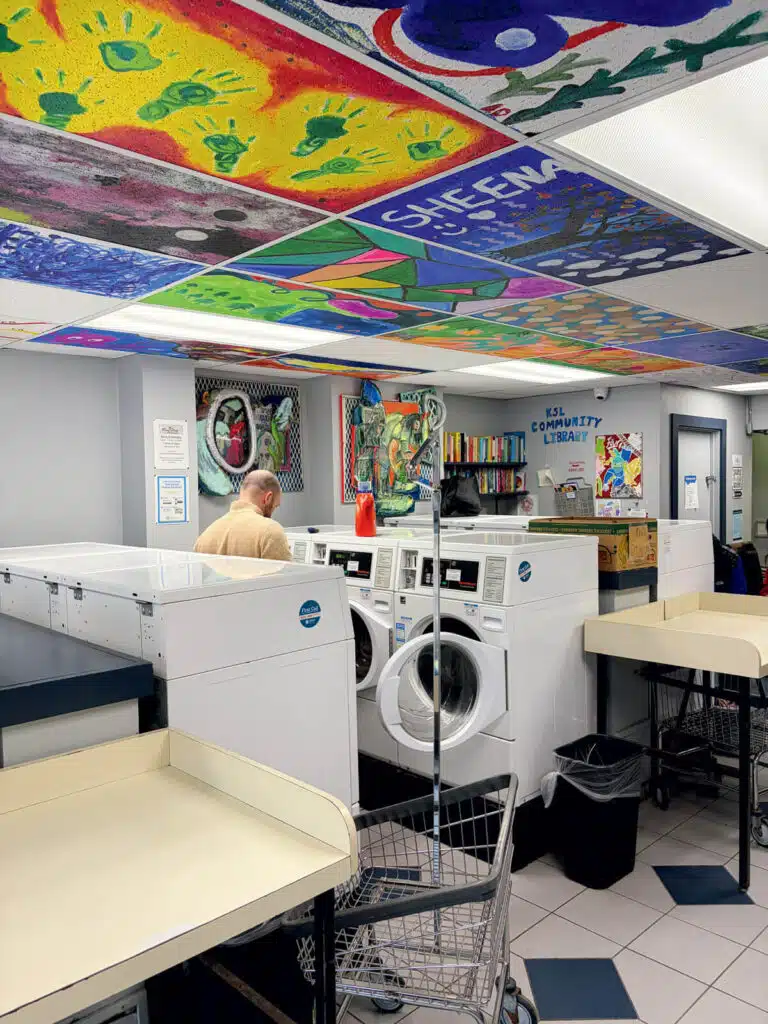
To call King Street today just a laundromat misses the entire point of the place. Patron-made art decorates the walls and ceiling. There’s a community-created library and a food pantry, and throughout the year, free classes on everything from financial literacy to screen printing are held around its 14 washing machines and 10 dryers.
“We hadn’t planned on running a laundromat,” says Andrew, who, like his wife, is a native Vermonter. “But we quickly saw how much of a stabilizing force this place had been to the neighborhood, and that if we did it right, it could be a lot more.”
Credit: Ian Aldrich
The backbone of all that “more” is Vermont Community Wash & Learn, the nonprofit founded by the Christiansens to make King Street a bona fide community center for some of the city’s most overlooked residents. A workforce training program offers paid work experience to the recently incarcerated and others trying to get back on their feet. There are winter coat drives and free Thanksgiving meals, and throughout the year a “community box” outside the laundromat makes everyday essentials like food and hygiene products available to anyone who needs them.
But the true spirit of the place may be felt most strongly on Wednesday afternoons, when King Street’s machines are made available for free use by homeless Vermonters. “Clean clothes are important for human dignity,” Andrew says. “In my mind, it’s a top-five human need, right up there with food and shelter. When you can begin your day in a clean set of clothes, it can put you on a different path.”
On a recent Wednesday, one of the earliest of those to arrive was Scott, a tall, middle-aged man carrying a large bag of dirty clothes and a bag of cookies he’d brought to share. He popped in two loads, then took a seat by the front window. “It’s nice knowing I can come here every Wednesday,” he said. “It’s dependable, and I can feel like I don’t look like I’m homeless.”
A few minutes later, a single mother named Donna came in with another pair of loads. “This has been a life-changer,” she said. “I know what this place used to be like. Now, I can leave my stuff here if I have to and not worry that anything will be stolen.”
That kind of testimony sparks a smile from Andrew.
“I never would have forecasted this for myself,” he says. “Like a lot of people, we were looking for some kind of positive impact we could make. Then we found this place and found a way to help. The mantra of [King Street] has been if you create a supportive, nurturing environment, it brings out the best in you. I feel like I’m exhibit A of that.”
This feature was originally published in the November/December 2026 issue of Yankee.