



New England Flavor | Eating New Englandy
Eating locally should also mean embracing traditional regional food. Find 15 eras of authentic New England flavor at these favorite eateries.
By Amy Traverso|Nov 19 2014|

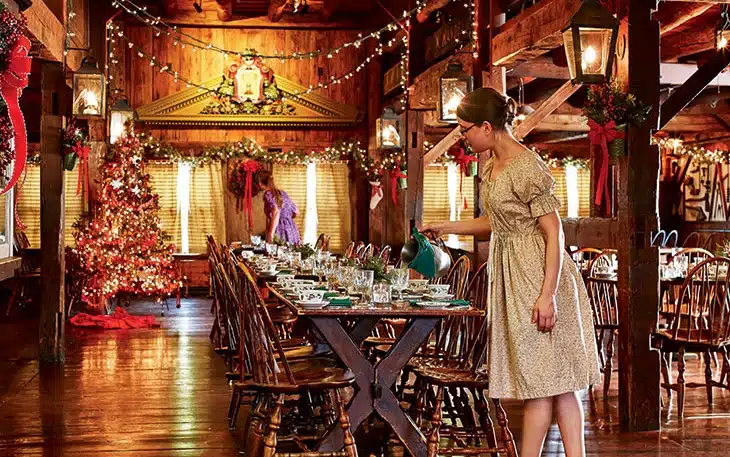
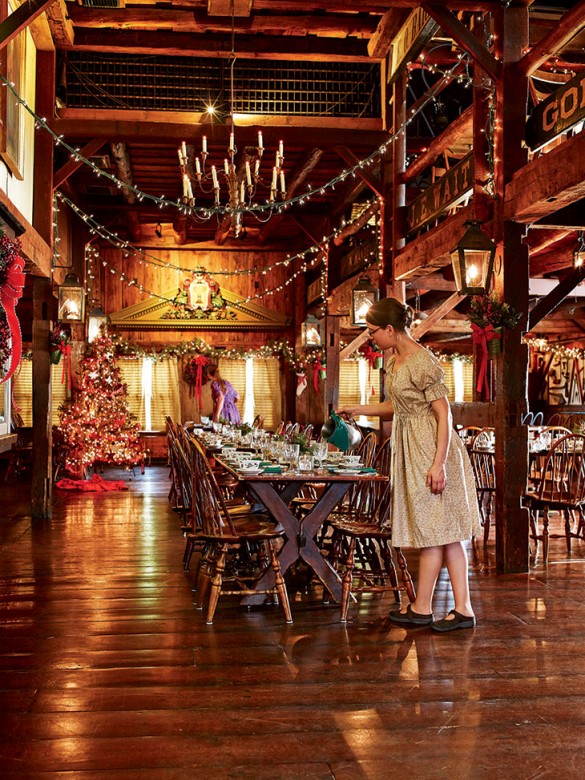
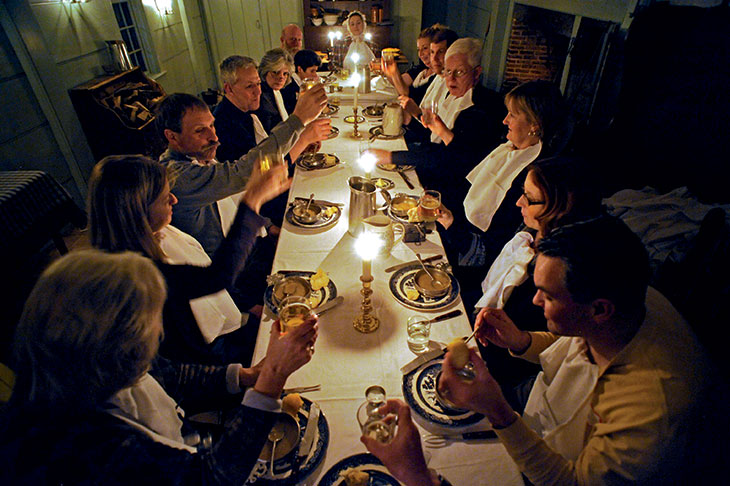
Staff members prepare tables for a Colonial-style Fireside Feast at the Salem Cross Inn in West Brookfield, Massachusetts.
Credit: Heath RobbinsCredit: Heath Robbins Emily Dickinson said it first: “I think New Englandly.” That phrase has inspired Yankee writers and editors for decades. We wonder what it means to think, travel, work, create, govern, and even eat New Englandly. And that last item seems more urgent now, as we witness the very slow fading of a once-common facet of New Englandy life: the classic tavern with roast beef on the menu and Indian pudding for dessert, or the old-school red-sauce Italian restaurant in Boston, or the diner serving johnnycakes made with flint cornmeal. We believe that eating locally should embrace not just the produce grown in nearby fields, but traditional regional foodways. It’s time to celebrate the places that still do. So we set out to find places that serve authentic New England foods in their many forms. We found that they not only exist, but that each one captures a unique thread of the rich fabric that makes up the New England table.
WHERE TO FIND THE BEST NEW ENGLAND FOOD | ERA BY ERA
NATIVE FOODS Plimoth Plantation | Plymouth, MA
The atmosphere may be a far cry from a traditional Wampanoag feast, but the cafeteria-style Patuxet Cafe at Plimoth Plantation does serve a rotating lineup of Native foods (alongside English Colonial dishes like peascods and pumpkin pie and modern sandwiches and snacks). There’s succotash, venison stew, stuffed quahogs, squash, mint tea, and nasamp (corn porridge) with berries. And at the nearby Wampanoag homesite, Native interpreters are usually cooking foods over live fire using traditional methods and truly local, seasonal ingredients.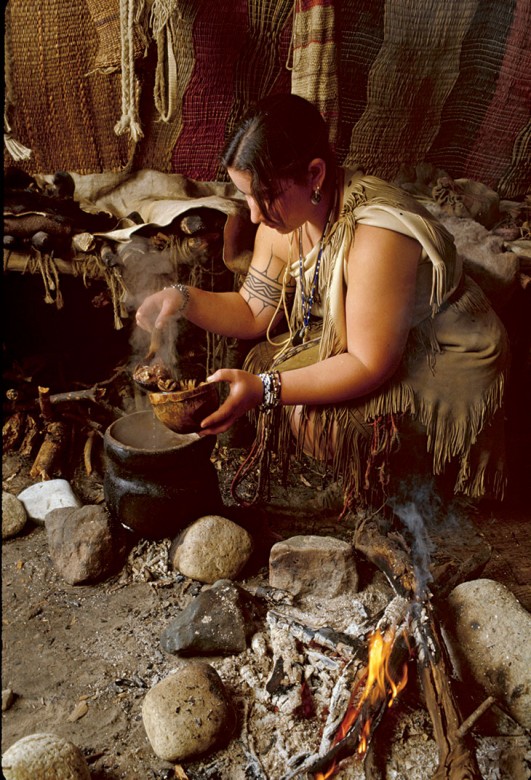
Melanie Roderick of the Wampanoag Indigenous Program makes turkey soup in a clay pot at Plimoth Plantation.
Credit: courtesy of Plimoth PlantationCredit: courtesy of Plimoth Plantation
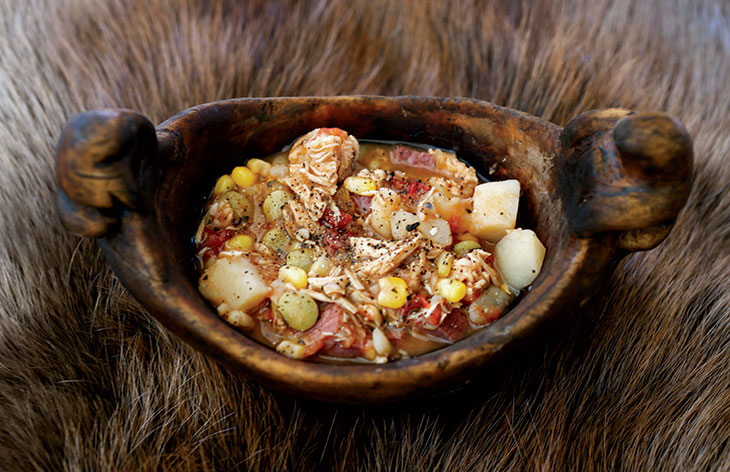
Succotash is served in a traditional handmade maplewood bowl.
Credit: courtesy of Plimoth PlantationCredit: courtesy of Plimoth Plantation Plimoth Plantation. 137 Warren Ave., Plymouth, MA. 508-746-1622; plimoth.org
THE COLONIAL ERA Salem Cross Inn | West Brookfield, MA
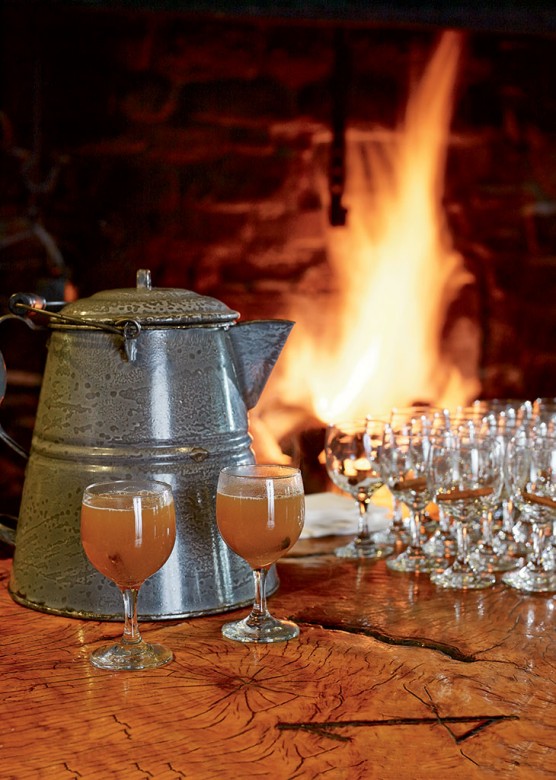
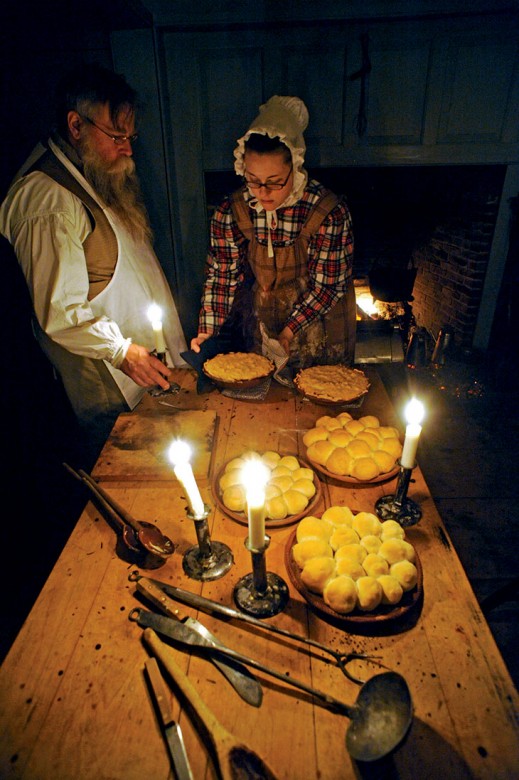
If the earliest New Englanders knew the sting of hunger, their grandchildren enjoyed comparative bounty. By the 1700s, the typical Colonial New England diet for a prosperous family included a midday meal of meat, vegetables, and maybe a soup, pudding, or tart. You can enjoy just such a 1700s-inspired meal at the Salem Cross Inn’s “Fireside Feasts,” cooked in the open hearth of a large fieldstone fireplace.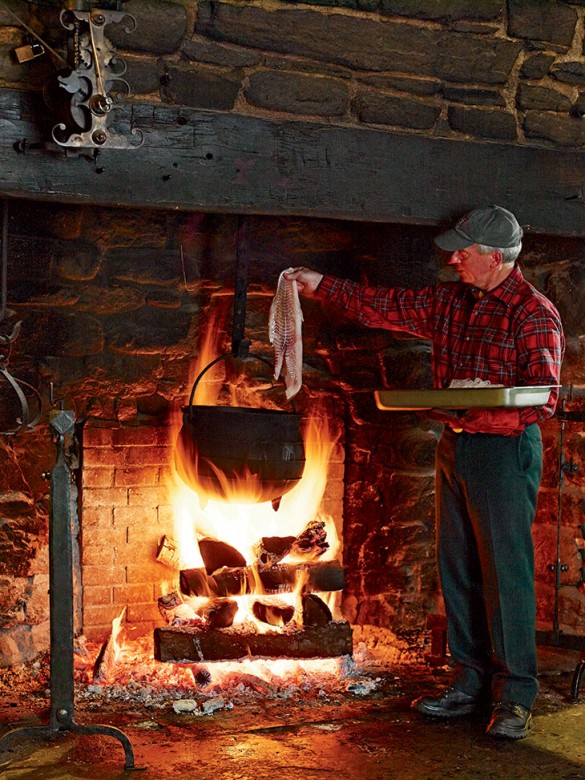
Bo Salem prepares fish chowder over a live fire.
Credit: Heath Robbins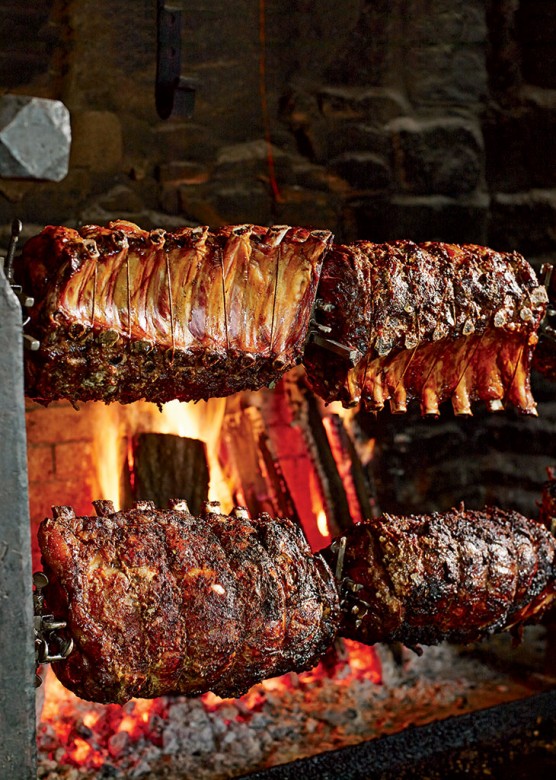

I love the magazine, but I’m sad to see Emily Dickinson misquoted in both the opening letter and this article. She didn’t write “I think New Englandy,” she wrote “I See – New Englandly” – with an “ly.” She’s important to New England and clearly, her thoughts are important to the article. I wish either the writers or copyeditors had taken a moment to look up the original poem and quoted her appropriately – “New EnglandLY,” not “New Englandy.”
http://dailydickinson.com/tag/new-englandly/
M.H. Johnson — Thanks so much for your comment. You’re right that the correct quote attributed to Emily Dickinson is “I See – New Englandly” and not “I think New Englandy.” We regret the error but appreciate the correction.