Where Music Meets the Moment
Festivals on creation and technology anchor a new BSO season built around big ideas.
By Yankee Custom Editors|Sep 01 2026|

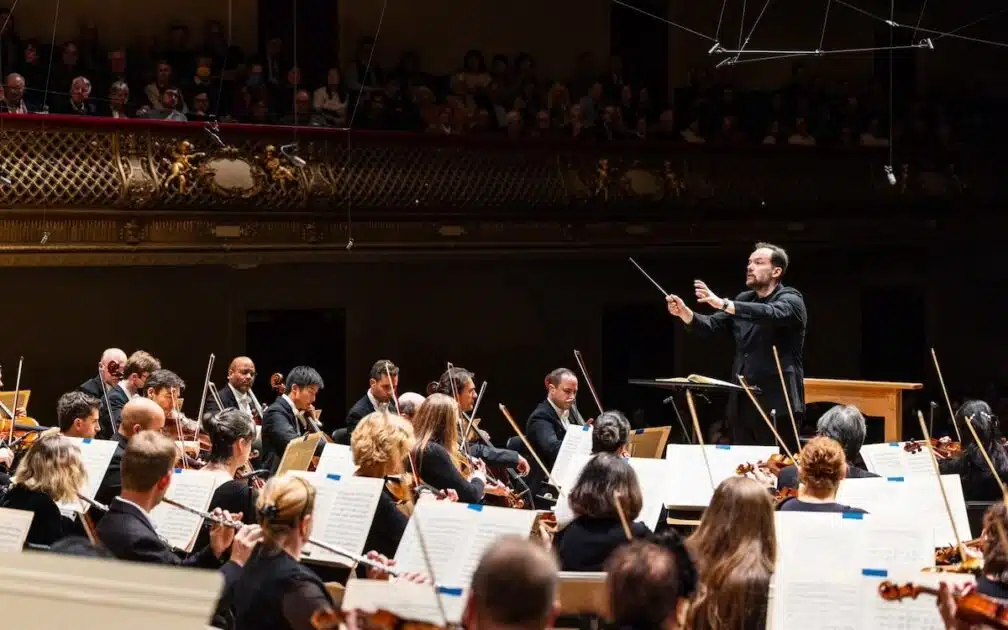
Now in its 146th season, the Boston Symphony Orchestra continues to innovate and inspire.
Credit: Robert TorresSponsored by the Boston Symphony Orchestra
When the Austrian composer Joseph Haydn premiered what would be widely seen as his masterpiece, The Creation, in 1798, the rise of the Industrial Revolution was well under way. Advanced machines were changing how people lived and worked, and even how they saw themselves. Listening to Haydn’s grand retelling of the biblical creation story, some in the audience that night may well have been wondering: What does it mean to be human?
Over two centuries later, that question of who we are and how we fit into a fast-changing world is being asked by more people, more urgently, than ever before. It’s against this backdrop that the Boston Symphony Orchestra has launched its 2026–27 season, offering the chance not just to hear world-class musical performances but also to take a fresh look at our modern lives through one of humankind’s oldest and most universal forms of art.
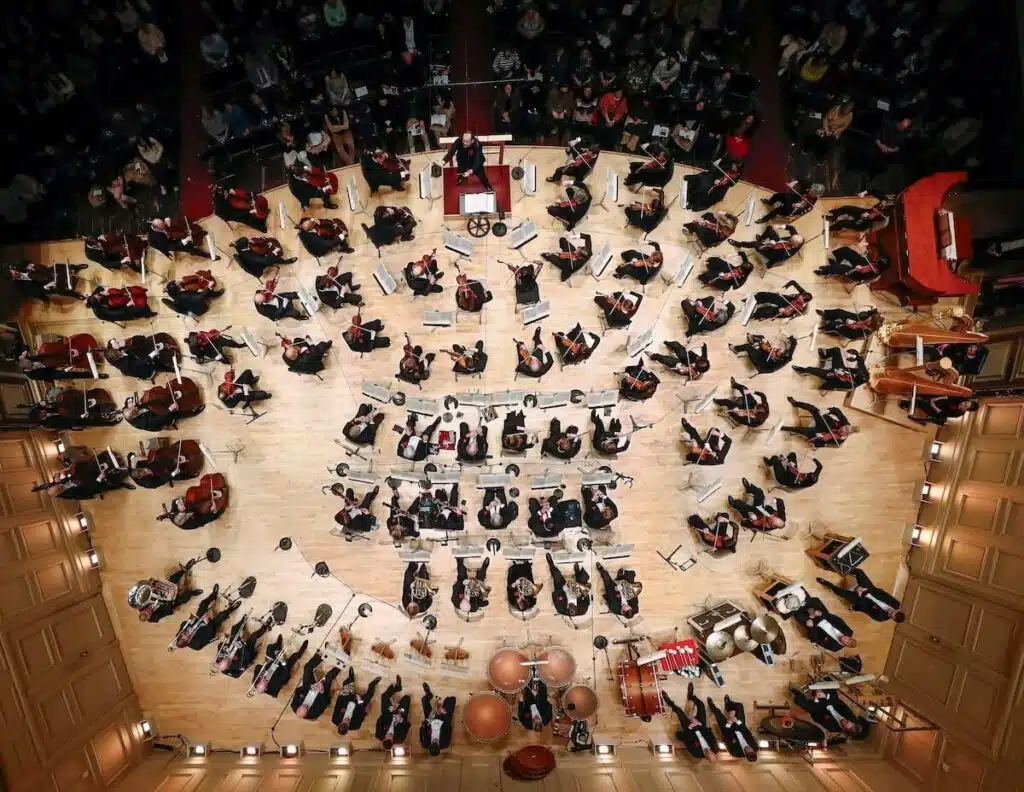
Credit: Winslow Townson
Among the artists leading this exploration of ideas is the Argentine-born American composer Osvaldo Golijov, whose oratorio Creation makes its world premiere Nov. 12–14 at Symphony Hall. Commissioned by the BSO and conducted by Eric Jacobsen, Golijov’s work is a response to Haydn’s The Creation, which will be performed the previous week (Nov. 5–7) as part of an overall “Creation” festival. But whereas Haydn followed a Judeo-Christian narrative, Golijov expands out to a more cosmic view.
“There’s no ‘In the beginning’ here,” he says. “In fact, there’s no beginning—only a constant swirl of atoms that gives birth and brings death to everything except for the dancing atoms themselves. Every being, including each of us, is a temporary constellation of atoms.”
Credit: Eric Cheng
Based on a concept by Tony-winning playwright David Henry Hwang and with lyrics by Leah Hager Cohen, Creation is, as Golijov puts it, “a story told in turns by the oldest tree in the world, by the first child ever born to a woman, by Vincent van Gogh, by a chorus of little ones eternally asking why?, by magnificent creatures both real and imaginary, and by Life Force itself. It is a hymn to life composed of life, composed of celebration and lamentation, of wonder and rue and love, and all of it in motion.”
To hear Golijov describe it, Creation isn’t a lens that brings one single truth into focus—the way Haydn’s The Creation does—but rather a kaleidoscope whose shifting patterns can inspire questions and reflections about the human condition. “Humans are wonderers, inquirers, lovers, and dreamers,” he says. “We are capable of great cruelty as well as great compassion, and we have a thirst to understand—we are complex! And as all of these qualities are elements of humans, all of these qualities are elements of Creation.”
Credit: Ebru Yildiz (Salvant); Nima Nazemi (Kalhor)
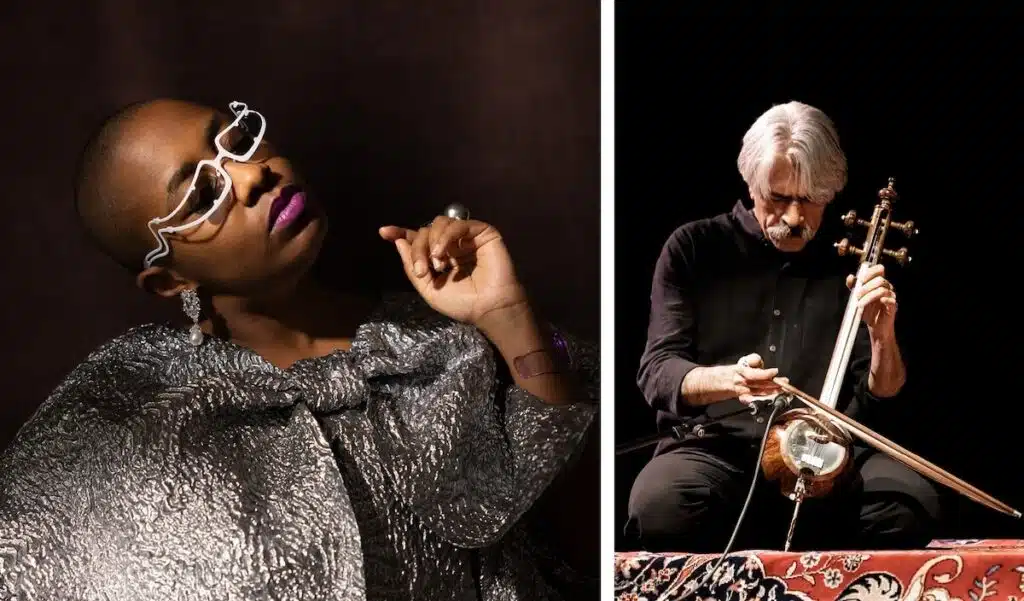
Helping bring this eclectic work to audiences is a group of soloists as diverse as they are gifted: Brazilian-born percussionist Cyro Baptista, vocalists Cécile McLorin Salvant and Davóne Tines, and Kayhan Kalhor, the world’s leading player of the kamancheh, the Persian spike fiddle. And, of course, there is the BSO itself, whose relationship with Golijov goes back more than three decades.
“When I write for this orchestra, I am able to write for individual people—I know their facial gestures when they play their instruments, I know their bowings, I can feel the physicality of specific people playing,” says Golijov, who has long resided in nearby Brookline. “I am so grateful the BSO is my hometown orchestra. It feels right to take the T or bike to Symphony Hall and have Creation brought to life first at home.”
Credit: Hilary Scott
* * *
Looking at the BSO’s 2026–27 season, it’s easy to see that while Haydn’s The Creation and Golijov’s Creation share a theme, they aren’t just talking to each other. In big ways and subtle ones, they connect with performances, talks, and educational programs that fill the calendar across nearly eight and a half months.
“Throughout the season, our audience will have the opportunity to engage more meaningfully with the music our orchestra performs through our humanities offerings,” says Daniel Mallampalli, the BSO’s assistant vice president for artistic planning. “We’ll be presenting several events across the city of Boston that contextualize our work not only through a musicological lens but through a broader societal perspective.
“From Haydn to Golijov, artists have long contemplated and questioned themes like technology, faith, and nature in their work,” Mallampalli continues. “We’re excited to provide a forum to explore these focuses, both on- and offstage, so that artists can tell their stories.”
Credit: Natalia Tsarkova
No matter whether you’re a season subscriber or you’ve never set foot in Symphony Hall, the top-of-mind appeal of the BSO’s “Technology and Our Humanity” festival (Oct. 19–25) is instantly clear. Throughout the week, venues around Greater Boston will host a variety of events—including a talk that delves into the history of the acclaimed MIT Media Lab—that encourage attendees to consider how technology is reshaping not only music but also our understanding of ourselves and one another. That all leads up to the world premiere of already and not yet (Oct. 22–24) by MIT Media Lab faculty director Tod Machover, who has been called “America’s most wired composer.” Commissioned by the BSO and part of a Symphony Hall program conducted by Kent Nagano, already and not yet features a live AI system that dynamically emphasizes the performance of each BSO musician while creating complex digital “blends” and sonic links across the entire orchestra.
Credit: Polina Vilijun (Opolai portrait)
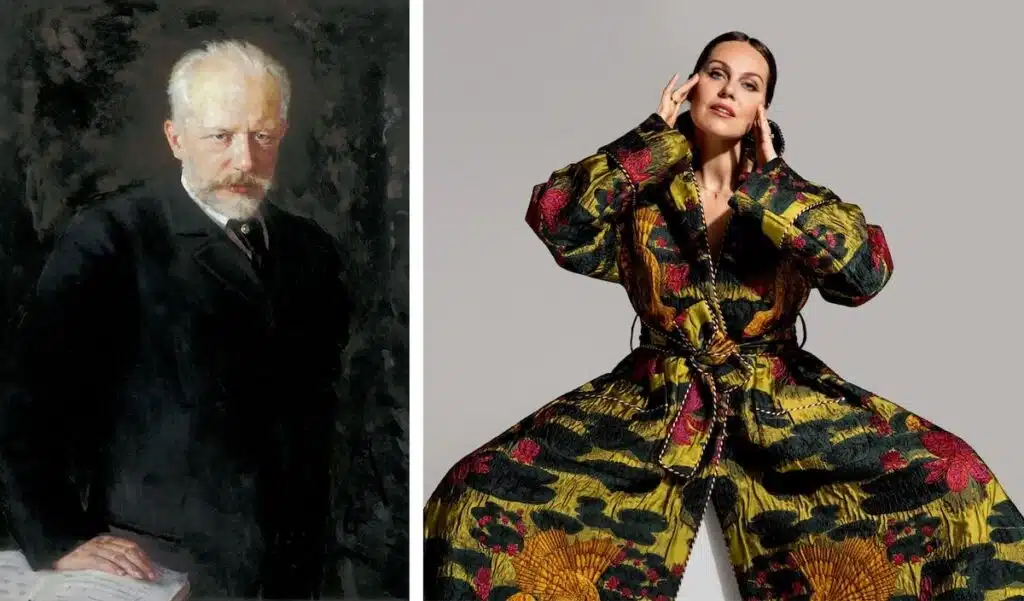
Two more BSO festivals in early 2027 provide a different kind of deep dive by helping audiences connect with the real people behind world-famous classical music. The Tchaikovsky Cycle (Jan. 7–31) spans the career of Russia’s first internationally celebrated composer, presenting all six of his numbered symphonies plus the opera The Queen of Spades (Pique Dame), while the Stravinsky Ballets (Feb. 18–27) focuses on three revolutionary works by another, equally famous Russian composer. In each case, the musical programming—much of it familiar even to non-classical-music listeners—is enriched by talks and events that help bring these musical giants down to a human level.
This showcasing of great historical composers underscores how the BSO invites its audience to experience the power of music across eras, Mallampalli says. “Innovation has long been a cornerstone of the Boston Symphony Orchestra’s DNA. Harking back to the days of our founder Henry Lee Higginson … and continuing onward in the Ozawa era and beyond, we have long been at the forefront of moving our art form forward by championing new works by the composers of our time,” he says. “But the beauty of the BSO is that we are just as passionate about celebrating the iconic works of the traditional Western orchestral canon, like Tchaikovsky’s symphonies and Stravinsky’s ballets, as we are about supporting the next generation of composers, artists, and creative voices.”
Credit: Hilary Scott
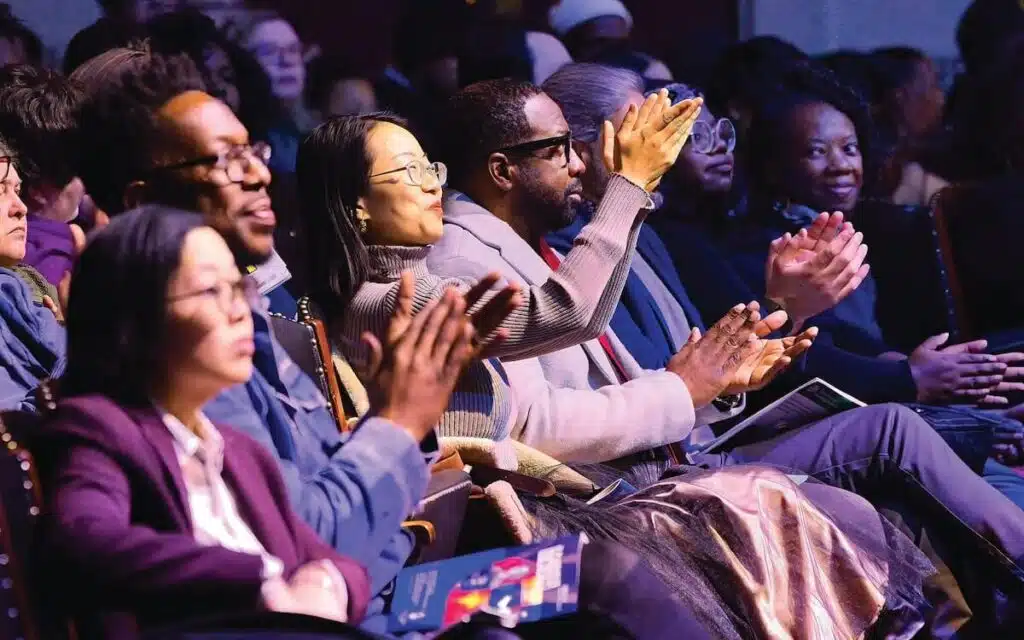
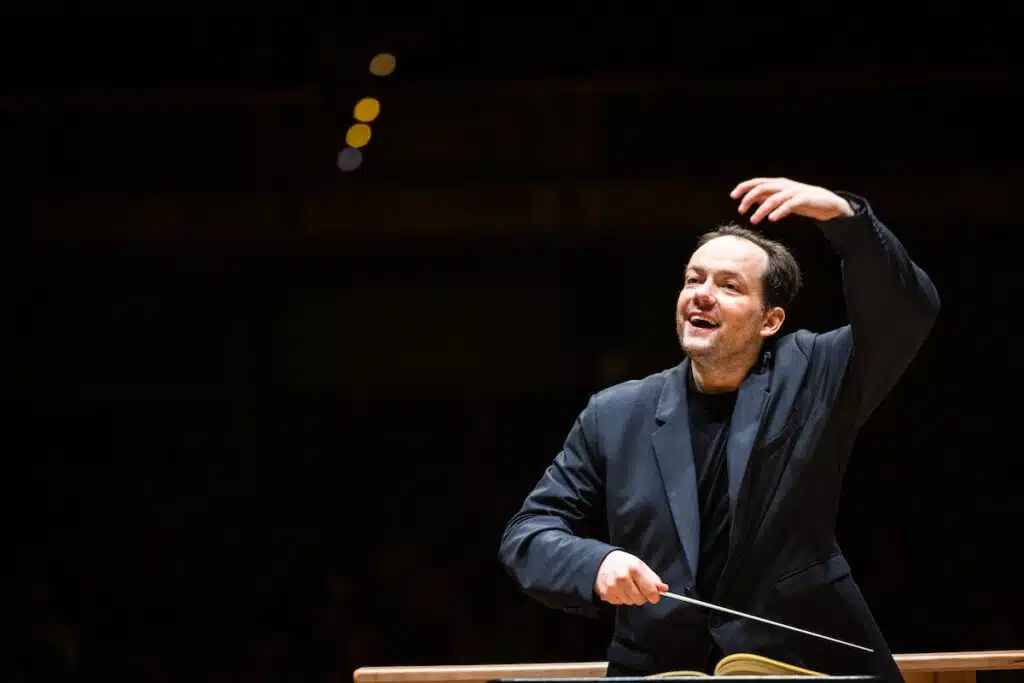
Scattered throughout the 2026–27 season at Symphony Hall, there are musical offerings that may appeal more to classical enthusiasts (such as a tribute to minimalist pioneer Philip Glass, Feb. 11–13, and star pianist Lang Lang’s return, March 2–3 and 5–6), and others that may pull in a more general audience (like the Boston Pops shows). But the throughline of human community, one that encompasses artists and audience alike, is always present. There will be a chance to welcome back former BSO Assistant Conductor Samy Rachid, who returns to the podium Nov. 19–20 for a program of Mendelssohn, Weber, and Schumann. Carlos Simon, the BSO’s inaugural Composer Chair, puts his distinctive stamp on three evenings with violinist Hilary Hahn and cellist Seth Parker Woods, Oct. 15–17. And, of course, there will be many opportunities to give Andris Nelsons some farewell applause: In his 13th and final season as BSO Music Director, he will lead 15 of the 25 subscription programs, including the Tchaikovsky and Stravinsky festivals, three world/American premieres, and a final, tenure-concluding performance of Mahler’s Symphony No. 3.
Credit: Robert Torres
“We are especially honored to conclude Andris’s tenure at Symphony Hall with a performance of Mahler’s Third Symphony,” Mallampalli says. “Mahler is a composer who is near and dear to Andris’s heart; he is truly one of the world’s foremost Mahler interpreters.
“The Third Symphony is in many ways Mahler’s reflection on the human condition—what nature, heaven, life, and love teach us,” Mallampalli adds. “This symphony is the perfect culminating moment for the BSO’s 2026–27 season, which truly offers something for everyone.”
To learn more about the Boston Symphony Orchestra and to explore the 2026–27 season, go to bso.org.