Girl Power in New England | Cara Belvin and EmpowerHer
Reaching out to girls who have lost their mothers, Cara Belvin is on a deeply personal mission to help them open up to others and reconnect with joy. Learn more about Cara and her nonprofit EmpowerHer.
By Ian Aldrich|Oct 24 2018|


In the spring of 2013, a mutual acquaintance introduced Cara Belvin to Emeline Berry, and the two struck up an unlikely friendship. Cara was 36, married with two young children, and running a successful nonprofit consulting agency out of her home in Scituate, Massachusetts. Emeline was a newly minted ninth-grader who lived nearby and had dreams of working in medicine. She was also struggling: Not long before, her mother had died unexpectedly of a heart attack. Even with a loving father and a protective older brother at her side, Emeline felt alone and unsure of how to move on with her life.
“I was known as the girl whose mom had died,” she recalls. “I felt these things that I didn’t think anyone else did—the kind of sadness I felt, or when I was happy, suddenly feeling guilty about feeling that way.”
But Cara understood. When she was 9, her own mother had died of breast cancer. Like Emeline, Cara, who grew up in Southington, Connecticut, had a caring family to fall back on, yet it wasn’t enough. Sometimes it felt as if her mom had never existed. Friends, parents, and even teachers avoided mentioning Cara’s mother or asking about the grief that Cara was quietly but painfully sorting through.
“People are afraid to offer support [to a child who’s lost her mother] because they’re afraid to step on the father’s shoes,” says Cara, who holds a master’s in psychology and worked for several years as a children’s psychologist. “They don’t want to suggest that he’s not enough. If she looks good, if she’s playing sports, if she’s getting good grades, if she’s got a ton of friends, they don’t want to rock the boat. They figure she must be doing fine. But just below the surface, she’s carrying a heartache that is unbearable.”
In Cara Belvin, Emeline found a maternal figure, someone she could open up to. They went out for ice cream, went shopping, and talked about their mothers. “She made me feel like I was normal,” says Emeline, “that I wasn’t the only one who’d gone through this.”
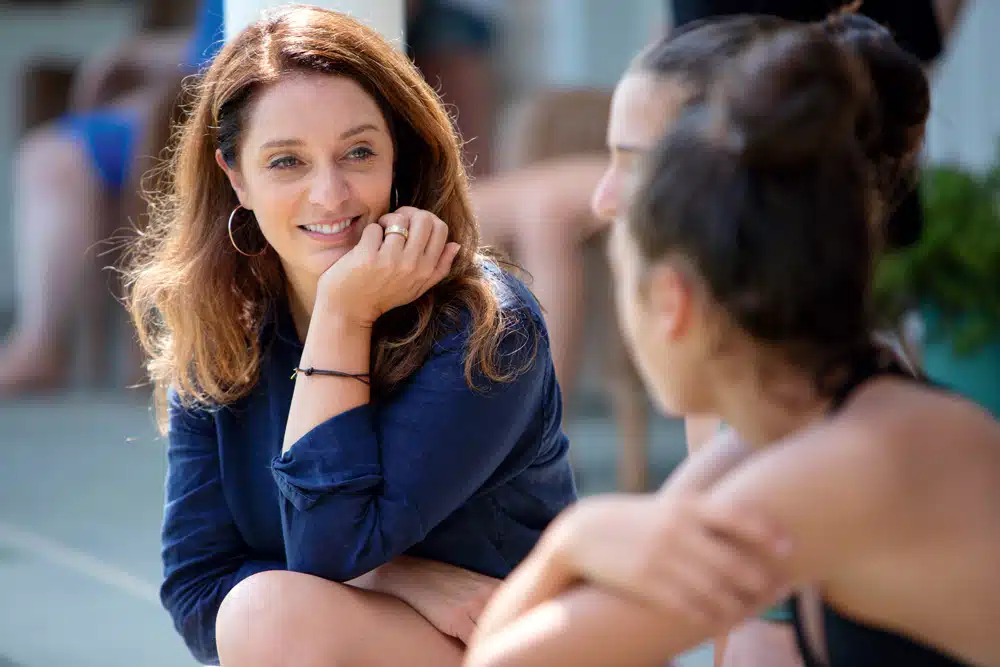
Founder Cara Belvin
Credit: Casey AtkinsCredit: Casey Atkins
Cara got something from it too. As she talked to friends about her experiences with Emeline, they told her about the motherless daughters they knew who were looking to connect with others like themselves. She also found more women like her who wanted to help. But there wasn’t any organization to connect the two groups. So, in August 2013, Cara put her long history in nonprofits to work and launched EmpowerHer.
It began with a simple mission: to find girls who’d suffered the early loss of their moms and bring them together on Mother’s Day weekend, often the most emotionally charged time of the year. Seven attendees, including Emeline, turned out for the inaugural event in Boston in 2014. They splashed around in the hotel pool, browsed the shops on Newbury Street, and went out for a fancy dinner. On the morning of Mother’s Day, the group did yoga together and then said a teary good-bye. As she watched the girls depart, Cara knew she couldn’t wait a whole year before doing something again.

Yoga on the lawn led by volunteer Elissa Shoreman (center left).
Credit: Casey AtkinsCredit: Casey Atkins
“They didn’t know each other, but they instantly connected,” she says. “It was magical and unbelievable. They didn’t talk about when their mom died or her favorite recipe—that’s what they do in support groups. They just got to be girls, and discover other girls who were like them, going through some of the same things.”
That summer, Cara, who’s as comfortable with constructing org charts as she is with thinking big, threw herself into building EmpowerHer. She spread her message quickly, eventually recruiting more than 250 volunteers to her cause.
Today, the nonprofit holds more than a dozen events throughout the year. There are beach parties and writing classes, cooking sessions and back-to-school shopping afternoons. They practice yoga and learn to surf. Each spring and fall, EmpowerHer hosts “Real Talk” discussions, in which older girls can talk openly about sensitive subjects like sex and dating. Cara and her team also carefully select and train adult mentors to pair with the program’s participants. In all, the organization, which is largely funded through private donations, works with 140 girls from across Massachusetts.
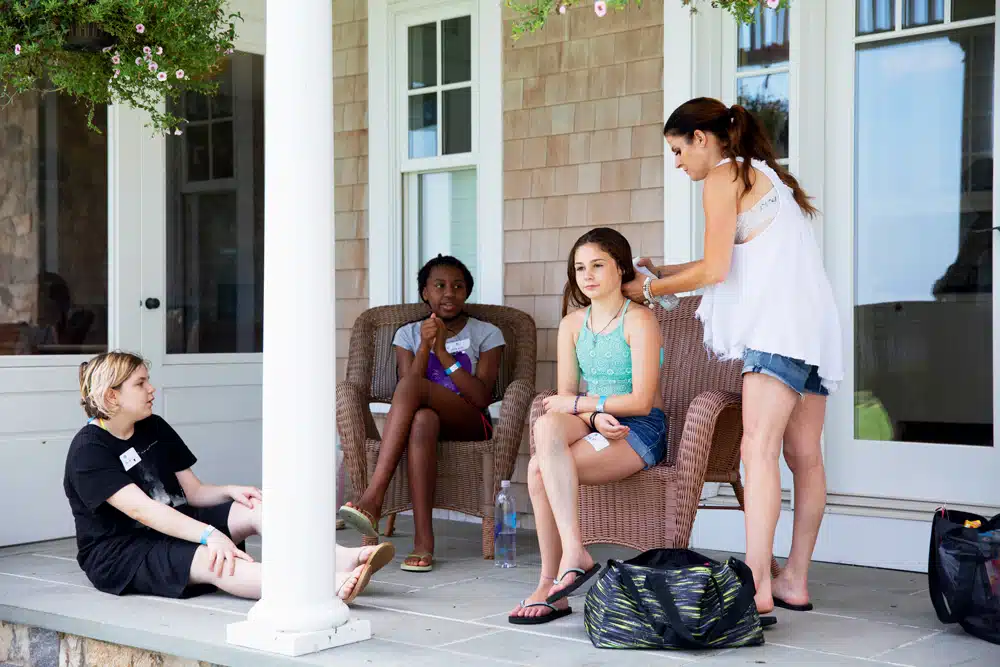
A porch hangout with volunteer Jayne Galligan.
Credit: Casey AtkinsCredit: Casey Atkins
EmpowerHer’s success stems from what it’s not. The nonprofit is not a therapeutic organization. The staffers, who work out of a small office in Norwell, don’t profess to be counselors. Instead, Cara, who now serves as paid executive director, aims to give these girls what she struggled to find in the years after her mom’s death: the realization that she was more than just “the girl whose mother died.”
“She’s giving these girls superpowers,” says Jenn Donovan, an EmpowerHer mentor. “They are confident and have so much strength. They have a reason to move forward each day, and Cara’s helped give that to them.”

Girls breaking for a snack between swims.
Credit: Casey Atkins