



Called to the Wild | Lucas St. Clair’s Controversial Conservation Mission
Lucas St. Clair’s mission was nearly impossible: to win support for Maine’s biggest swath of national park land despite controversy around its benefactor— who also happens to be his mother.
By Ian Aldrich|Jan 02 2018|

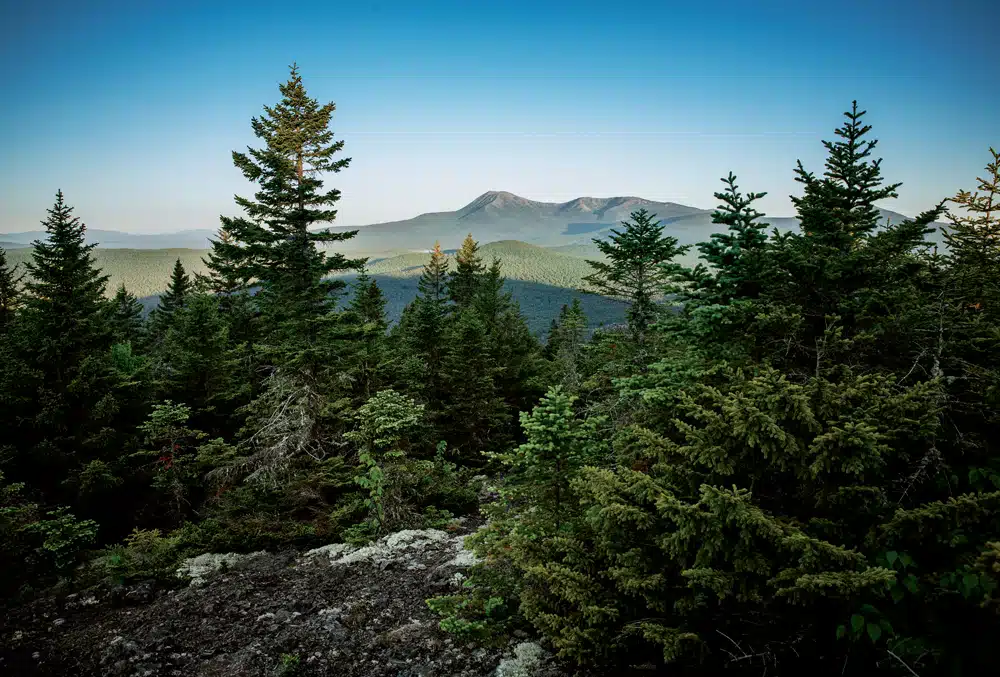
The 87,500-acre Katahdin Woods and Waters National Monument stands in part as a testament to the doggedness of Lucas St. Clair.
Credit: Little Outdoor GiantsThe 87,500-acre Katahdin Woods and Waters National Monument stands in part as a testament to the doggedness of Lucas St. Clair.
Credit: Little Outdoor GiantsCredit: Little Outdoor Giants
It’s the morning of August 24, 2016, and Lucas St. Clair is anxiously pacing his second-floor downtown office in Portland, Maine, an iPhone pressed tightly against his ear. Both exhausted and energized, St. Clair, president of the private land-conservation group Elliotsville Plantation, has calls to make. People to thank. Congratulations to accept. as he paces, he never strays far from “mission control”: a long conference table blanketed with laptops, cellphones, and a scattering of water bottles and coffee cups. As St. Clair chats, the others in the room—his wife, Yemaya; his adviser, David Farmer; and two outside consultants, Barrett Kaiser and Maria Weeg—are hammering the refresh button on their browsers, which are locked in on the White House press release website.
Over the past five years, St. Clair has poured his life into getting 87,500 acres of his family’s property in northern Maine, just east of Mount Katahdin, named a national park monument. He’s made hundreds of trips to the region for coffees, meetings, and press tours; in the past two years alone he racked up 60,000 miles on his Jeep Cherokee. In between were frequent flights to Washington, D.C., to talk with legislators, cabinet members, and department heads about the merits of the monument designation.
In the northern Maine community of Millinocket and the small towns that surround it, some have seen St. Clair as a savior to a region reeling from the demise of the paper industry. To others, he’s a rich interloper hell-bent on upending a way of life and inserting the federal government into hard-core mountain and forest towns, places where local control is a prized commodity. There have been handshakes and hugs, insults and death threats.
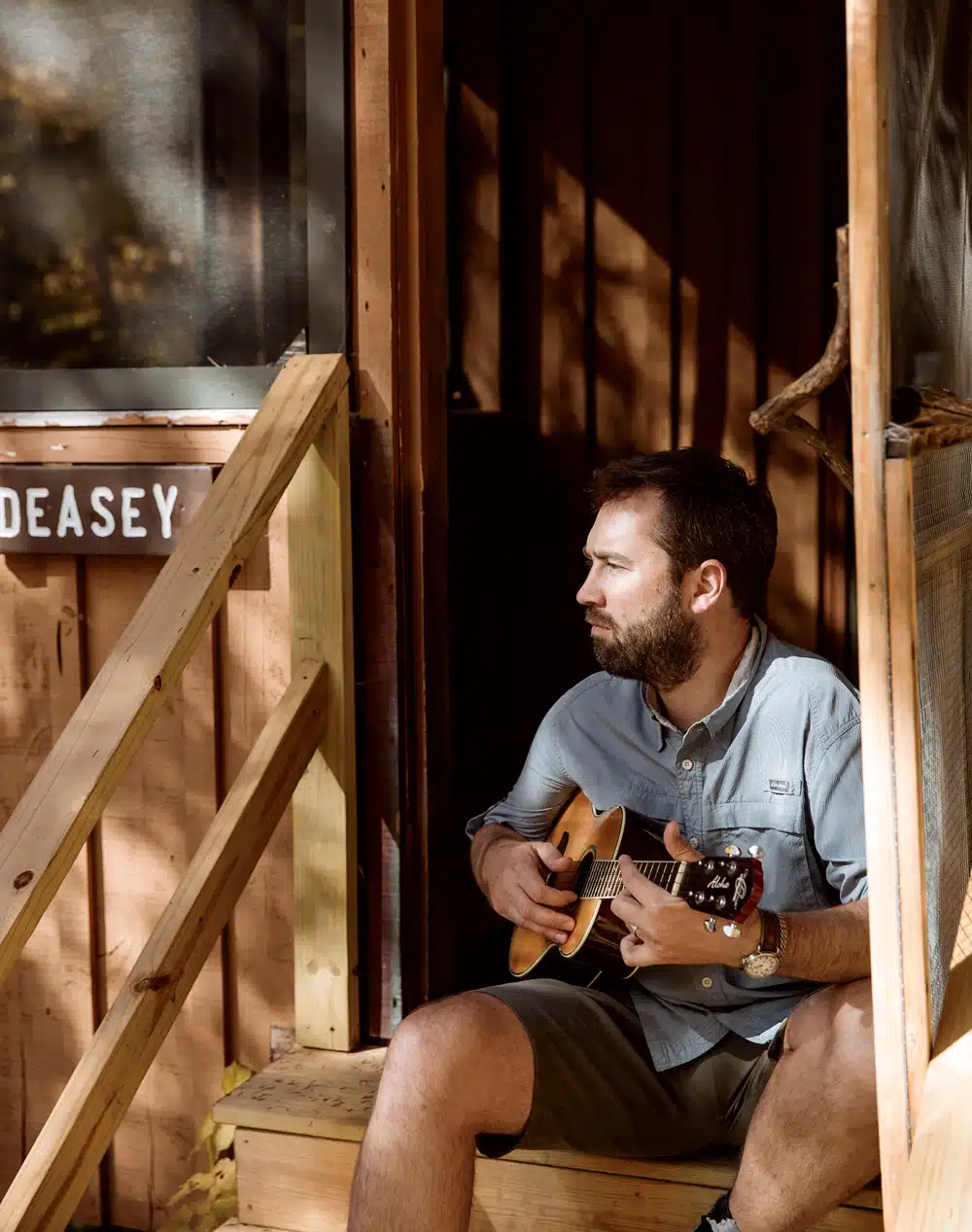
St. Clair at an old hunting camp on the park property.
Credit: Little Outdoor GiantsCredit: Little Outdoor Giants
St. Clair picked up the cause where his mother, Roxanne Quimby, had left off. Beginning around 2000, she began directing part of the fortune she’d made from selling Burt’s Bees, the personal-care products company she’d cofounded nearly 20 years before, toward buying swaths of abandoned timberland from northern Maine’s struggling paper companies. To Quimby, it was a chance to protect what didn’t always get protected—the woods and waters—and perhaps reinvigorate the local economy. But a decade of opposition to both Quimby and her idea for a national park wore her down, and in late 2011 she tapped her son to lead the effort.
Slowly, St. Clair found success where his mother had not. Local businesses and the regional chamber of commerce backed the park idea. Two of the state’s largest newspapers, the Portland Press Herald and the Bangor Daily News, voiced their support. But the clearest sign—to the public, anyway—that St. Clair had triumphed came on the day when he and others gathered in his office as the Quimby land was turned over to the U.S. Department of the Interior. The next morning, as St. Clair works his phone, the announcement by President Barack Obama of the new National Park Service monument will be simply a formality.
Still, the 39-year-old St. Clair, a tall man with a thatch of dark hair and a neatly trimmed beard that allows him to fit in with both woodsmen and Beltway insiders, remains anxious. He arrived at his office shortly after 8 and, as he often does, slipped off his shoes. The office, housed in an old brick building, reflects his personality with decor that favors landscape paintings, maps, old snowshoes, fishing poles, and books on brook trout, filmmaker Wes Anderson, and national park lodges.
For much of the next hour and a half, St. Clair, dressed in black jeans and a light-blue patterned button-down shirt, stays on his feet, circling the conference table to throw glances at the computer screens. Finally, at around 9:30, the White House website flashes a video from President Obama introducing the Katahdin Woods and Waters National Monument. St. Clair shoots his hands up into the air, a measure of both his relief and awe that this moment had actually arrived. The others erupt into cheers. Yemaya gives her husband a teary hug.
Then the room quiets, and St. Clair picks up the phone. There are supporters to call; almost immediately the media requests begin flooding in, too. When one conversation or interview ends, a new phone is handed to St. Clair—Boston outlets, NPR, reporters from everywhere seeking a quote. The reprieve is over, and St. Clair, who is maybe the only person who could have resuscitated his mother’s idea, does what he’s been doing virtually nonstop for the past several years. He gets back to work.
An understated resilience defines Lucas St. Clair’s personality. Its roots can be traced to his early childhood. His parents, George St. Clair and Roxanne Quimby, both native East Coasters, arrived in Maine via San Francisco in 1974—another pair in a wave of young baby boomers seeking a simpler life in the woods of northern New England. They had $3,000 saved up, which they used to buy 30 acres in Guilford, a mill town 50 miles north of Bangor. They cleared the land with a bow saw and built a small saltbox home on a ridge overlooking a creek. It was a handmade life: no running water, no electricity. The property was alive with gardens and honeybees. Kerosene lanterns lit the home, while a dug well supplied the water. What little money Roxanne and George needed they earned through part-time work, she as a waitress and he as a radio deejay.
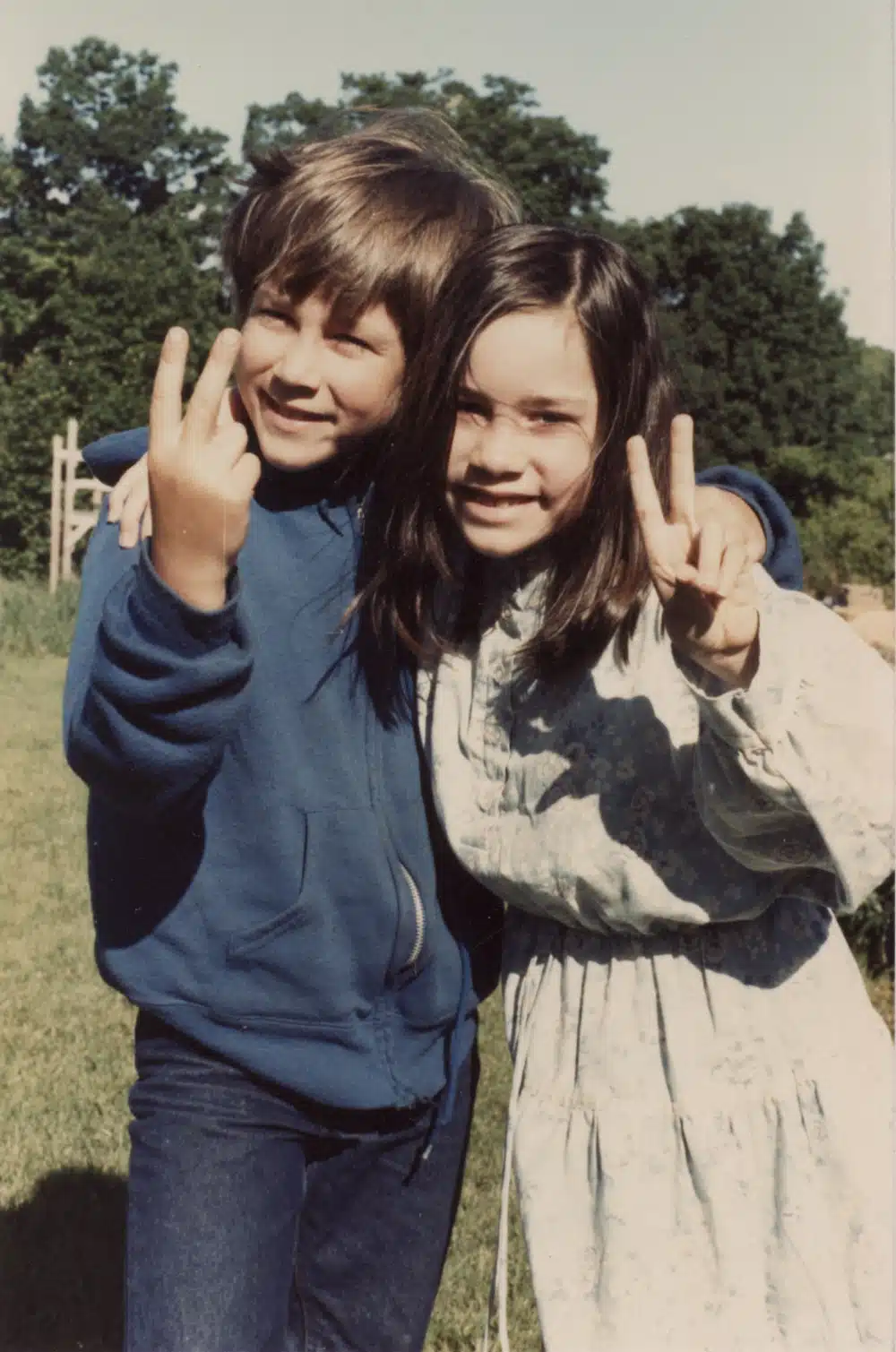
A young Lucas St. Clair with his twin sister, Hannah. Raised in rural Piscataquis County, both children felt at home in Maine’s great outdoors from an early age.
Credit: courtesy of Lucas St. ClairCredit: courtesy of Lucas St. Clair
In June 1978, the couple welcomed their twins, Lucas and Hannah. As the children grew, the woods became their playground. They built forts, dammed the creek, and wandered the forest. Their father led them on treks around the property, pointing out the different plants and animals. Later, there were adventures up Mount Katahdin and fishing on Maine’s rivers.
“There were times when it was uncomfortable,” says Hannah. “We’d come home at night in winter and the house was freezing cold, but I think living that way helped us both become adaptable to different environments. There were no creature comforts. And the ability to have unstructured play and the freedom to explore made us both curious and interested in adventure and travel.”
It was a secluded life, but not a solitary one. And, as he would continue to do throughout his life, young Lucas enjoyed being around people.
“We’d go to these gatherings at the grange, where all these people were,” George says. “As soon as the car was parked, he’d open the door and zoom right into the room. He wanted to be where the action was.”
In 1983, George and Roxanne divorced. She found some land and eventually built a home in nearby Parkman; he got an apartment just minutes away. This new life brought them out of the deep woods but didn’t disconnect their children from the outdoors. Lucas and Hannah cross-country skied in the field near their mother’s house and rode their bikes deep into the summer night. On fishing trips with his father, Lucas learned how to read the waters and look for the cold, dark pools where the trout lurked. George, whom friends teased for cutting off his fly hooks so he wouldn’t hurt the fish, instilled in his son not just a love of nature but also a respect for it, a kind of tender appreciation of its beauty.
At age 10, the twins followed their father up Katahdin for the first time. “We got to the table lands and it was just socked in with fog. There were people coming down saying they didn’t see a thing from the top,” St. Clair says. “But we were like, We’ve made it this far, let’s go. And when we got to the peak, the wind was blowing and the mist and fog parted. These huge views of the valley came into focus, and I was blown away that we had climbed so high. Then I saw the sign with the mile markers to different places along the [Appalachian Trail]. I was just floored that anyone could walk that far. From that moment, I knew I wanted to do the AT.” And nearly a decade later, as his high school classmates prepared for college, he would do exactly that.
School wasn’t always easy for the young St. Clair. Struggling to find his footing in the classroom, he gravitated toward hands-on activities such as painting and blacksmithing. During his sophomore year in high school, he grew seven inches and gained 60 pounds. “It was awful,” he recalls. “It was the worst year. I felt like my body abandoned me. Sorry, buddy, I’m doing my own thing this year.” The wilderness became his outlet, a place that gave him confidence.
“My junior year at Gould [Academy, in Bethel, Maine], we went on an eight-day winter camping trip,” he says. “There were students who were really anxious about it. It wasn’t anything they’d done before. And for the first time I was like, I know this stuff—I can teach others about it. It dawned on me that I did have a skill set. That who I was was not defined by the classroom.”
After high school and his AT hike, St. Clair traveled to Patagonia and then backpacked around Europe. He remained in London that fall to attend culinary school and eventually trained to be a pastry chef. Back in the U.S., he worked in restaurants in New York City before, at age 21, returning to Maine and opening a restaurant in Winter Harbor with a girlfriend. The business was a modest success, but the experience of running it wasn’t.
“Were I to do it all over again, I would have gone to refrigerator repair school, because what I mainly found myself doing was wrenching on compressors and trying to get plumbing working,” St. Clair says. “It was all about fixing stuff.”
In 2005, with the restaurant and the girlfriend behind him, St. Clair rode his motorcycle across the country. He wound up settling in Seattle, where he reconnected with Yemaya, whom he’d met during his postgrad year in South America. In this new life, St. Clair worked as a fishing guide, served as a sommelier for a group of restaurants, and sometimes modeled for the clothing company Eddie Bauer. By early 2011 he was married and a new father, enjoying a comfortable city existence. Yet the dream of returning to Maine was never far. Neither was a familiar restlessness that he had felt at different periods in his life.
And then he got a call from his mother.
When Roxanne Quimby moved to Maine, the state’s northern region was in transition. In 1976 the final log drive tumbled down the Kennebec River; a decade later, Great Northern Paper had its first large-scale layoffs. A way of life—one that had earned Millinocket the nickname “Magic City” for the speed at which it had been built a century before—unraveled. By 2014 the population of Millinocket had plunged by nearly 42 percent and a fifth of all working-age residents were jobless. Houses here could be had for less than $30,000.
As the forest products industry stumbled, though, Quimby wound up on a path to prosperity. In 1984 she met Burt Shavitz, who was selling his own honey from a truck on the side of the road. She offered to help and eventually began making boot and furniture polish from the excess beeswax, processing the stuff, with the twins’ help, on a wood cookstove. Later she hit upon a recipe for lip balm, and after that had started to sell, she converted a defunct schoolhouse in Guilford into a manufacturing center for the small company. By the late 1990s, Burt’s Bees had a new home base in North Carolina and a sales volume that made Quimby worth hundreds of millions of dollars.
Her foray into land preservation came as a result of her son’s Appalachian Trail hike. Upon his return, St. Clair had remarked to her that the final stretch of the trail in northern Maine, the Hundred-Mile Wilderness, hadn’t felt like much of a wilderness at all—what with the sound of cars buzzing along nearby roads and the clanging of neighboring logging operations. Motivated to help create more of a buffer along the trail, Quimby bought 40,000 acres near Monson. By 2007 she had spent $39 million to purchase a total of 80,000 acres of wilderness and was hosting public meetings on the idea of creating a national park.
“I feel like my reason for being put on this earth will have been fulfilled, because this will live on after me,” Quimby told this magazine in 2008. “A park is a demonstration that there is something in America that I can love. It’s very democratic: A Mexican immigrant or a millionaire, for 10 bucks they both get the same experience.”
But some of the qualities that had made Quimby such a successful businesswoman would hurt her push to sell the park idea. She was headstrong and uncompromising, according to critics, and she had little appetite for the politicking that a project like this required.
“She didn’t couch a lot of things in the way people wanted to hear,” says Nick Sambides, a longtime Bangor Daily News reporter. “She had no real structure set up…. She organized it like she was organizing a flower festival. She had a very grass-roots, low-key, hey-wouldn’t-this-be-wonderful approach. She thought everybody would line up behind it and that it wasn’t a terribly political thing—when it’s nothing but politics.”
Quimby also represented a stark departure from the past in a region where what has come before is revered in almost a religious sense. She was a woman, and more significantly a rich woman who packed a strength of will that had been imparted by her own mother, who’d escaped Lenin’s Russia as a young girl. To Quimby, embracing the woods, her woods, meant reimagining what might come next, even if that would upend generational traditions. On her newly acquired land she banned snowmobiling and hunting. She evicted people from camps they built on property they’d leased from the mills, then she had the cabins burned to return the land to wilderness.
The battle over Quimby’s park, then, was about more than just the land. It was a battle over the future—who should decide it, and perhaps even what those deciders should look like.
It takes an act of Congress to create a national park. By the late 2000s, after years of meetings and publicity, Quimby hadn’t gained the backing of Maine’s congressional delegation. “Ban Roxanne” signs were in storefronts and on truck bumpers and front lawns throughout the Millinocket region. Then, in a fateful 2011 Forbes interview, Quimby offered her unfiltered thoughts on her adopted state.
“We have the most aged population in the country,” she said. “I believe we have one of the highest adult obesity rates in New England. We have … oxycontin abuse … [and] Maine is the largest net receiver of federal funds, even though we supposedly hate the feds … it’s a welfare state.”
Cue the backlash. “Roxanne Quimby Calls Maine a Welfare State” declared the front page of the Bangor Daily News. To many unemployed Mainers, her words overshadowed the millions of dollars that her Quimby Family Foundation had donated to nonprofits across the state. And it became apparent that if Quimby’s national park was going to happen, she could no longer be the person to lead the fight.
At the time, St. Clair was still living out west. “ I just thought [the Forbes article] was another story, but it didn’t go away, and people kept talking about it,” he says. “Look, I’m used to my mom saying exactly what she thinks. And often she’s right. She’s incredibly intuitive and super-bright, so I was like, Those are the problems with where I grew up. Wouldn’t it be great to have a national park and bring new jobs and opportunities? But that’s not at all how it played out in the press.
“I hear a lot of people talk about her legacy and the fact that she wants this as part of her legacy,” he continues. “She lives this lifestyle that’s so close to the land and is really introverted. She doesn’t think about her legacy. She thinks about the trees and the rivers and the moose. Those are things that really move her. If she could have done this anonymously, she would have.”
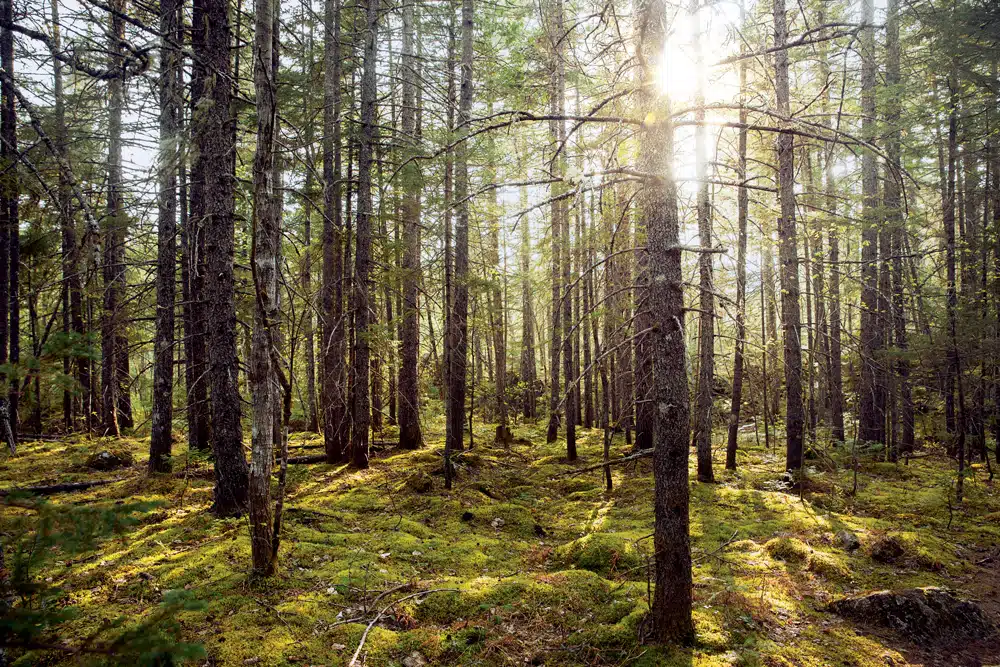
Though its vistas may be less dramatic than those of national parks out west, Katahdin Woods and Waters is impressive for being an uninterrupted stretch of wilderness in the heavily land-fractured eastern U.S.
Credit: Little Outdoor Giants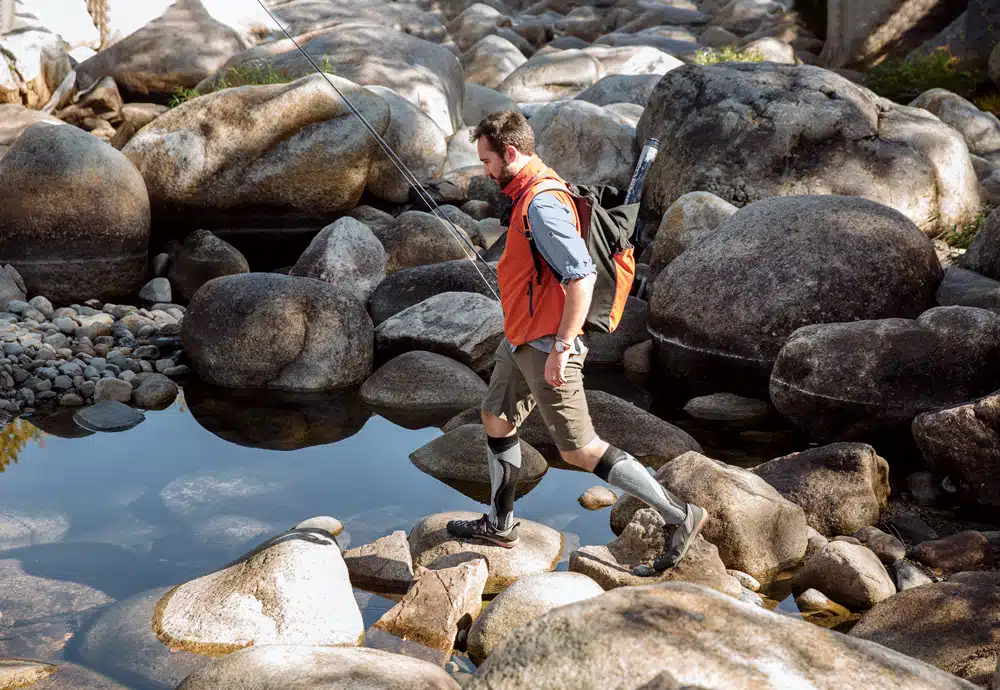


I am very impressed with his mothers’ legacy he so valiantly made a reality, with all that work. I grew up in northern NH near that territory and one of my uncles on my mothers’ side worked at Brown Company, which ended up under several different ownerships at various times. I attended Brown (grammar) School. He was quite “the outdoorsman” and he took me with him to stay at a camp he owned with his family in northern NH that had no electricity. They used to hunt for deer and rabbit. He won a state lottery to go Moose hunting and he actually shot and killed a 650 pound female. He said it was so much work cleaning it he would never do it again. They had 4 “hunting beagles” that were kept at his fathers’ home. Their camp had a gas powered refrigerator and it was really fun going there with him. A lot of the time I was the only person he invited to go with him there. He was a fabulous cook, too! I remember he made me fudge the day of my fathers’ fathers’ funeral (in our religion “children” (under the age of 12) are not allowed to go onto cemeteries, until they become an adult). I will never forgot him doing that for me! He was an avid fisherman and Brown Company allowed their employees to use a fishing camp. I remember it was Parmachini, I’m not sure of the spelling, it’s probably an Indian name. I have also used Burt’s Bees products since they began selling lip gloss. It was very interesting to learn “its origin” (a resourceful Yankee, his mother!!!!!!).