



Plimoth Plantation | Living-History Museum
Yankee Classic: 1983 interview with a Plimoth interpreter As a historian, I prefer my history dead. Living-history museums make me nervous, and I tend to overthink the situation. I understand that the interpreters are in period character, but who am I in this charade, exactly? A time traveler? A ghost? A stranger from a distant […]
By Justin Shatwell|Oct 24 2008|

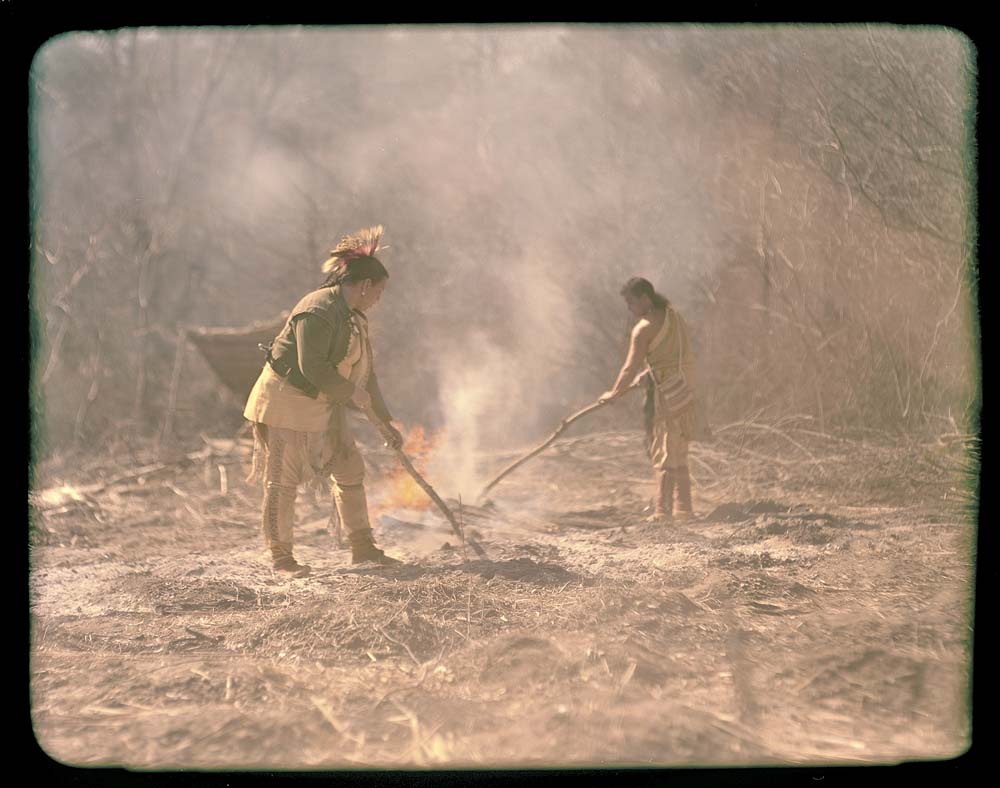
Two Wampanoag interpreters use traditional techniques to prepare a field for planting.
Credit: Kozowyk, ChristianYankee Classic: 1983 interview with a Plimoth interpreter
As a historian, I prefer my history dead. Living-history museums make me nervous, and I tend to overthink the situation. I understand that the interpreters are in period character, but who am I in this charade, exactly? A time traveler? A ghost? A stranger from a distant land? Books never cause this kind of anxiety.
Still, I have a soft spot for Plimoth Plantation. Because of Thanksgiving, the Pilgrims are perhaps the most Disney-fied of our forefathers.
On my first visit, I imagined I’d find a multimillion-dollar adaptation of an elementary-school play — all starched black suits and shiny patent-leather shoes. Instead I was confronted with a place of unsettling authenticity.
The settlement’s dreary cottages sprawl down the side of a hill, tufts of green fungus growing from their thatched roofs. When it rains, the interpreters plod through the mud, going about their 17th-century day. When you talk to them, they don’t pull their punches. In their choppy accents, these Puritan Separatists talk candidly about everything from watching loved ones starve to their feelings about “the savages.” The Wampanoags (who, thankfully, are not in character) balance their accounts of 1627 with the sobering stories of what happened to their people in the centuries after.
By leaving the dirt on its history (and its historians), Plimoth makes an ideological stand. This museum could just as easily attract visitors by parading out the popular myths and construction-paper turkeys. But Plimoth Plantation is about more than that. It’s about personally reminding us of all we’ve inherited as Americans, both good and bad. Whether you talk to an English colonist, who has mastered the art of being someone else, or a Wampoanog, who is unapologetically himself, these people talk about the story in terms of “we,” not “they.” For whatever reason, that’s enough to make me understand who I am in all of this.
During November, Plimoth Plantation offers a variety of Thanksgiving and harvest dinners, each providing a historical experience in keeping with the time of the Pilgrims (reservations required for some options).
800-262-9356; 508-746-1622
plimoth.org



On an elementary school trip to Fort # 4 in Charleston, one particular actor played his _doctor_ role to the hilt, showing all the tools of his trade and QUITE graphically describing what he did with them. While he related one particularly grisly commentary on the short sharp bone cutter and amputations, two children rushed from the room and vomited in the courtyard. Ahhh, elementary school trip fun! 🙂 A New England memory!