Angels Among Us 2010
Yankee Magazine proudly recognizes the “Angels Among Us” of” 2010. Congratulations to these dedicated New Englanders who are making a difference everyday!
By Ian Aldrich|Oct 07 2010|

Do you know a New Englander making a positive impact in their community? Nominate an Angel today!
Credit: ShutterstockEach year, we spotlight ordinary people with extraordinary hearts in our ongoing Angels Among Us series.
Credit: Aldrich, Ian
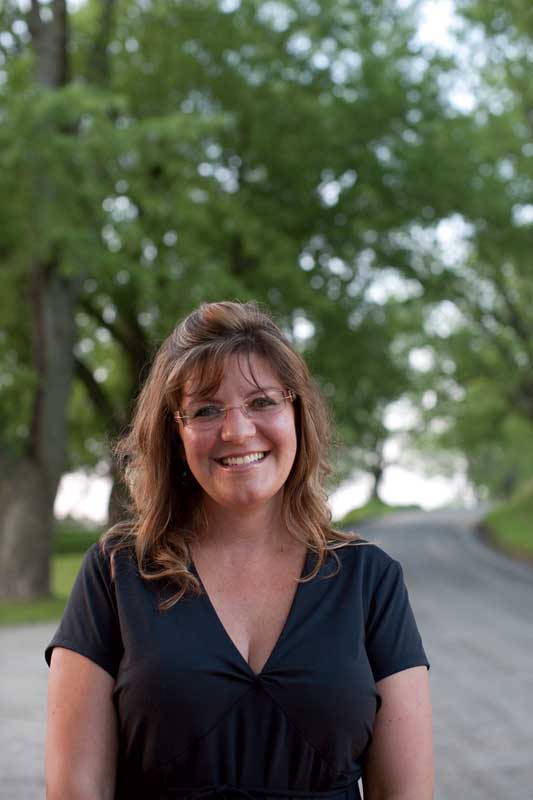
Jodi Wheeler | H.O.P.E. (Helping Other People Everyday)
Jodi Wheeler is a lot of things to a lot of different people. To new mothers struggling to make ends meet, she secures them clothes and toys for their infants. To a family facing winter, she finds good cold-weather jackets. To kids getting out of school for the weekend who may not have enough to eat at home, she provides backpacks stuffed with food to keep them nourished.
But in her hometown of Lyndonville, Vermont, Wheeler just likes to think of herself as a catalyst, someone who’s helping others find a channel for their desire to combat the poverty that laces through the northern part of the state. “There are so many people who want to help and do good stuff but don’t know how to do it,” she says. “They just want to do something.”
Wheeler can relate. Her husband, Rick, owns a local sporting-goods store, and in 2004 she noticed that he was giving away equipment to students so they’d be able to play school sports: a quarterback who didn’t have cleats … a baseball player who needed a new glove. Wheeler sent word to parents in the area that if they had unused sports equipment they wanted to donate, she’d clean it, sort it, and give the stuff out discreetly.
Wheeler found herself taking in requests for things other than sports equipment. Parents came calling for clothes; some needed food. Others needed different kinds of items–pots and pans, for example–just to make a fresh start in life. Wheeler tried to help them all, formalizing her work around an entity she called H.O.P.E. (Helping Other People Everyday). Within 18 months she’d run out of room in the basement of her husband’s store. She found a new place, but then moved again when that became too small.
H.O.P.E. now makes its home in a renovated storefront in downtown Lyndonville. Like its founder, it serves a lot of different kinds of needs. It’s a thrift store; it’s a food pantry; it’s an appliance shop. The downstairs level caters to new moms, while a small closet houses prom dresses and tuxedos for high-school students. Wheeler’s office is really a holding pen for things like Christmas packages or Easter baskets that she plans to send out. There’s talk of creating a backyard garden that will supply the food pantry with a steady stream of fresh vegetables throughout the summer. “My board allows me only one idea a month,” Wheeler says with a laugh.
Equally important, though, is that this isn’t just a Jodi Wheeler-led operation. More than 50 people contribute in some way, from the local man who fixes the appliances to the retired woman who cleans and restores the donated dolls. H.O.P.E. is just what Wheeler imagined it would be: people helping people in any way they can. “It’s about the community,” she explains. “It’s about taking a little step forward and saying you’re going to do this, and then everybody helps you. Tiny things can make such a huge difference.”
For more information: hopevermont.com
Credit: Aldrich, Ian
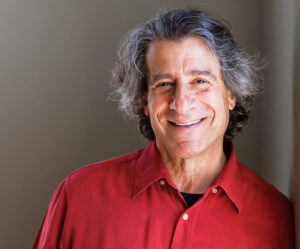
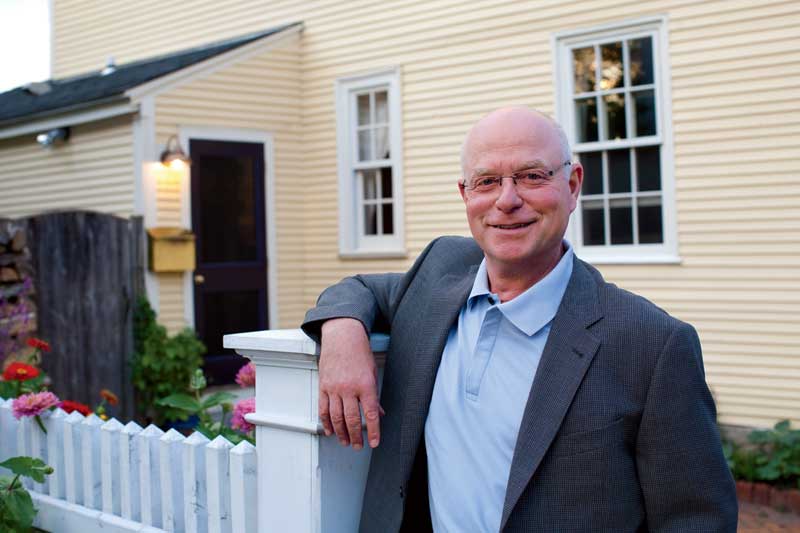
David Krempels | Krempels Brain Injury Center
This is a story that could have turned out much differently; nobody needs to remind David Krempels of that. It’s also a story about perseverance, about one man giving back to those who’ve suffered through a similar kind of trauma.
In June 1992, Krempels, a 42-year-old building contractor living in Newmarket, New Hampshire, was on his honeymoon in Maine. He and his new wife, Ettamae, were headed north to Portland one sunny afternoon when, just south of the city, a tractor trailer plowed into the back of their car. Ettamae was killed immediately; Krempels, meanwhile, clung to his own life, the victim of a serious brain injury.
He stayed in a coma for several weeks, remained in acute care for nearly three months, and then began the long process of grieving and reclaiming his health. He made incredible gains, “but slowly I realized I was never going to be the same person,” he says.
Soon, this son of a minister reached another conclusion: He wanted to help others like him. In 1995, after a jury awarded him a large settlement, Krempels tapped into this new money to offer grants to those reeling from the financial aftershocks of brain injury. But as he delved more deeply into the work and his own recovery, Krempels realized that it wasn’t just money that others like him wanted. “I’d go to these support groups,” he explains, “and people would be saying, I really wish we could do this more than once a month.“
A different kind of philanthropy called to him. Today, the Krempels Center in Portsmouth, New Hampshire, is a premier post-rehab facility for those who’ve suffered through brain trauma. Stroke victims, car accident survivors, people who’ve battled back from brain tumors–three days a week, eight hours a day, residents from around the Seacoast stream into its headquarters. In a world that doesn’t often view these survivors fairly, the Krempels Center gives them a chance to socialize, interact, and regain a sense of normalcy. There’s community and camaraderie, family support groups, and member workshops that tackle subjects ranging from sex and relationships to computer skills and bill paying to fitness and word retrieval.
“There are many types of therapy,” says Lee Harvey, an architect who was forced to retire following a massive stroke. “Learning to walk, that’s obvious. But less obvious is a therapist reading a book with you. You wouldn’t think it’s therapeutic, but it is.”
“What these people need most is friendship,” Krempels says. He’s sitting in the cafeteria; it’s lunchtime, and around him there’s the buzz of chatter and laughter. “Look at them. They’re smiling. They’re talking. They’ve got a life and they deserve it. How great is that?”
For more on the Krempels Center, visit: krempelscenter.org
Credit: Aldrich, Ian
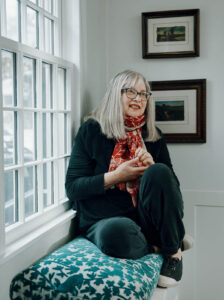
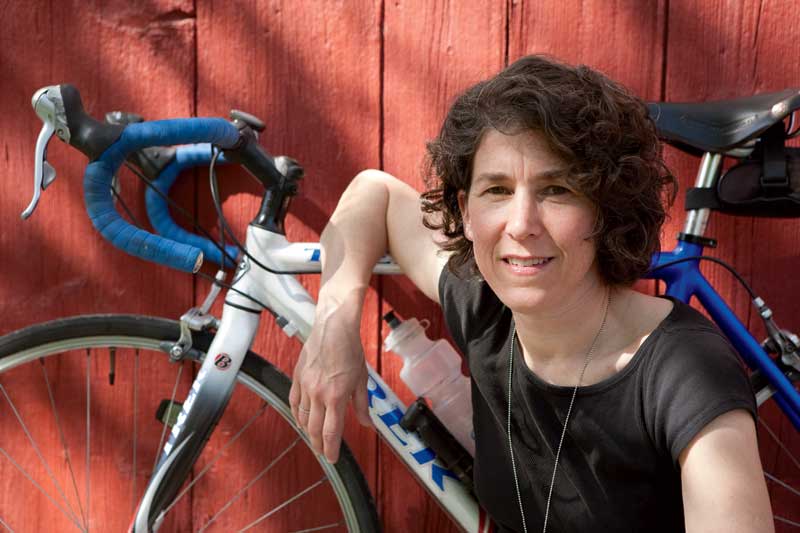
Suzy Becker | Kids Make It Better
Think back for a moment to 1989 and the world that was unfolding around AIDS and HIV. Medical research on the disease was still in its infancy, and the stigma directed toward those carrying the virus was often severe. That same year, Suzy Becker, an artist and, at the time, owner of a small, successful greeting-card company in Lexington, Massachusetts, decided to see whether she could change things. Her idea: rally a group of dedicated cyclists for a ride to raise money for treatment and awareness. The result: 13 riders and $30,000.
Today, Ride For AIDS Resources (Ride FAR) is the oldest continually run AIDS/HIV bike-a-thon in the country. Held in September every other year, the fundraiser has generated more than a million dollars for things like a quiltmaking project, involving middle-school children in Rhode Island, that honors those who’ve lost their life to AIDS, and larger international endeavors, as well, such as expansion of treatment availability for children in South Africa and Zimbabwe. Last year the ride raised $157,500–its most ever.
Its success has caught even Becker by surprise. But so has the fact that she’s had to keep doing it.
“I thought the bike-a-thon would go on, but I thought they’d find a cure and then we’d have a good ride for another cause,” says Becker, who lives in Bolton, Massachusetts, with her wife, Lorene Jean, and their young daughter, Aurora.
During the ride’s two-decade run, Becker has filled out a resume that could cover the work life of several people: She co-founded a Massachusetts charter school; she served as a White House fellow under President Clinton; she’s a New York Times best-selling author, and in conjunction with her newest book, Kids Make It Better, has worked with children on coming up with solutions for the oil spill in the Gulf of Mexico. And on it goes. Threaded through all of it, however, has been Ride FAR, which Becker not only organizes–the planning begins a full year in advance–but bikes as well.
It hasn’t been an easy journey. She’s kept it going through career changes, marriage, becoming a parent, even illness. In 1999, a determined Becker embarked on the ride just two months after undergoing brain surgery.
Then there’s the five-day ride itself. Last year’s route began in Provincetown, wended its way through Sandwich, dipped into Little Compton, Rhode Island, then wound back to the Bay State and the towns of Franklin and Rutland, before finally finishing up in Stow, some 500 miles later. Grueling? Yes. Addicting? Even more so.
To be clear, the participants aren’t a team of Lance Armstrongs. They’re lawyers, landscape architects, doctors. And of the 25 riders who do it each time, a number have been with Becker since the beginning.
“We don’t have a lot of turnover,” she says. “Once people start doing it, they want to keep doing it.” Becker can relate.
For more on the bike-a-thon, visit: ridefar.org. For more about Kids Make It Better, visit: suzybecker.com
Credit: Aldrich, Ian
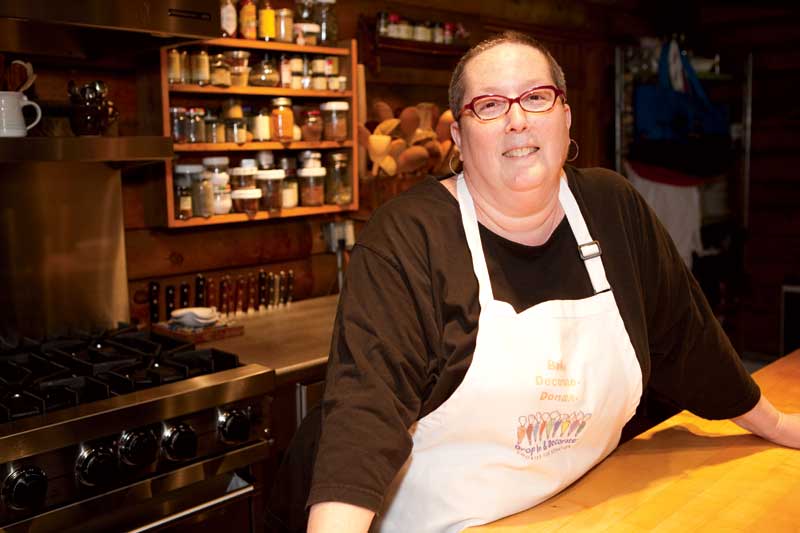
Lydia Walshin | Drop In & Decorate
In early December 2003, Deborah DeBare, executive director of the Rhode Island Coalition Against Domestic Violence (RICADV) in Warwick, received a call from a woman who wanted to make a donation. For DeBare, whose agency oversees shelters around the state, it wasn’t an unusual inquiry. What was different this time, however, was the nature of the gift. The caller, Lydia Walshin, from Glocester, wasn’t looking to give money or drop off clothing. She was offering holiday cookies, which she and her friends wanted to make exclusively for the families RICADV serves.
DeBare was grateful but thought the gift missed the mark. “I was thinking that there were so many greater needs to fulfill,” she says. “But I was struck by her passion and vision. She just had this exuberance.”
A few days later, DeBare saw why, when Walshin strolled into the agency’s office with a large plastic container stuffed with cookies, as bright and beautiful as a box of Christmas toys. They came in different shapes–animals, snowmen, ice-cream cones–all individually wrapped in plastic and colored ribbons with a simple message stuck on the back: “Made just for you, with natural ingredients and love.” In a place where people’s days are shaped by securing life’s necessities, this little touch of luxury struck a chord with kids, mothers, even the staff.
“The people we work with are in crisis,” says DeBare. “They’re dealing with issues of safety. They need a bed, they need a roof, they’re having to make hard decisions. So to then all of a sudden have someone say to you, No matter what, somebody cares about you, that’s a transformative thing.”
Call it “the power of food,” says Walshin, who teaches cooking and writes about recipes and kitchen gadgets on her three blogs: theperfectpantry.com, soupchick.com, and ninecooks.com. “When you get a group of people in the kitchen to cook, there’s a bonding that goes on,” she adds. “A family is formed, and there’s a lot of good and creative energy that comes out of that.”
Which is why, about a year before she called DeBare, Walshin was wondering whether she could expand that energy beyond the kitchen to help people connect with others in their communities. So, after a holiday cookie-baking party with friends, she decided to donate what they’d made to a social-service agency in Boston. Staff and families loved the gift, which spurred Walshin and her group to give again, then several more times.
These days, Walshin is connecting in ways she never imagined. She’s established a nonprofit, aptly called “Drop In & Decorate,” around the whole endeavor. She hosts cookie-decorating get-togethers during the holidays as well as in early May, just before Mother’s Day. More impressively, she’s inspired others to follow her lead. To date, Drop In & Decorate events have taken place in 33 states as well as in Canada, Germany, India, Japan, and the Dominican Republic–and more than 20,000 cookies have found their way to 116 different social-service agencies.
It’s not just for foodies or seasoned bakers–that’s not the point. You just have to want a make a difference in your community, Walshin says: “It’s a very simple idea: bake, decorate, donate. These are more than cookies. They’re an individual gift. They’re a piece of someone’s heart and soul. They reflect someone’s very best intentions.”
For more on Lydia Walshin’s organization, visit: dropinanddecorate.org