



30 Days of Wonder | Autumn Along the Connecticut River
From source to sea, autumn along the Connecticut River is a four-part, month-long ride through the very heart of New England.
By Eileen Terrill|Aug 25 2016|

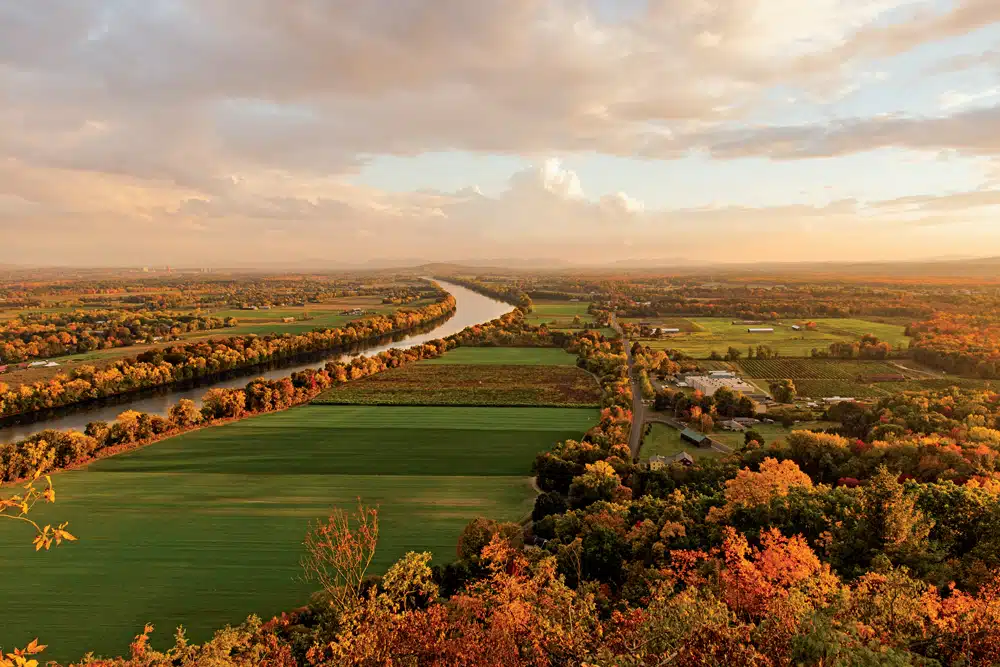
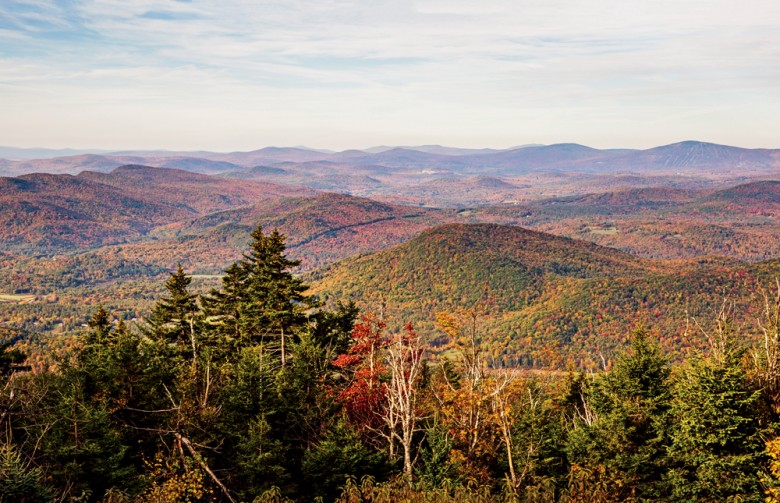
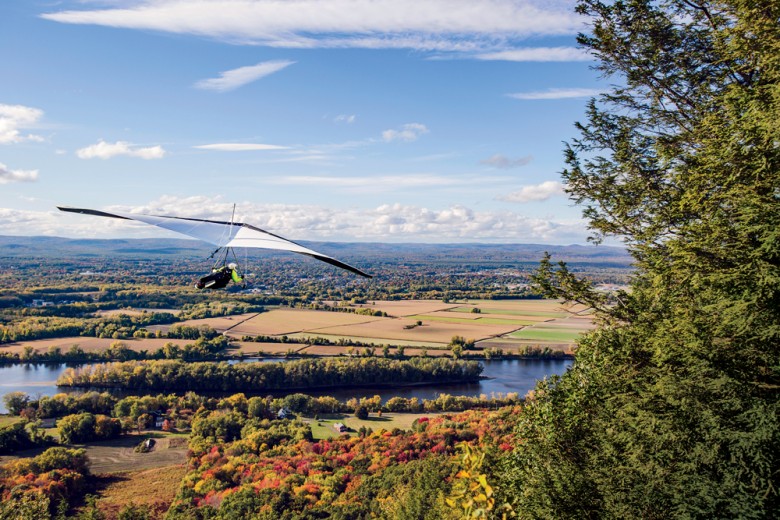
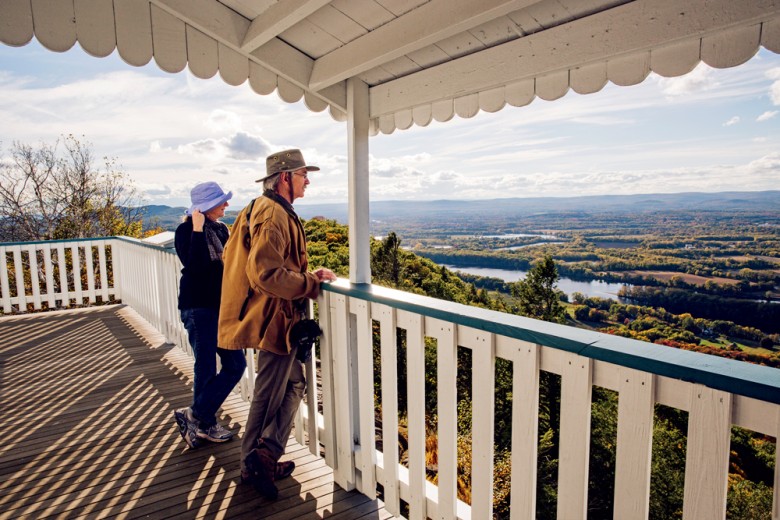
From Mount Sugarloaf in South Deerfield, Massachusetts, looking south over the Pioneer Valley’s rich farmland. In the far background are the Holyoke and Mount Tom ranges.
Credit: Carl Tremblay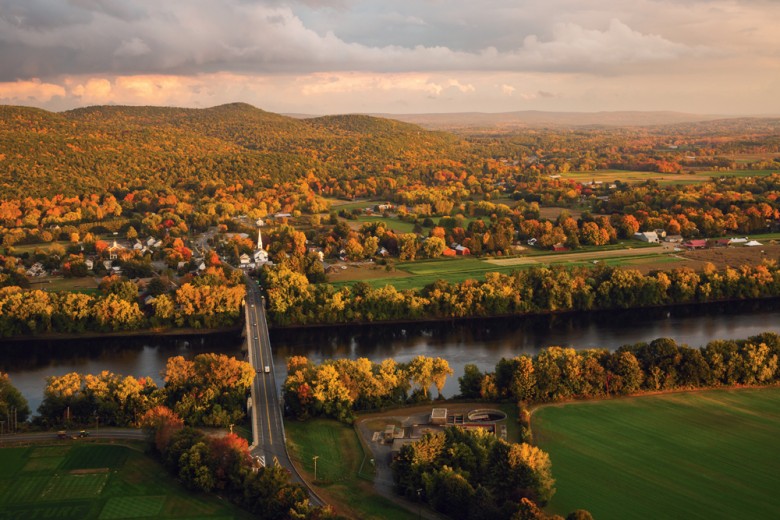
Seen from Mount Sugarloaf across the Connecticut River, the town of Sunderland, Massachusetts, is nestled amid a carpet of fall color.
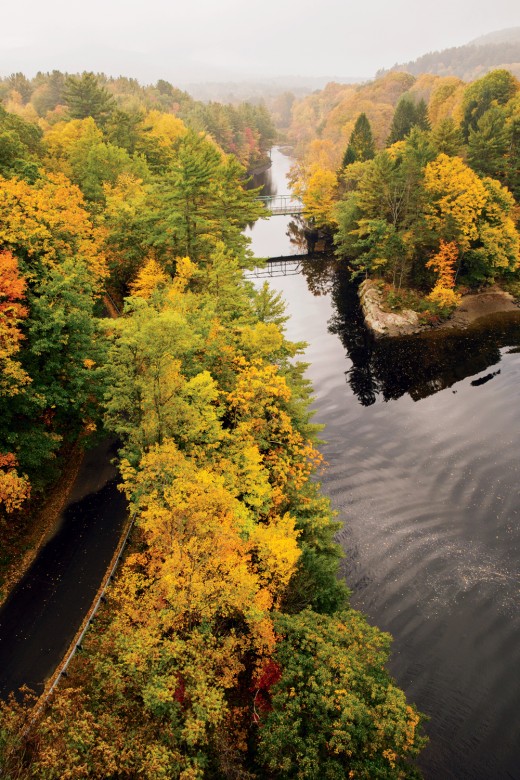
Credit: Carl TremblayCredit: Carl Tremblay “Long Tidal River” the region’s NativeAmericans called it when they first explored the“Connecticut” (a Colonial variation on an Algonquian name) thousands of years ago. And indeed it is long, trickling from humble origins 300 yards below the Canadian border, then plunging 410 miles through four states before emptying into Long Island Sound. From mid-September through mid-October, this verdant landscape, the very core of New England, wears the vibrant colors of autumn, as a spectacular panorama of foliage lights up the valley.The itineraries that follow—just a small sampling of the valley’s many opportunities for exploration—will give you a feel for the river along the way, each week a mini-season all its own. From the Great North Woods to the Tidelands, we feature four distinct stretches—one each within the valley’s four major regions. Each trek can be a destination in itself, or you can spin them all into one of the most memorable autumn outings anywhere, as you watch the color riding the river on its sinuous north–south plunge.
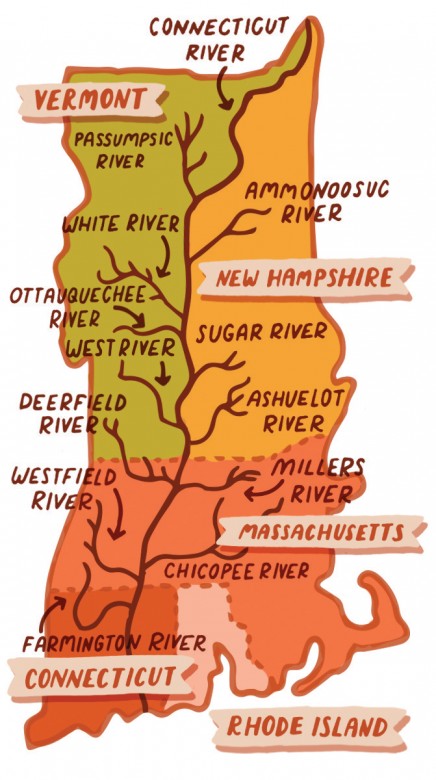
A few of the major tributaries feeding the Connecticut. This American Heritage River drains 11,000 square miles of New England’s core.
Credit: Map Illustration by Jessica McGuirlCredit: Map Illustration by Jessica McGuirl
NORTHERN EXPOSURE | THE GREAT NORTH WOODS
Third and Fourth Weeks of September
Our Connecticut River Valley adventure begins close to the Canadian border, in the farthest reaches of New Hampshire’s Great North Woods, then heads south through the remote Connecticut Lakes region and our base in the town of Pittsburg. We’re in the heart of “Moose Alley,” a stretch of U.S. Route 3 that will take us through some of the most beautiful territory in all of New England, where pristine lakes and tumbling waters feed the Connecticut River, cradled amid imposing mountains.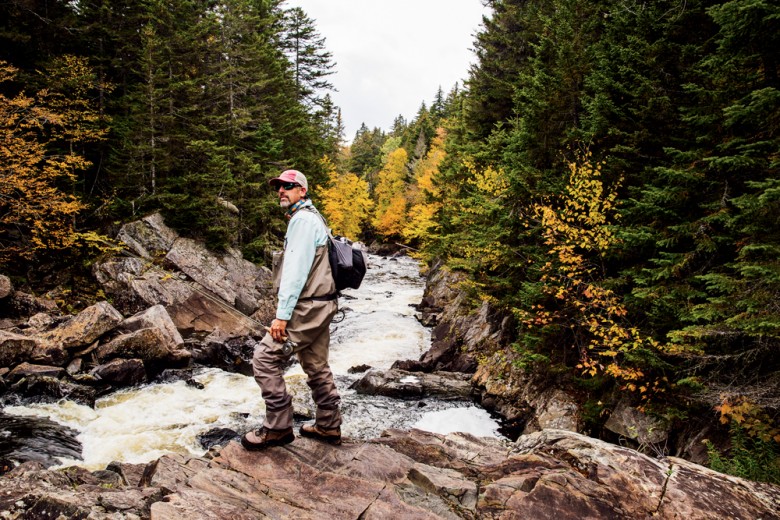
Bill Bernhardt is the head guide for The Cabins at Lopstick in Pittsburg, New Hampshire, and designs many of the flies sold in Lopstick’s shop.
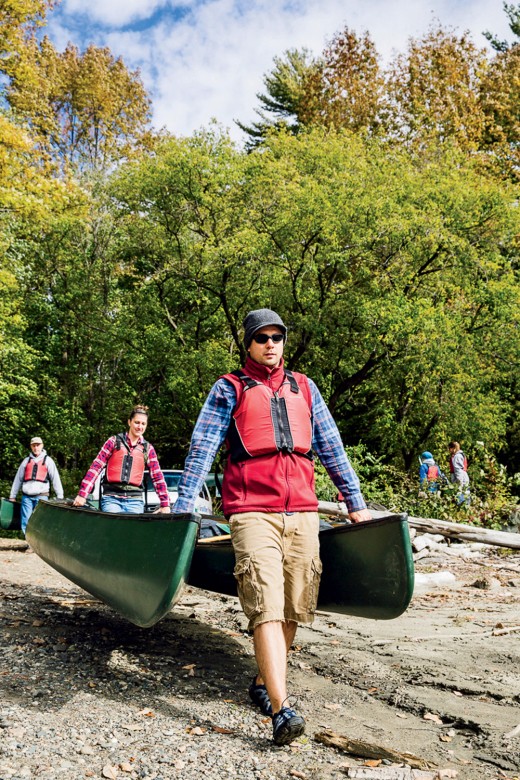
Credit: Carl TremblayCredit: Carl Tremblay Three peaceful tributary streams—Perry, Indian, and Halls—burble along to the west. In 1832, however, armed rebellion was in the air here, when this little corner of New England produced the secessionists of the Indian Stream Republic (p. 94). Today it’s home to rustic camps, woodsy resorts, and all the outdoor recreation any hiker, paddler, or fisherman could wish for. We’ll visit a handful of these storied wilderness lodgings, but first let’s take in a few unique North Country sites. From Pittsburg, take Route 145 South through Clarksville into Stewartstown Hollow to stop at Poore Farm Historic Homestead & Museum (get there before the September 30 close), a unique early-19th-century settlement and a venture into bygone days. A bit farther south on 145, pull over at Beaver Brook Falls, one of those surprising, beautiful sights that seem to just appear along the roads here. A few minutes more and the “big city” of Colebrook (pop. 2,300) emerges, with a café, a tavern, a nifty arts-and-crafts shop—and Le Rendez Vous, a bakery so beloved by townspeople that their victorious fight in 2009 to keep it open when the State Department didn’t renew its French owners’ visas brought the New York Times to town. Now let’s travel U.S. Route 3 and find a couple of those classic lodgings that pulse with the flavor of the North Country. Tall Timber Lodge, on Back Lake, started life as a sporting camp in 1946. The Caron family took it over in 1982, and their descendants run the operation today. Cindy Howe (née Caron) creates the hearty breakfasts, while her brother, David Caron, is maestro of the Rainbow Grille (try the Woodsman Steak, Filet & Crab, or One Fat Fish for world-class wilderness dining). Tall Timber offers 26 cabins and eight individual rooms in the lodge itself. You’re here for the outdoors, and Tall Timber provides its guests with canoes, paddleboats, and kayaks; you can rent a fiberglass fishing boat (or a family-size pontoon boat), or meet up with a professional fly-fishing or birding guide. Nearby are The Cabins at Lopstick. Begun as the Currier Camps in the 1920s, Lopstick is a complex of more than 50 fully equipped cabins spread out around First Connecticut and Back lakes, along the Connecticut River, and on nearby Perry Stream. Lopstick is an official Orvis-endorsed fly-fishing outfitter; its guides can teach you technique and steer you to the best spots.
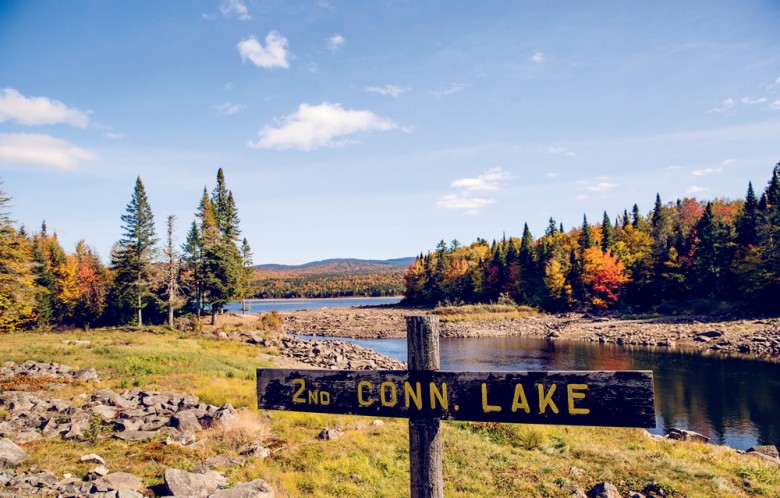
New Hampshire’s Second Connecticut Lake spans more than 1,200 acres, with depths of over 60 feet, home to land-locked salmon and lake trout.
Credit: Carl Tremblay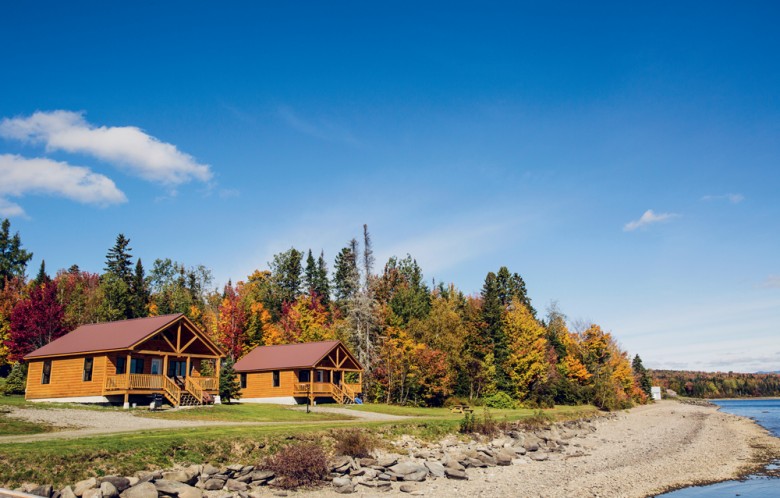





I thoroughly enjoyed reading this article in your magazine. I enjoy history and the lovely New England area. My son works for the CRWC so he sends me information regarding the area that he knows I’ll enjoy. Thanks for the trip down the river.