



Poutine | A Canadian Classic Jumps the Border
Poutine has been one of Canada’s favorite comfort foods for more than half a century, yet it’s only recently found its way onto American menus.
By Chris Burnett|Aug 18 2016|

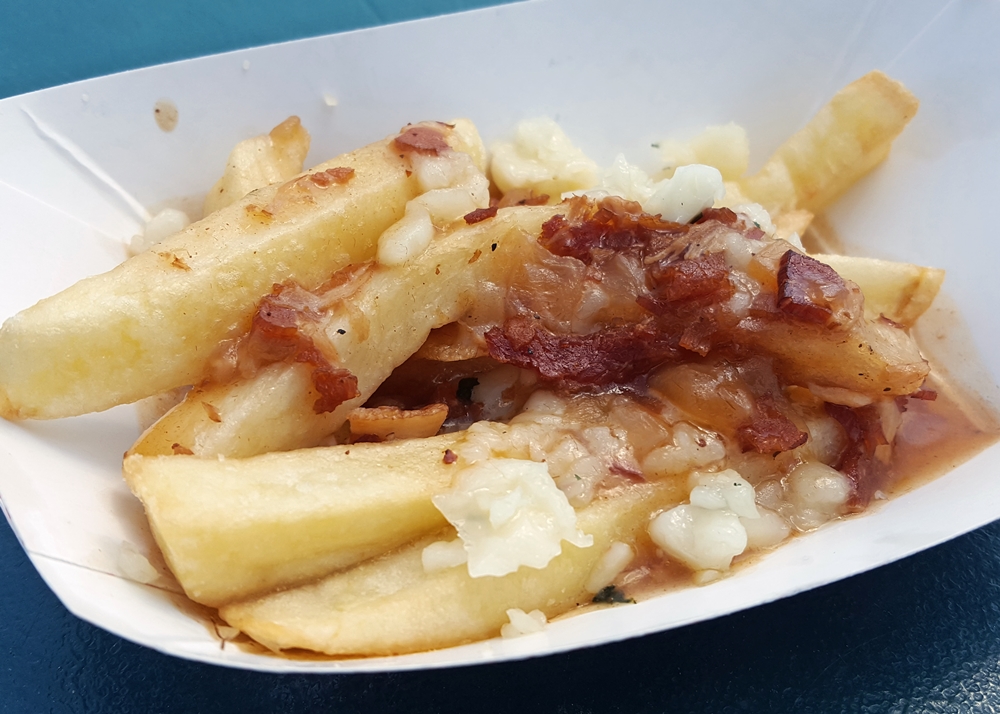
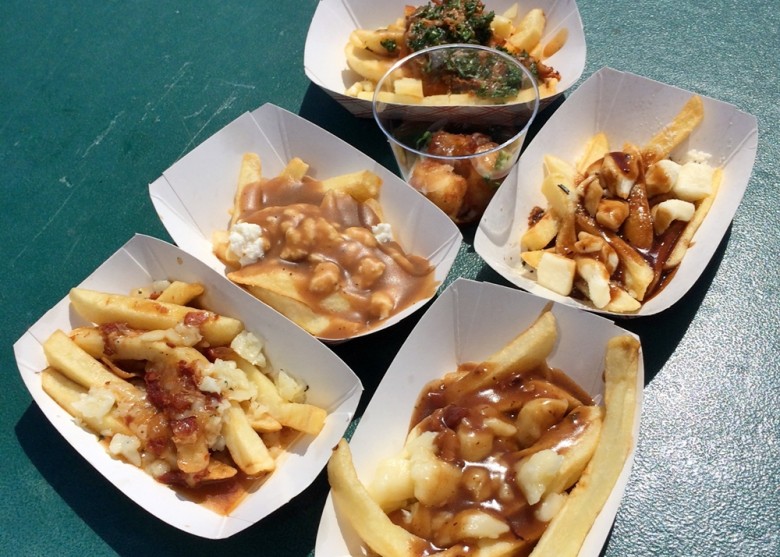
Poutine from the Portsmouth Catering Company at NH PoutineFest
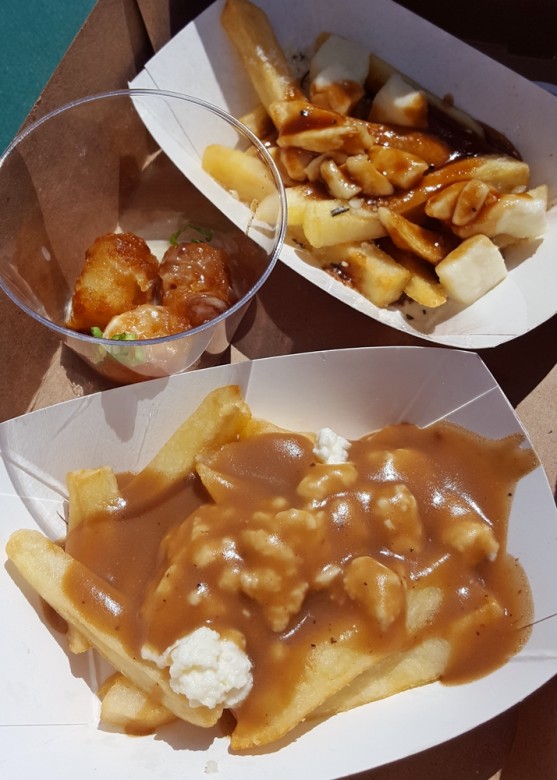
There are many different styles of poutine, from those with thin gravy (background) to those with thick gravy (foreground) and even those with tater tots (middle).
Credit: Chris BurnettCredit: Chris Burnett
History of Poutine
Poutine can trace its origins back to 1950s Quebec, though several restaurants claim to have invented it, meaning the exact location of its creation is contested. How the dish got its name is also a mystery, but there are a number of theories that seem to hold water. According to the Dictionnaire historique du français québécois (Historical Dictionary of Quebec French), the word poutine could be a borrowing from one or more of the regional languages of France, in which similar words mean things like “hodgepodge,” “crushed food,” or “a mixture of various things.” A second theory states that poutine comes from the English word pudding, and yet another possibility is that the word is simply a mix of Québécois slang. After encountering the messy concoction in real life, it’s easy to see why any of these proposed origins would suit it well.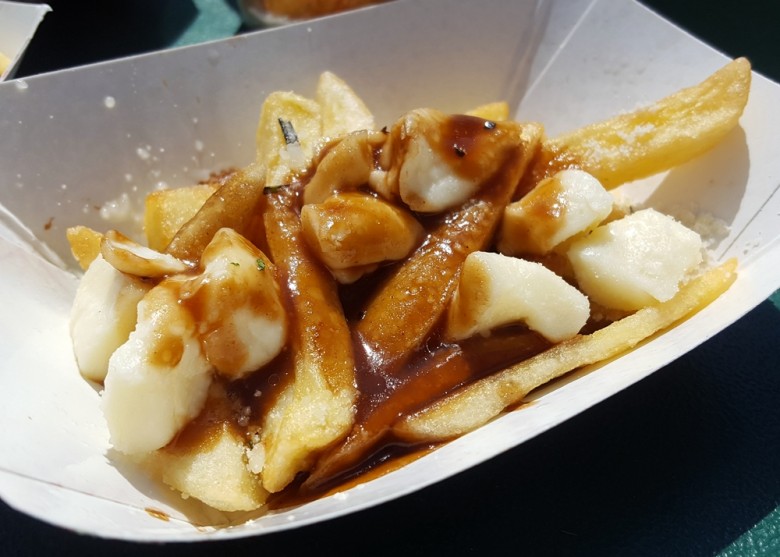
Poutine from NH PoutineFest
Credit: Chris BurnettCredit: Chris Burnett
The Proper Poutine
Although poutine doesn’t win any awards in the “Healthiest Foods” category, it does deserve honorable mentions for its simplicity and taste. In its most basic form, poutine consists of only three ingredients: French fries, gravy, and cheese curds. Don’t be fooled, though, as there is a method to poutine’s madness. Ideally, the fries are cooked until they’re golden brown, but not overly crispy and dry. The gravy is traditionally poultry- or veal-based and should be thick enough to not make your fries soggy, but thin enough to reach the majority of the dish. As for the cheese curds, they should be as fresh as possible and shouldn’t be more than half-melted when the dish is served. The mark of a true poutine cheese curd is the “squeak” it makes when you bite through it, which is the source of one of its other popular names, squeaky cheese. Of course, the above only applies to your basic, traditional poutine, and many more exotic variations can also be found. One Montreal poutinerie, La Banquise, offers more than 30 varieties — from breakfast poutine, featuring fried eggs and bacon, to taco poutine, topped with guacamole and sour cream. Many restaurants dress their poutines with a variety of meats, such as hot dogs, pulled pork, or smoked meat, and in 2011, a Montreal chef even won Iron Chef America with his lobster-themed version.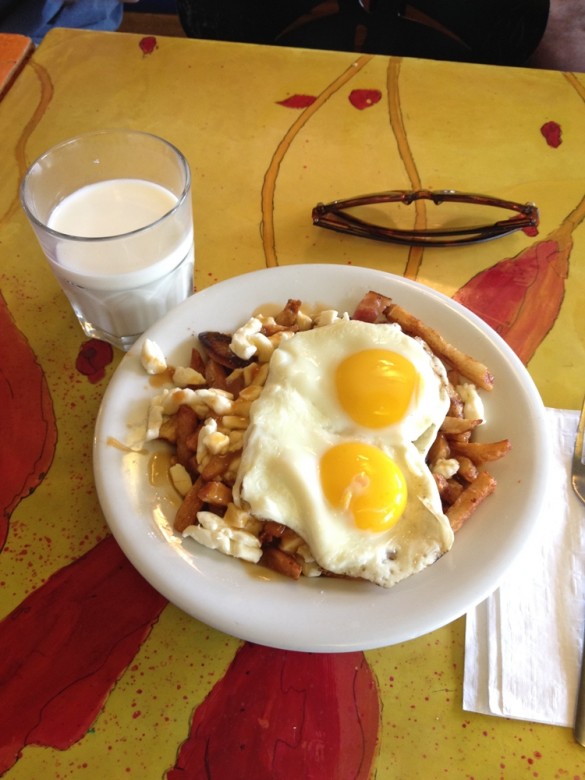
Breakfast poutine at La Banquise in Montreal, Canada.
Credit: Chris BurnettCredit: Chris Burnett
Poutine Popularity
Since its creation decades ago, poutine has become a culinary sensation in Canada and even fast food giants like McDonald’s and A&W have started to offer the dish. In recent years, it’s jumped the border, spreading to areas like the Pacific Northwest, the Midwest, and New England. You can now find traditional poutines, as well as American innovations, at a number of restaurants, pubs, and food trucks throughout these regions. In New England, poutine’s rising popularity shouldn’t come as a total surprise. The influence that French Canadian culture has had on the region is quite large and there are many Americans with French Canadian ancestry living here today. According to the 2000 Census, the six New England states have greater percentages of these French Canadian descendants than any other states in the Union (aside from Louisiana). One in four Mainers has French ancestry and more than a fifth of both Vermonters and New Hampshirites can say the same. Glance at any New England telephone book and you’ll see several Gagnons, Levesques, and Tremblays — all of whom probably have French Canadian roots.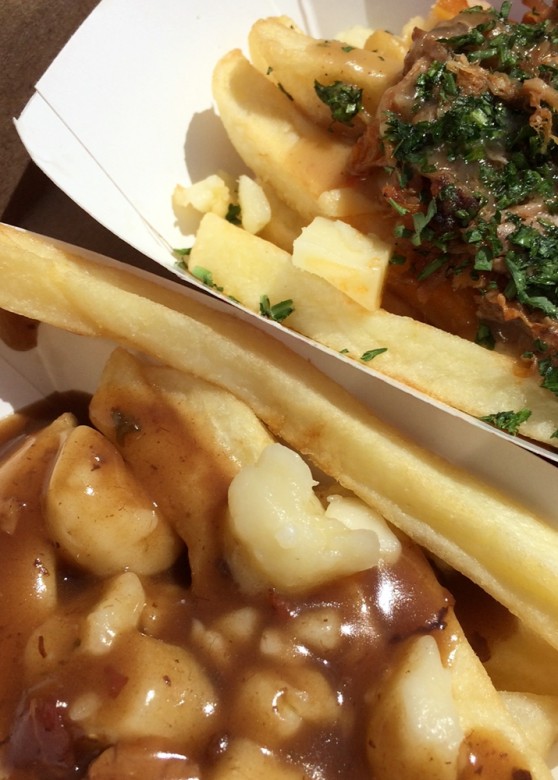
Two different poutines found at NH PoutineFest.
Credit: Chris Burnett

I was at the Poutine Festival and Yes there were issues but I do have to say I enjoyed myself and will gladly go again next year.
My grandfather was from Shediac and I grew up poutines and rappee being made by all of my aunts and uncles, but I have never seen it made or served the way these pictures show it. Ours were made with grated potato which was put into towels to have the moisture squeezed out, then formed into balls with salt pork in the center, wrapped in cheesecloth and boiled.
I was on the Gaspe Peninsula this summer and had Poutine for the first time but not the last. OMG so good. Had it 3 more times before we left Canada and yes I am all French Canadian.
Just like many other things, Quebecois steal and claim things as their own. As the man from Shediac states, original putine was poutine rappee and was/is an Acadian food. It was taken by the Quebecois and adapted, but they did not invent or develop it at all. SO the history is flawed, as the Quebecois claim to be the first french canadians, though the Acadians came more than 50 years earlier. Acadians came to the new world to get away from the aristocracy and live on the land. Teh quebecois came here out of jealousy to create their own aristocracy. VERY different cultures.