



New England Honey | Homegrown
New England honey ranges from light in color and softly fragrant to dark, rich, and intense. Maple syrup isn’t New England’s only deliciously sticky homegrown product — this region is one of the country’s leading producers of honey, too. Local New England honey is worth buying for more than its heavenly taste.Delivered Daily: New England […]
By Christie Matheson|Apr 28 2008|

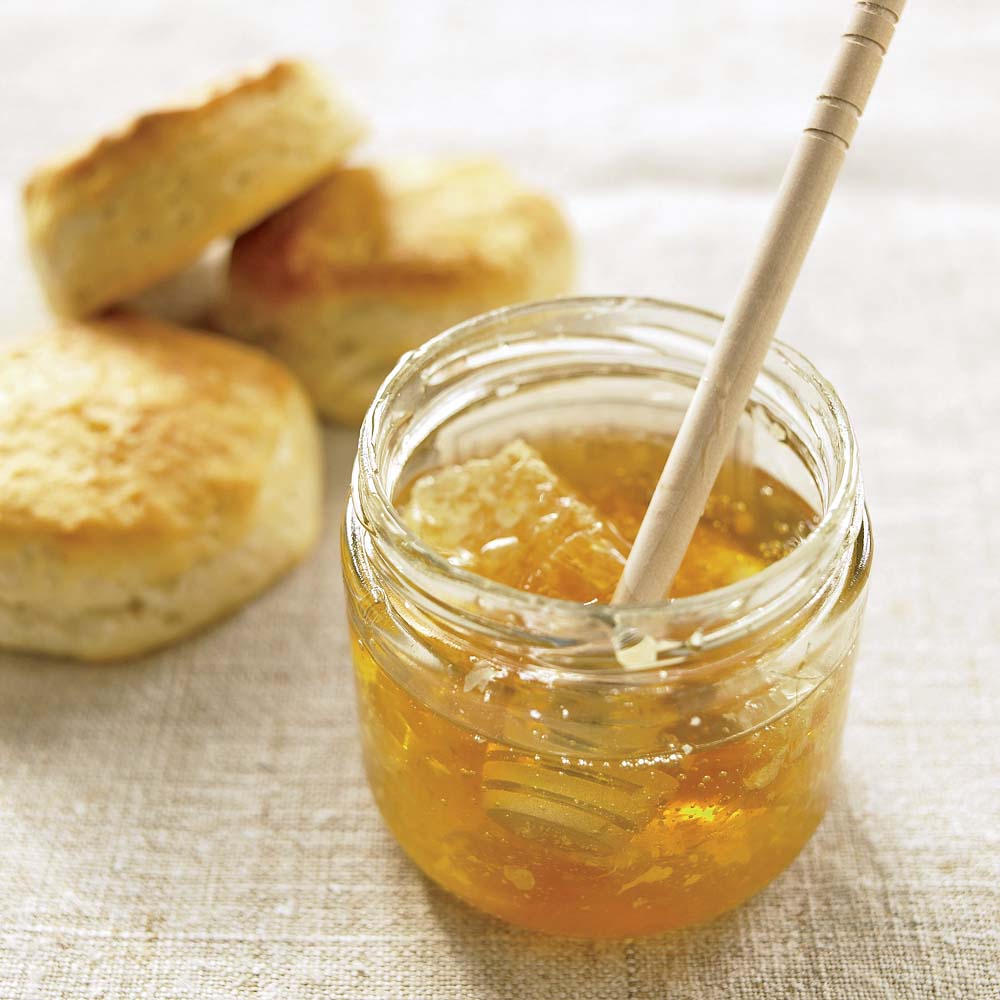
New England honey ranges from light in color and softly fragrant to dark, rich, and intense.

Maple syrup isn’t New England’s only deliciously sticky homegrown product — this region is one of the country’s leading producers of honey, too. Local New England honey is worth buying for more than its heavenly taste.
Supporting small-scale beekeepers — who tend to be careful with their breeding practices and who limit pesticide use — may also help to protect the bee population from colony collapse.
New England honey ranges from light in color and softly fragrant to dark, rich, and intense. Bees manufacture honey from the nectar of flowers, so in each drop you can taste the essence of local flora. Spring honey — perfect for pairing with an aromatic herb to make a lightly fragrant syrup — derives from the delicate blossoms of fruit trees, clover, and young flowers, while robust summer honey comes from berry plant blossoms and roses. The darkest honey of the year is made in the fall, when bees find nectar in blooms such as goldenrod and aster.
Try New England honey in tea with a splash of milk, on toast with fresh butter and a light sprinkling of sea salt, in savory-sweet salad dressings, and in sophisticated cookies and cakes. Or simply enjoy a fabulous spoonful straight from the jar.
To Bee or Not to Bee
Since late 2006, bees all across the country have been disappearing at an alarming rate. The phenomenon is known as “colony collapse disorder,” but no one understands quite why it’s happening (although a bee virus and overuse of chemical insecticides are just two of several possible culprits). Experts do agree that busy little bees — who work hard pollinating garden plants, wild vegetation, and trees — are essential to the growth of many crops. When regional bee populations dwindle, local farming suffers. For more information, contact your state university system’s extension service or state department of agriculture.
New England Honey Producers
To find some of the best of your local honey bunch, check out your favorite market or farm stand, or visit any of the establishments listed below:
Common Sense Wholesome Food Market
53 Main St., Plymouth, MA
508-732-0427; commonsensemarket.com
Dan & Whit’s General Store
319 Main St., Norwich, VT
802-649-1602; danandwhits.com
Farmstead
186 Wayland Ave., Providence, RI
401-274-7177; farmsteadinc.com
Lionette’s Market
577 Tremont St., Boston, MA
617-778-0360; lionettesmarket.com
Maine’s Pantry
111 Commercial St., Portland, ME
877-228-2028, 207-228-2028; mainespantry.com
Tutto Sfoglia
49A Pleasant St., Nantucket, MA
508-825-9900; shoptuttosfoglia.com



Don’t forget Hillside Beekeeping Supplies & Honey in Merrimack, NH. We’ve been your New England local supplier of honey for over thirty-three years! Visit us at HillsideBees.com
LaLa’s Farm in Haverhill, Mass offers a wide variety of local honeys, maple syrup, jams, relishes, and other spreads. Along with some great backyard chicken keeping and farming lifestyle projects! Take a look at LaLasFarm.com