Angels Among Us: 2008
Yankee Magazine proudly recognizes the “Angels Among Us 2008.” Congratulations to these dedicated New Englanders who are making a difference!
By Carol Cambo|Oct 24 2008|


Do you know a New Englander making a positive impact in their community? Nominate an Angel today!
Credit: ShutterstockThese four New Englanders are making a difference, one life at a time. Pauline Alighieri remembers a friend in Massachusetts with a foundation that funds cancer research. Brenden Gobell is a teen angel who volunteers with his family at South Park Inn, a homeless shelter in Connecticut. Deborah Descenza brings developmentally disabled adults together to work on a farm in New Hampshire. And Linda Gilbert rallies her Vermont friends to send aid to Honduras.
Credit: Kalinowski, Matt
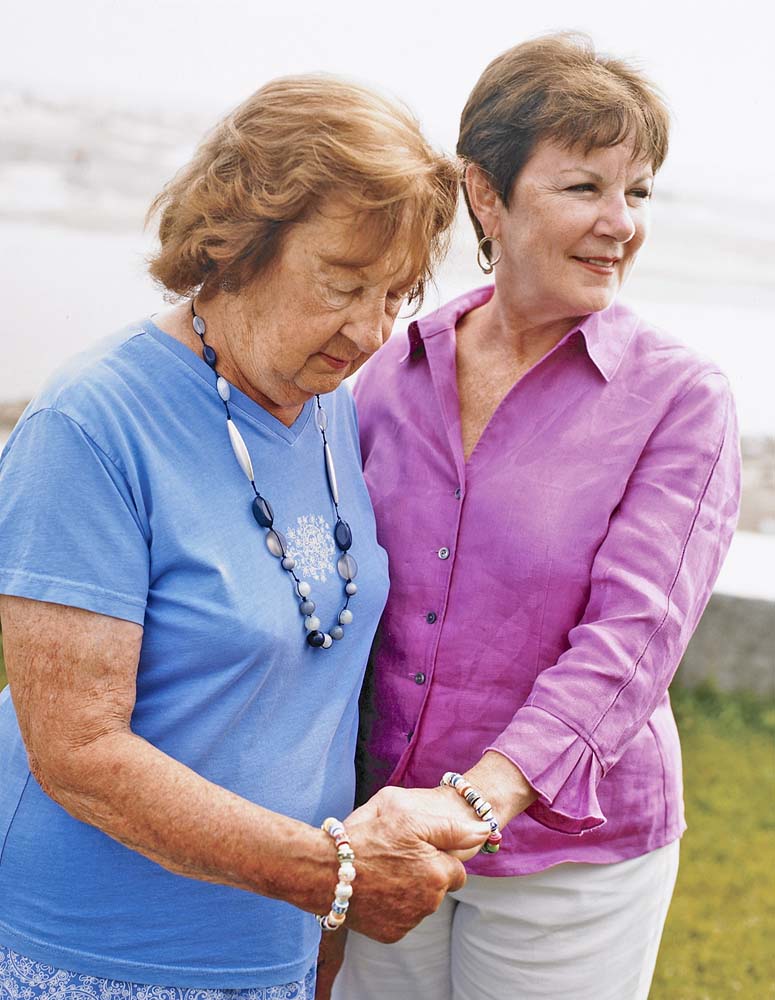
Pauline Alighieri | Friends of Mel
Mel Simmons never cared much for pink. Still, when she was diagnosed with breast cancer in 2000, she embraced the color’s symbolism: solidarity and support in the face of a disease that kills 40,000 women a year. During her battle, Mel spoke publicly, raised money, and somehow managed to keep her sense of humor. She loved to hand out small gifts to her caregivers and fellow patients. When a friend brought her several dozen bracelets from Istanbul, Mel passed them out like party favors.
“That’s just how she was,” says Pauline Alighieri of Norwood, Massachusetts. “When you became a friend of Mel’s, you felt you had arrived.” Pauline was a friend of Mel’s for more than 35 years. They’d met when they were starting their careers as flight attendants out of Logan Airport. In recent years, the relationship deepened. “We talked endlessly about girl stuff, about our kids … We were both single moms,” says Pauline.
When Mel passed away in 2005, her friends decided to sell “Mel’s bracelets” with a goal of raising $5,000 to keep funding the kind of research and support that had helped keep her alive for five years. The bracelets were bright and perky, just like Mel. And they sold like hotcakes: One year later, Mel’s friends had raised $1 million. Founded by Pauline, the Friends of Mel Foundation, based in Hingham, has now raised more than $4 million to date.
Learning to run a foundation is new for Pauline (she earned a bachelor’s degree in psychology from Emmanuel College in 2005), but the spirit of giving is in her family’s genes. Her mom, Helen Ouellette, now in her eighties, has volunteered for the Red Cross, participated in toy and food drives, and adopted families at Christmastime. Pauline, the oldest of seven kids, remembers the year her parents lost their children’s store in Lewiston, Maine, to fire. “Dad still brought baskets of food to the church for Christmas that year, for other families in need,” she recalls. Helen is still giving, orchestrating a pumpkin parade each year in Auburn, Maine, to raise money for the Maine Children’s Cancer Program. And 2008 was a banner year: Friends of Mel matched Helen’s October 2007 pumpkin proceeds, together giving a total of $36,000 to the center.
Under Pauline’s direction, the foundation targets research, as well as education and support for cancer patients and their caregivers. “Our goal is to get them over that hump,” she says, “while they’re in treatment. The kind of thing a friend does when the chips are down.”
Four-year cancer survivor Karen Rein says a recent wellness weekend cosponsored by Friends of Mel at Lake Winnipesaukee in New Hampshire “was a turning point.” In spending time with 200-plus other survivors, Karen saw that she “hadn’t completely dealt with the emotional and mental piece of recovery, and that was holding me back from living my life to the fullest and moving fearlessly toward the future. What a gift this new mindset is.”
Learn more: 781-740-2511; friendsofmel.org
Credit: Kalinowski, Matt
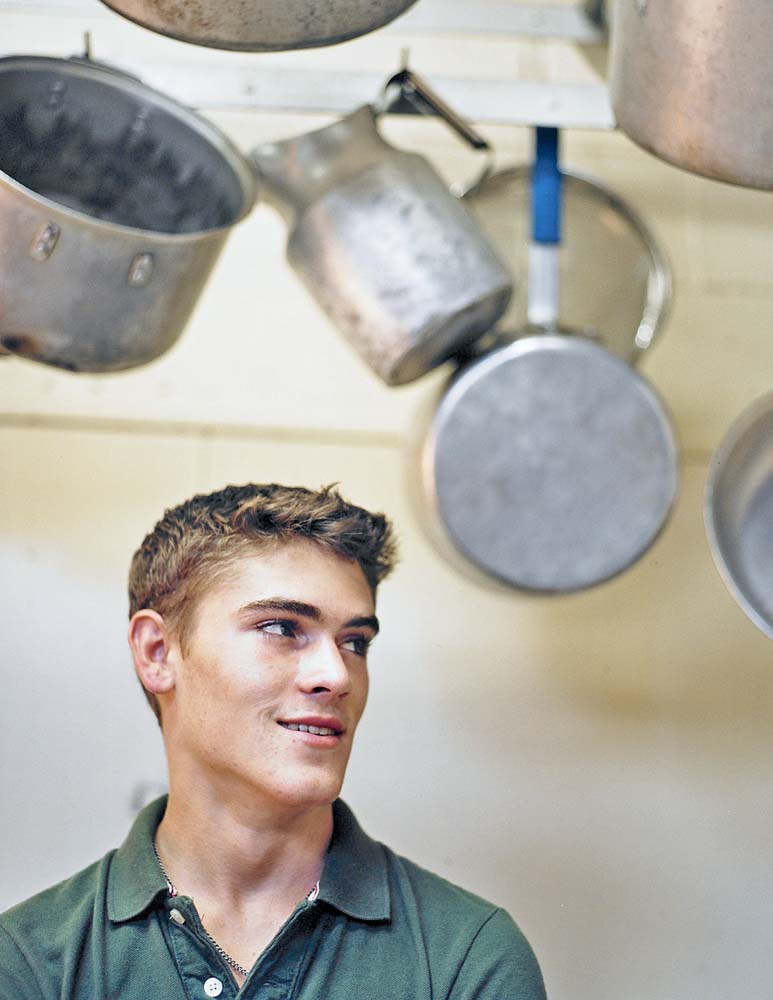
Brenden Gobell | South Park Inn
Brenden Gobell is a foodie. He likes real blueberry pancakes, bacon-wrapped scallops, and sushi.
He also knows hunger. As a wrestler for Avon High School, he would cut weight before a match, sometimes reducing calories drastically for several days. “You move beyond hunger,” he says. “And then you’re just dying of thirst.”
But on the nights when he prepares baked ziti for 120 people at Hartford’s South Park Inn homeless shelter — as he and his mom and sister have done pretty much every other month since Brenden was 12 years old — there’s enough pasta to feed an army. And baguettes. And green salad. And always cookies, because a fair number of residents have a sweet tooth, a byproduct of opiate addiction.
“We have only a few families like the Gobells,” says Brian Baker, the shelter’s assistant director. Most nights, church or school groups cook. “The Gobells pay for the food themselves or through their own fundraising, and prepare it, too.”
After six years of volunteering, Brenden knows the shopping list by heart: 16 boxes of ziti, five four-pound jars of tomato sauce, two large tubs of ricotta, five pounds of shredded mozzarella. “The women and children eat first,” explains Brenden. “Then the men. They come back for seconds and thirds.”
Dinner marks the high point of the day. Curfew is six o’clock. After dark, counseling and clinics address the complex issues that push people onto the street: mental illness, substance abuse, and unemployment, among them. Twenty minutes northwest of here, Hartford’s gritty neighborhoods blur into sweeping views of the capital city embraced by million-dollar homes on Avon Mountain. The stark contrast in economics between his hometown and the Inn “gets me out of the bubble,” says Brenden.
What began as help for his mom became an ongoing commitment for Brenden: first raising money for the dinners, then conducting drives for linens and toiletries. For his senior-year project, he organized a miniature golf tournament, netting a $1,120 donation. “I was floored,” says Baker. In a flat-funded environment, every dollar — and every plate of pasta prepared and served with respect — is one more step in the right direction.
Learn more: 860-724-0071; southparkinn.org
Credit: Kalinowski, Matt
Deborah Descenza | Farmsteads of New England
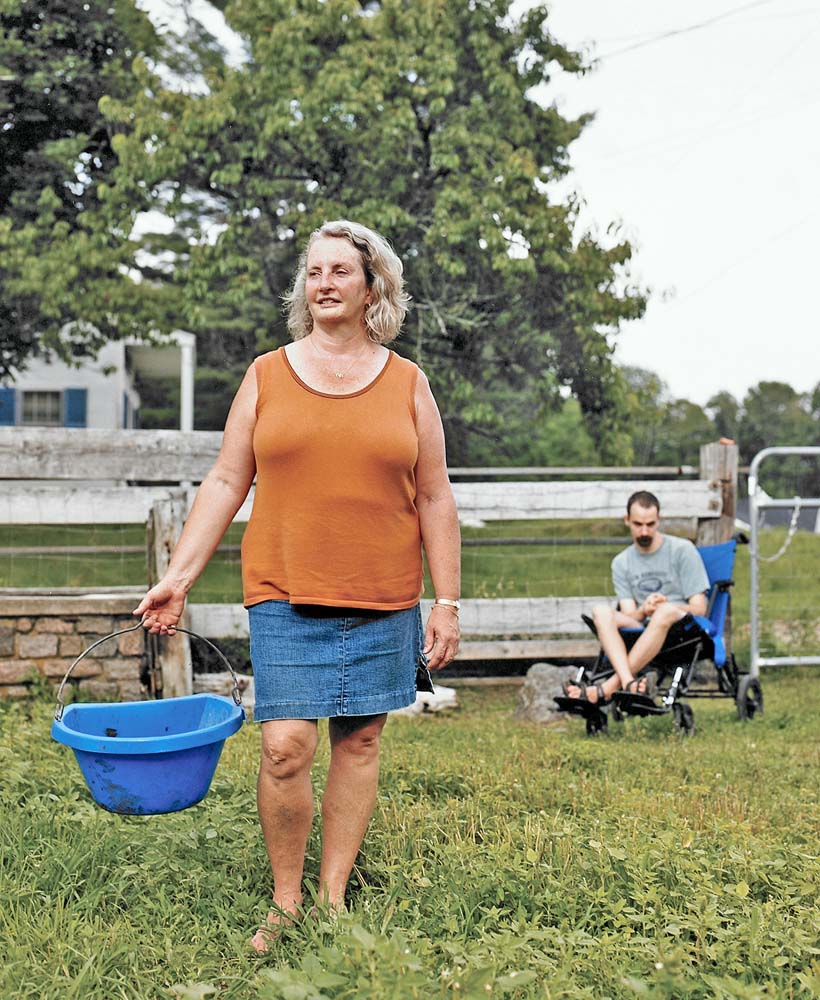
Andrew Gray was born with a rare metabolic disorder; he’s considered developmentally disabled and autistic. He has no understanding of dangers in the environment, so would think nothing of walking in front of a moving car or playing with a piece of broken glass. “He might wrap his arms around a perfect stranger, swipe a hat off someone’s head to play with it, or slap someone as he walks by if the mood strikes,” says his mother, Deborah DeScenza. Mainstreaming or adult foster care — state-supported options for many such adults — clearly wouldn’t work for Andrew. How many other families, thought Deborah, are in the same fix?
“One of the biggest complaints of the developmentally disabled is that they’re lonely,” says Deborah. She wanted to create a place where these adults could live, work, and play together with the support of mentors. A farm seemed a safe place for someone like Andrew to connect with the rhythm of the seasons and to enjoy the satisfaction of completing a day’s chores.
When Andrew turned 16, Deborah left her teaching post at Pinkerton Academy, raised money, and bought historic Rosewald Farm just north of downtown Hillsborough, New Hampshire, in 2003. Farmsteads of New England welcomed its first residents, including Andrew, later that year. The biggest challenge of parenting a disabled child, explains Deborah, is the exhaustion of providing care around the clock. “When parents see their child flourish here,” she says, “they can finally just breathe.”
Eight one-bedroom apartments were added to the facility last year, with several more on the drawing board; the farm-stand business and a waiting list of would-be farmers are growing. Deborah now spends nights in the barn birthing baby goats, and has learned to appreciate the dirty truth behind the phrase “pig pile” through tending her own muddy herd. Her wish list has come to include things such as manure forks and Rototillers.
On a summer day, the farm is in full swing. Small groups of farmers prepare lunch, make crafts to sell, and check on the stocks of veggies at the stand. Deborah’s vision has come to abundant fruition. In rounded sprawling letters, a farmer named Dave lists “the things I like about living at Farmsteads: being able to live on my own, go to bed when I want, get up out of bed when I want, make my own meals.” Likewise, Andrew has come to savor the chore of recycling, and counts the daily sorting and the weekly trip to Hillsborough’s transfer station among his proud rituals.
Learn more: 603-464-2590; farmsteads-ne.org
Credit: Kalinowski, Matt
Linda Gilbert & Friends | Vermont Hands to Honduras-Tela
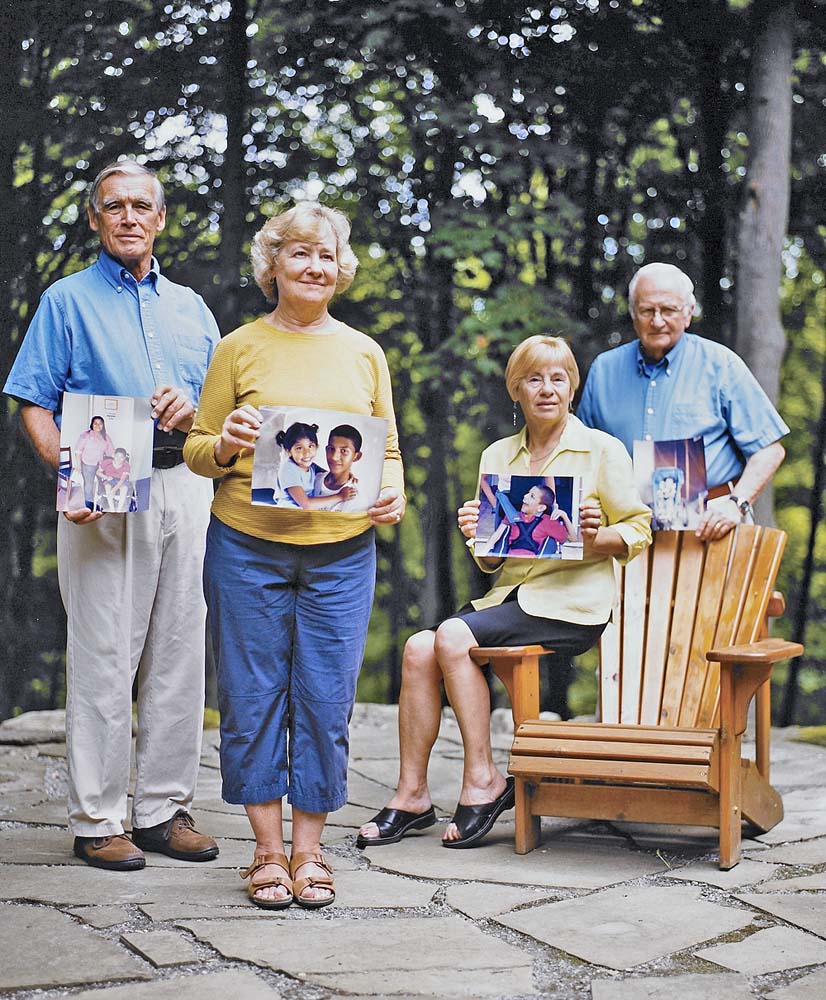
Smiling out from photos, the children of Tela, Honduras, win hearts with their wide eyes and toothy grins. It’s the kids, says Linda Gilbert (who has six grandchildren of her own) who continue to inspire Hands to Honduras-Tela (H2HT), based in Charlotte and Shelburne, Vermont.
Honduras is one of the poorest countries in the Western Hemisphere and is thus a magnet for service groups. Linda Gilbert and her friend Colleen Haag (Shelburne’s town clerk) joined a Rotary International trip in 2003; they returned home thinking how much more they could do. The people of Tela needed new facilities and equipment, but they also needed people trained to run them.
Shelburne’s phone lines lit up as a committee of like-minded volunteers drew together. The effort has mushroomed into a full-blown relief service: In 2008, 70 volunteers — ages 8 to 79 — dug foundations, laid rebar for classroom walls, and conducted health screenings for hundreds of people. They arrived with thousands of dollars’ worth of donated goods.
“We believe that if we give women access to education and keep their kids in school, there will be systemic change,” says Linda. She and her husband, Al, a retired economics professor, aren’t naive about the task’s complexity. Climbing out of crushing poverty is hard. “The cost of school, maybe $50 a year, plus a uniform, is just not doable for many families,” explains Al. By building relationships — with the mayor of Tela, with Honduran educators and service providers — H2HT is striving to create sustainable change. The Vermonters, alongside their Honduran counterparts, have built and equipped a physical rehab center, schools, water and latrine systems, and a playground. They’ve delivered fire-safety equipment and trained Tela’s bomberos (firefighters). “We brought a woman named Juanita a wheelchair; she hadn’t left her home, basically a three-walled shack, in three years,” says Al. Moms now bring their disabled children in for services from remote villages by way of donated baby joggers.
Last year, Jean Coffey, a pediatric nurse practitioner from Essex Junction, and pediatrician David Stifler saw hundreds of patients whose medical records are carried solely in their heads. “The experience made me realize that high-tech equipment isn’t always necessary to provide good care,” Jean says. Jean and David will return next year; in the meantime, they’ve been meeting weekly to brush up on their Spanish.
Learn more: 802-425-3838; handstohonduras.org