Angels Among Us 2009
Yankee Magazine proudly recognizes the “Angels Among Us 2009.” Congratulations to these dedicated New Englanders who are making a difference!
By Ian Aldrich|Oct 07 2009|

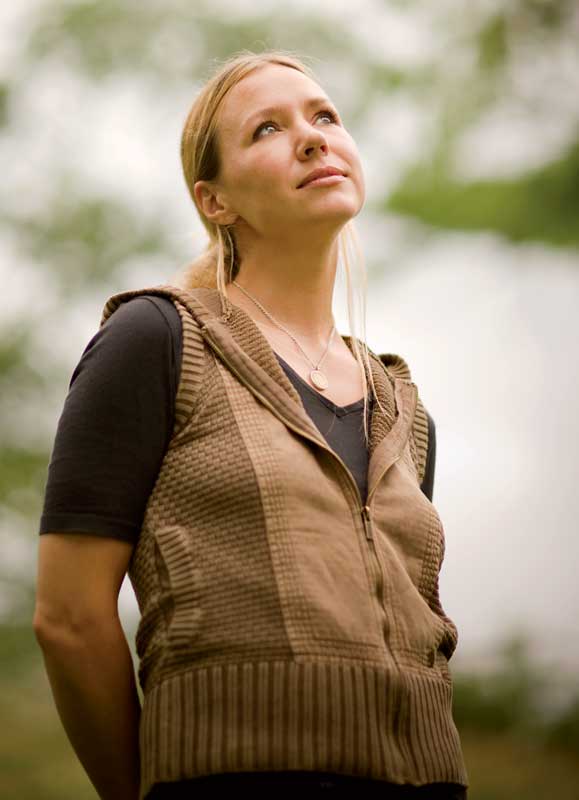
Kara Rainey has been a regular volunteer with Boston's Home for Little Wanderers since 2005. Mentoring, companionship, and getting kids out and about on field trips are all part of her mission. A metal sculptor herself, she also teaches art classes at one of the nonprofit's group residences.
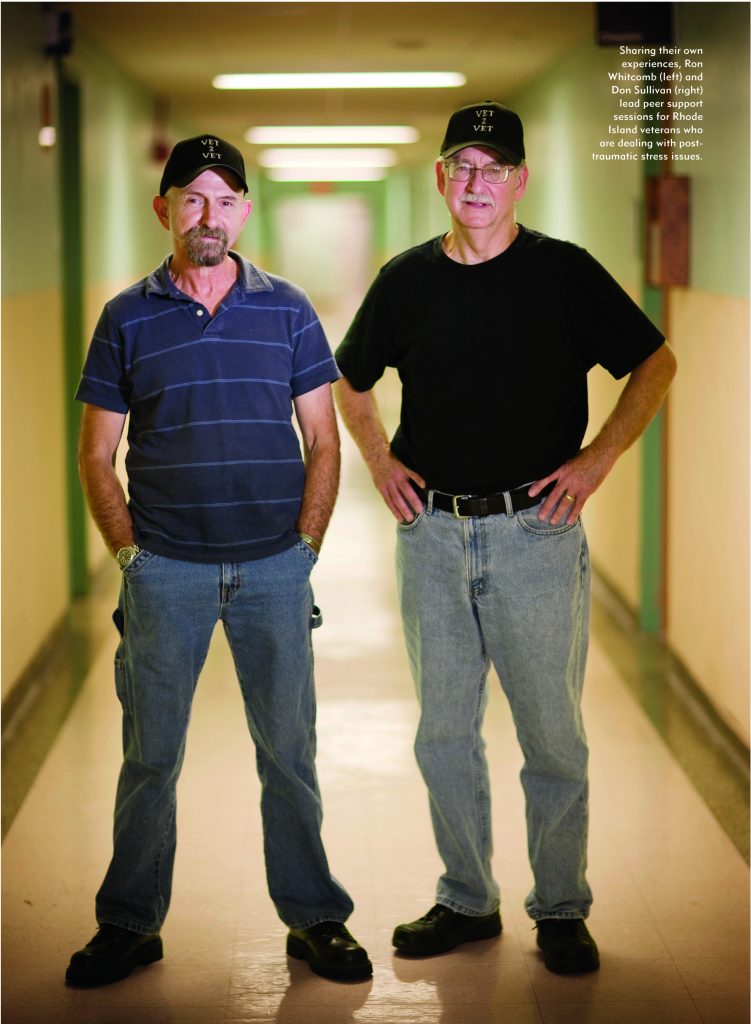
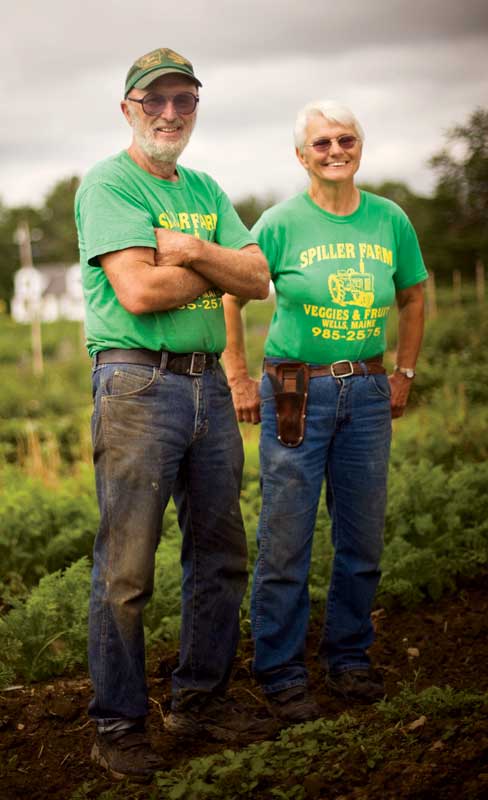
Credit: Nemeth, TiborKara Rainey is being a friend in Boston, Massachusetts, at the Home for Little Wanderers. Wynona Ward is seeking justice in Vershire, Vermont, as founder of Have Justice Will Travel. Ron Whitcomb and Don Sullivan are working together in Providence, Rhode Island, in Operation Vet 2 Vet. Bill and Anna Spiller are feeding their neighbors in Wells, Maine, when they Plant a Row for the Hungry.
Kara Rainey | Home for Little Wanderers
In October 2005 Kara Rainey returned home to Roslindale, Massachusetts, from three weeks in New Orleans, where she’d volunteered for the American Red Cross in the aftermath of Hurricane Katrina. The 37-year-old mother took a deep breath, looked around, and realized she’d like to change how she directed her volunteer work. “I wanted to focus on something more local,” she says. “I wanted to work more in my community.”
Her search brought her to Boston’s Home for Little Wanderers, the nation’s oldest child and family services agency. The nonprofit, whose history dates back to 1799, works with thousands of Massachusetts children and families each year, offering programs that range from adoption work to special-needs care. A big part of its work includes running a group home in the Mission Hill neighborhood for a dozen kids between the ages of 8 and 13, all of whom are contending with complex family issues. Most have moved a lot, bouncing among group and foster homes.
The place has become a second home of sorts to Rainey, too, who’s there weekends, teaching art, or organizing field trips that get kids to museums, out hiking, or even learning how to juggle. It’s a 10- to 15-hour commitment each week, something she doesn’t skip, even though last February she lost her job as an accountant with JPMorgan Chase. “These kids, they’re surrounded by social workers, lawyers, clinicians, whose job it is to deal with them,” Rainey says. “That’s not my job. Nobody’s paying me to be with them. They’re learning about what it means to earn friendship.”
On one recent Sunday, Rainey leads five kids through Boston’s Museum of Science. Her enthusiasm–she peppers her language with phrases like “Right on!” and “lovie”–is infectious. She’s easygoing, without losing her sense of authority over the group, which includes pretty 12-year-old Riley (her name has been changed here to protect her privacy), who has a fondness for pink (T-shirt, sandals, hair clips) as well as for Rainey, her mentor over the past two years. They’ve gone to Red Sox games and the ballet, they’ve sat courtside at the 2008 Celtics championship ceremony, they’ve gone camping, and they’ve shared more than a few meals. “She has a taste for fine dining,” says Rainey, with a laugh, “which is a hurdle.”
But it’s evident that Rainey wouldn’t have it any other way. “People tend to think that volunteering means being in a kitchen or something,” she says, trailing after the kids, who are in search of the museum’s musical stairs. “But there are ways to get involved that use your talents. There are lots of opportunities out there, especially working with kids.”
Learn more: 888-466-3321, 617-267-3700; thehome.org
Credit: Nemeth, Tibor
Wynona Ward | Have Justice Will Travel
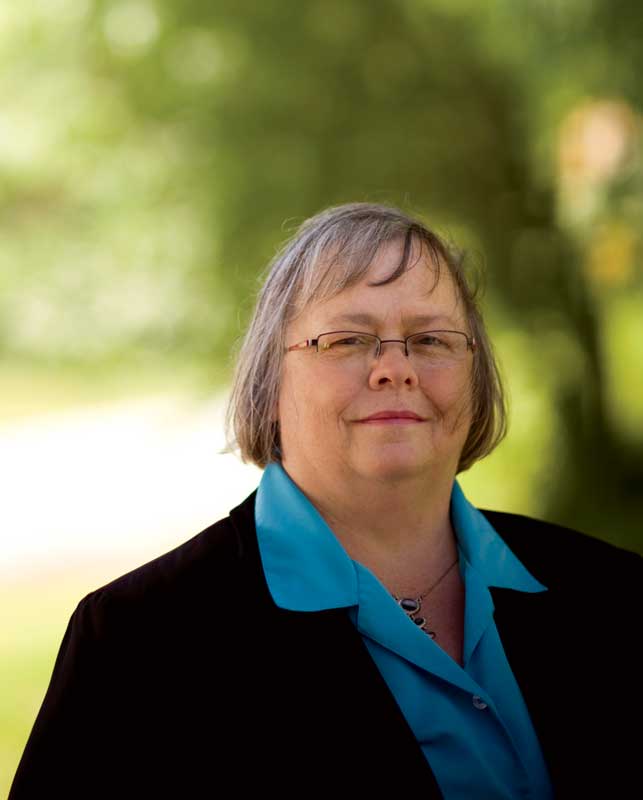
Every year Wynona Ward, founder and executive director of Have Justice Will Travel (HJWT), a free legal clinic for abused women and children from low-income families, gets a new law school intern. There, on that first day, at the nonprofit’s rural headquarters high on a hill in Vershire, Vermont, Ward delivers her favorite welcome. “You probably traveled some pretty roads to get here,” she says. “And I bet you passed through gorgeous farmland and idyllic towns. And you saw beautiful mountains. Now, let me show you another Vermont–one of back roads, trailers, and tarpaper shacks.”
Growing up in remote West Fairlee, Ward knows that other Vermont. She also knows something about domestic violence and the grinding toll it takes on all those involved. Ward was the child of an alcoholic father; abuse was a constant theme not only for her, but for her mother and four siblings as well. But it was a sexual abuse case involving her older brother and a young girl in the family that put Ward, at age 40, on a path that would turn this longtime long-haul truck driver into a nationally recognized attorney.
To protect the girl, Ward thrust herself into the case, managing details and serving as the bridge between her family and their lawyer. When it was over, Ward’s brother went to prison, and Ward returned to the classroom, determined to help others the way she’d helped this child. She earned her bachelor’s degree, then a law degree. And in 1998 HJWT was born.
HJWT isn’t a legal world of power lunches and mahogany furniture. Ward’s work takes place around kitchen tables, in small-town diners, or in one of several SUVs that she and her team drive as they crisscross the state visiting clients. Even HJWT’s home base is humble: a small, white clapboard ranch, on farmland that rolls right up to it. The bedrooms are the staff’s offices; the cozy living room is stuffed with legal volumes; a long table there serves as a conference area.
With a patchwork of funding–mainly grants, fellowships, and donations–HJWT works to soften the blow of poverty on wives and mothers who are trying to escape abusive relationships. Ward says that too often women don’t follow up on an initial request for a restraining order–not because they don’t want to, but because they don’t have the means to do it. And if they do make it to court, they may find themselves without a lawyer, trying to navigate a legal minefield against a spouse who can afford representation.
“If they lose, they have to go back home, and their lives can become even worse,” says Ward, who reports that more than 90 percent of the women her team works with don’t return to abusive relationships. “It’s really not fair. It’s not just.”
What began with a small $32,500 grant 11 years ago now boasts five offices around the state, employs five full-time attorneys, and has served more than 10,000 people since 1998. In addition, HJWT offers free classes on healthy relationships, job and financial skills, and résumé writing. It’s about empowerment, says Ward, and it’s something she hopes to expand not just to other areas of Vermont but to rural areas across the country.
“When these women get away from the abuse, they just bloom,” Ward says. “They become assured, confident, and want to help other people.” Just as she has.
Learn more: 877-496-8100, 802-685-7809; havejusticewilltravel.org
Credit: Tibor Nemeth
Ron Whitcomb & Don Sullivan | Operation Vet 2 Vet
Ron Whitcomb and Don Sullivan, Vietnam vets and both on full disability for post-traumatic stress disorder (PTSD), met three years ago at a therapy session for their illness at the Veterans Affairs Medical Center in Providence, Rhode Island. They became close friends, and it was there, as their sessions began to wind down, that the two of them wondered what was next. More specifically, Whitcomb and Sullivan wanted to know, were there any veteran-led support groups that could help them and others discuss and manage their day-to-day lives?
The answer: Not yet.
The two men knew what was needed. “You can deal with a counselor, and they can understand what you’re saying, but they can’t understand exactly what you’re talking about and what you did,” says Sullivan. “They’ve got the books but not the experience.”
In early 2008, when the VA announced that it was forming a series of peer-led session groups, the two friends jumped at the chance, creating a discussion group for male veterans–mostly those who’ve been treated for PTSD, but some others in need of different kinds of support as well. More than a year and a half after its creation, Operation Vet 2 Vet (or “the Ron and Don Show,” as it’s affectionately known) has taken root not just at the Providence VA Medical Center–where it has set up three weekly meetings–but at another veterans’ center in Warwick, too.
“It fills a very important need and a gap in our services,” says Michael Goldstein, M.D., chief of the mental health and behavioral sciences service at the Providence VA. “And [Ron and Don] have taken this program on in a way that was unanticipated, which has been thrilling to see.”
At the heart of Vet 2 Vet is what it’s not. These aren’t clinically driven sessions. Whitcomb and Sullivan don’t keep records; they don’t require attendance. The program’s meetings–which run at least one hour but often much longer–aren’t restricted to any one particular war. They’re not choked with nostalgia. As much as possible, they steer clear of what Whitcomb calls “old war stories.”
Instead, the veterans sit in a circle with up to a dozen others and talk about the present and how each person is coping with PTSD and other issues. The subject matter may range from relationships to work. In some cases, too, it can touch on validation. “There are guys who come here who’ve never told anyone they’re vets before,” says Sullivan. “Because they weren’t in combat, they’re having guilt issues about even having PTSD.”
Of course, Ron and Don are there to lead, but they’re also there to participate. As both of them see it, these sessions are a part of their wellness, too. They get to talk about what they’re experiencing and to show, by example, that a full, positive recovery from PTSD is possible.
“It’s been a helluva journey,” says Whitcomb. “If I hadn’t gone through the darkness like I did, I wouldn’t have developed the strength to help others. It’s a unique experience, and I’m lovin’ it.”
Learn more: 401-345-5457; site.operationvet2vet.com
Credit: Nemeth, Tibor
Bill & Anna Spiller | Plant a Row for the Hungry
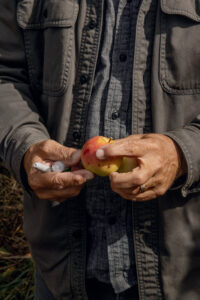
On Bill and Anna Spiller’s 130-acre farm in Wells, Maine, an expanse of crops–apples, pumpkins, corn, potatoes, zukes, cucumbers, and carrots–is the result of their 42 years of hard work. Trees have been felled, rocks cleared, fields created. In recent years, a new farmhouse and barn have been added, too, built by Bill from logs he cut and milled himself.
So, in 2001, when the Spillers wanted to try to make a bit of a dent in the poverty that can quietly hit rural areas of their state, they turned to their land and the new Maine chapter of the national Plant a Row for the Hungry program, in which farmers set aside a small portion of their property to grow vegetables and fruits for food pantries and shelters. It’s free food, of course, but just as important, it’s fresh food: crisp carrots, plump tomatoes–the very things to which people in need often don’t have access.
The state chapter, coordinated by the University of Maine Cooperative Extension, has expanded each year–in 2008 more than 90,000 pounds of food was donated–and with it, so has the Spillers’ participation. Over the last several years the couple has given more than anybody, including nearly 16,000 pounds of produce in 2007 alone. At the height of summer, state volunteers pay two visits a week to the Spiller farm, picking and boxing up so much produce that it can sometimes be a struggle to get it all into the back of their pickup. “This is what we do,” Bill says. “I can donate this easier than I can money.”
The Spillers certainly have their fans–people like Joan Sylvester, volunteer coordinator for the York County Shelter Programs. “They’re true Down Easters,” she says. “Bill is very straightforward. Doesn’t say a lot. But what he does say counts. And he knows food is needed, so he’s always wondering, ‘What can I do to help?’ “
The Yankee in Bill scoffs at any idea of self-importance. Truth is, the Spillers are almost apologetic that they haven’t been able to give more. Their goal: to eventually grow 40,000 pounds of food a year to donate. “I think everyone ought to try and help society,” Bill says. He’s standing outside, gazing across his land. It’s spring, and a whole season of planting and harvesting awaits. “It’s work. You don’t just put plants into the ground and harvest them. I’d like to help people a lot more than I already do.”
Learn more: 877-492-2727; gardenwriters.org