



A Night at Boston’s Symphony Hall
Did you know that Symphony Hall was the first of its kind? The construction of Boston’s Symphony Hall ensures an acoustically pleasing evening of music.
By Montana Rogers|Dec 12 2016|

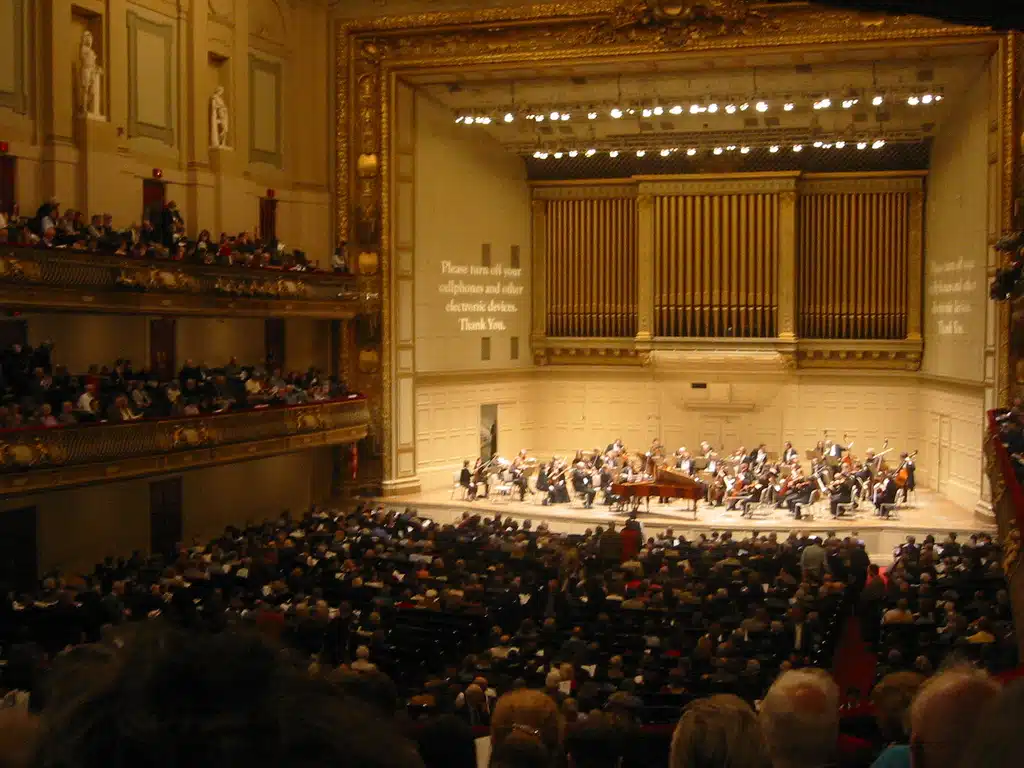
Boston's Symphony Hall
Credit: Mooogmonster via Wikimedia CommonsSymphony Hall Exposition
One of my favorite activities is attending classical or instrumental concerts. Several years ago, I had the opportunity to go to a Boston Pops concert at Symphony Hall. The program consisted entirely of scores composed by John Williams. It was a fun and memorable evening, if not slightly more casual than I had expected. As I watched from the audience, I couldn’t help but appreciate the gold-leaf detailing and statues that decorated the hall. Little did I realize that I was sitting in one of the most progressive music halls in the United States.
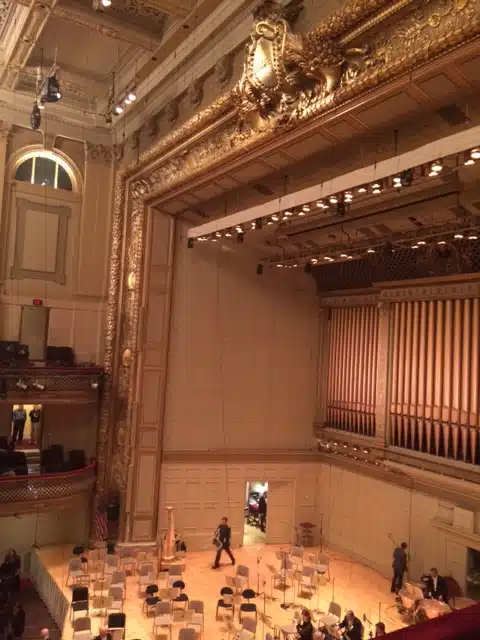
Two weeks ago, I found myself back at Symphony Hall. This time, I sat with a group of music students in one of the balconies. In addition to Brahms’ Symphony No. 1 and Brahms’ Piano Concerto No.1, the conductor, Andris Nelsons, would be conducting the world premiere of “the space of a door” composed by Brown University’s Eric Nathan. Before the concert began, one of the students informed me that Symphony Hall was the first music hall in the United States specifically designed with acoustics in mind.
Credit: Montana Rogers
Development (Design and Construction of Symphony Hall)
Sound is a tricky thing. A concert hall must project the quietest plucking of strings and embrace the loudest of symbol crashes. It should provide a balanced acoustical experience that reaches each member of the audience no matter where they are seated. McKim, Mead, and White of New York, the architectural firm responsible for the design and construction of Symphony Hall, hired a Harvard physics professor, Wallace Clement Sabine, to assist. This appointment was unprecedented. For the first time in history, architects employed scientific musical principles to design a concert hall.
The architects modeled Symphony Hall after Gewandhaus concert hall in Leipzig, but Sabine took its construction to the next level. He used his understanding of sound to help break ground on acoustic-conscious structures. He considered elements such as the reverberation and absorption of sound, suggesting the rectangular shape of the hall. At his request, the builders sloped the walls and made coffered ceilings (grid-like in pattern). Sabine proposed shallow balconies, claiming that deeper recesses would easily trap sound. He designed 16 niches in the walls of the hall to house plaster statue replicas of various Greek and Roman subjects. These offered a decorative component and paid homage to the past, while simultaneously aiding in the distribution of sound throughout the hall.
On October 15, 1900, the new home of the Boston Symphony Orchestra opened. The full, warm sound of the instruments amazed people. Throughout the years, the hall has undergone some renovations. In 2006, repairmen used the same materials and methods in an attempt to replicate the floor and maintain the same sound. Symphony Hall remains a relevant fixture in the music world, where the undying notes of the classic mix and mingle with the contemporary tones of today’s music.
Coda
To this day, music aficionados consider Symphony Hall, right here in New England, one of the best concert halls in the world. If you haven’t yet had the pleasure of attending a concert here, I highly recommend it.
You may also like…
A Weekend at Tanglewood





Boston’s Symphony Hall is indeed a worthy venue although I have always been partial to the Symphony Hall in San Francisco where I once enjoyed a memorable Rachmaninoff Concert conducted by the legendary Seiji Ozawa. In truth, however, both in a very real sense pale in comparison to the Blue Hill Congregational Church in Blue Hill Maine where I once enjoyed an intimate and very New England nuanced performance by the Talich String Quartet, arguably one of the best string quartets in the world. While the sound quality may not have been on a par with that of a large symphony hall the acoustics are really astoundingly good and the experience of taking part in a standing ovation of 100 Maine coastal residents truly moved by a brilliant performance was incredible!