



Beyond Beauty | Our Land, Our Sea, Our Future
With his stunning portraits of New England’s wild places, Jerry Monkman creates both art and a call to action.
By Ian Aldrich|Feb 22 2018|

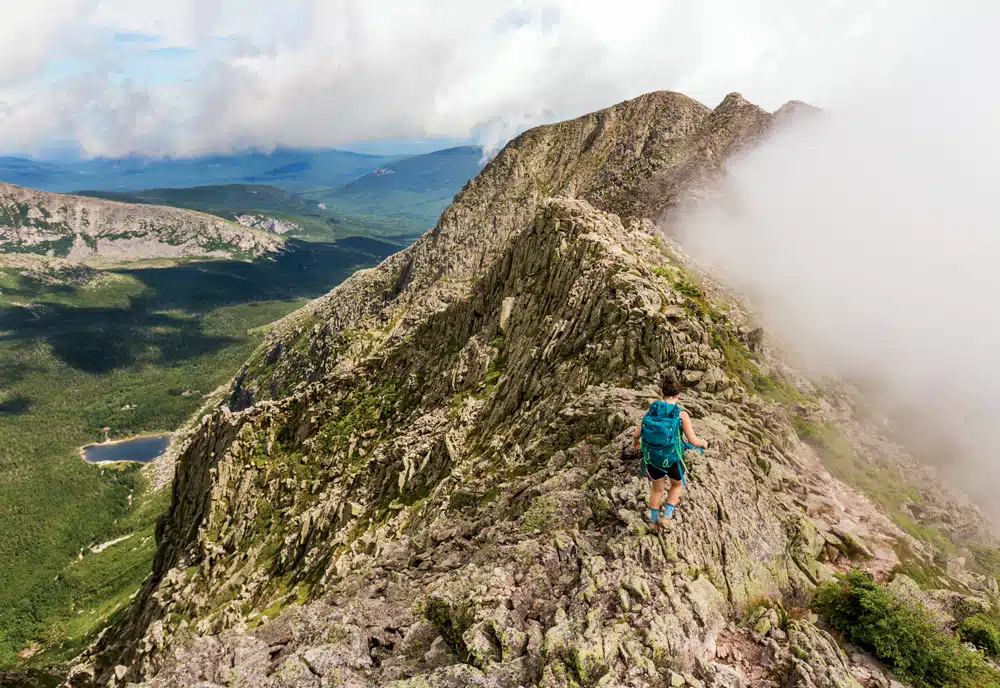
Monkman’s photography trips sometimes include his wife and their two children. Here, his teen-age daughter, Acadia—named for Monkman’s favorite national park—navigates the Knife Edge Trail on Mount Katahdin.
Credit: Jerry MonkmanBack in the fall of 1989, Jerry Monkman was a Midwest transplant living outside Boston with a freshly minted business degree and no desire to put it to use. Instead, the 24-year-old paid his rent by working retail at the Burlington Mall and used his off days to explore New Hampshire’s White Mountains and Maine’s Acadia National Park. With his future wife, Marcy, he’d camp and hike, capturing the landscape and the light with his Nikon SLR camera.
But it wasn’t until he attended a book signing by Galen Rowell, a renowned mountaineer and outdoor photographer, that Monkman saw the chance to merge his passions for nature and photography into a career. “Here I was [at the mall], selling guidebooks and plastic dinosaurs,” says Monkman. “Instead of just looking at nature photos in the food court, I could get paid to take them.
“Galen wrote a lot about the right light and participating in the landscape—he thought his best images came when he was on expedition, when he was really immersed in his surroundings,” Monkman continues. “Marcy and I took that to heart, and would go out for days on end. It’s how I became a better photographer and got my best work.”
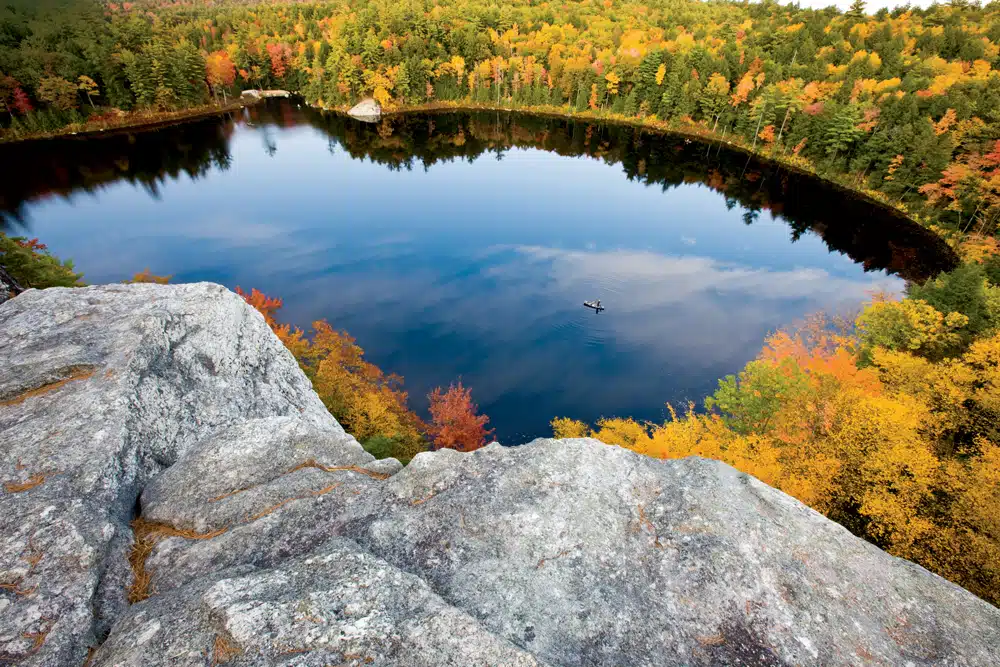
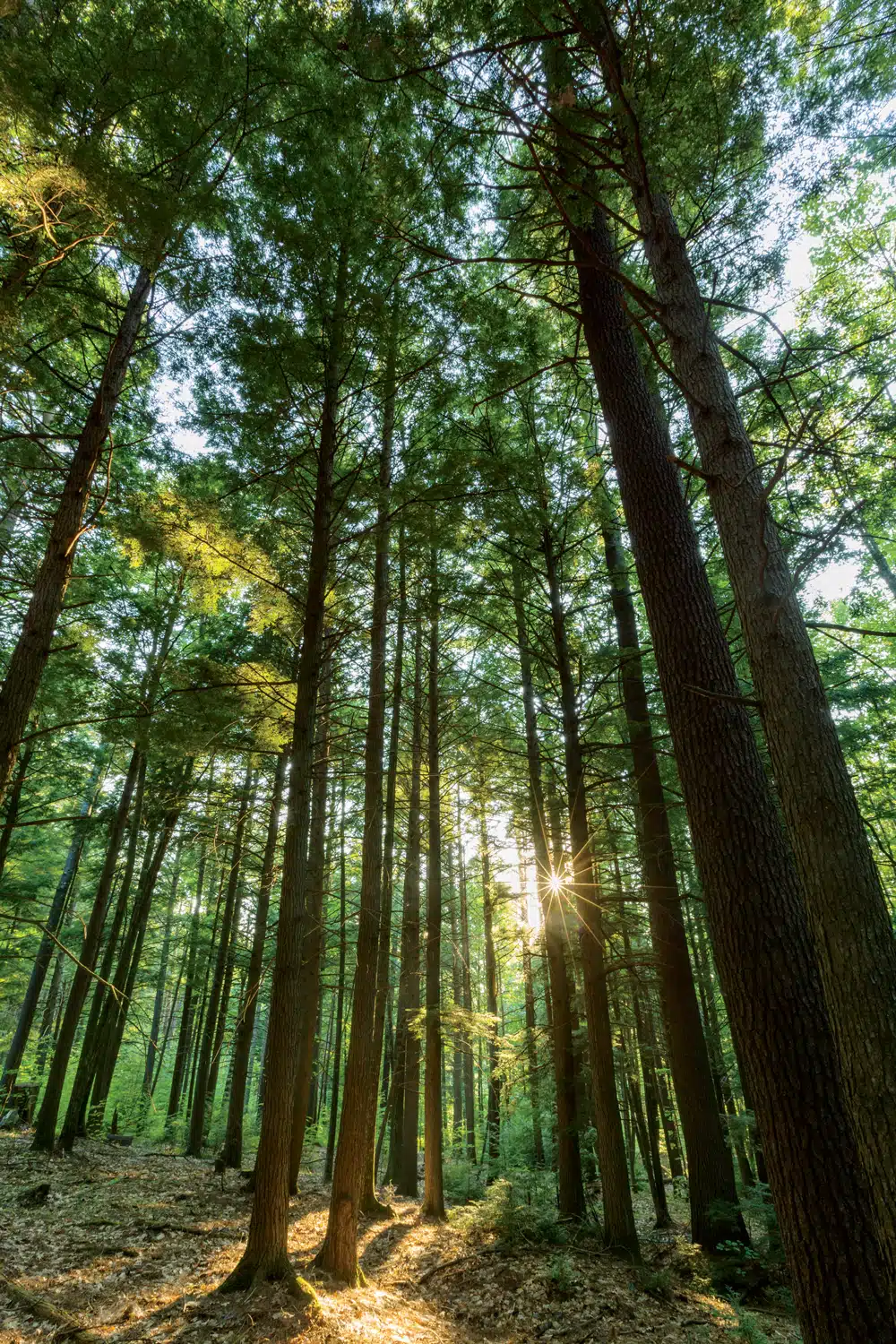
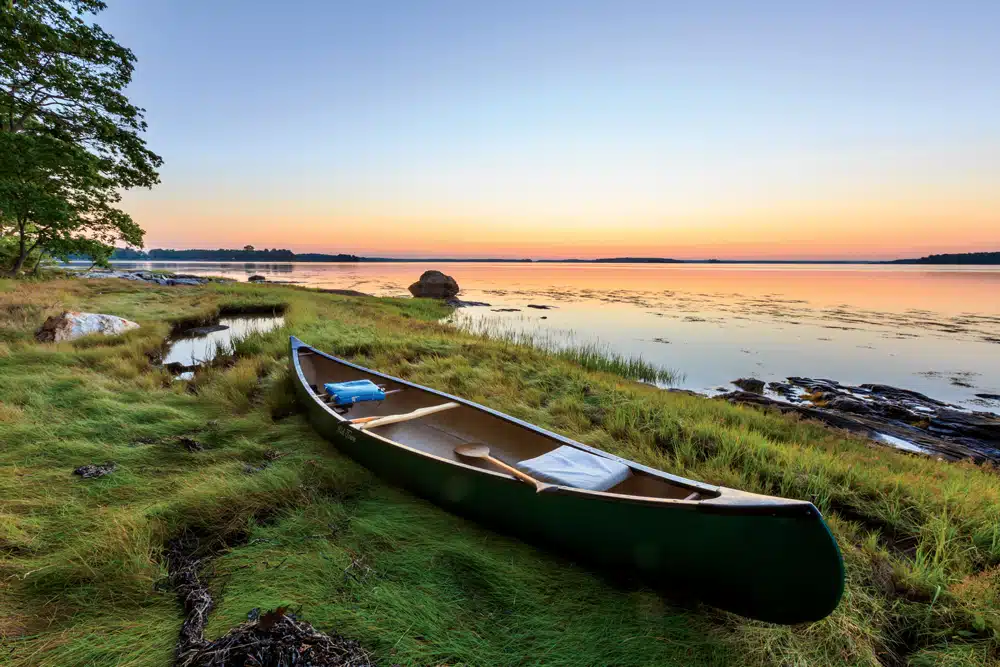
It’s still that way. Over the past quarter-century, Monkman has produced some of the most enduring photos of New England: The ice-blasted peak of Mount Washington. The soft springtime beauty of Connecticut marshlands. A fog-wrapped Katahdin ridgeline. But to call him just a nature photographer misses the point. His is a kind of advocacy work, one that goes far beyond trying to create pretty calendar photos. Nearly all his clients—the Appalachian Mountain Club, the Nature Conservancy, the Conservation Fund, and the Trust for Public Land, to name a few—are organizations whose mission includes protecting New England’s lands and waters.
Many of these groups’ achievements have been made with help from Monkman, whose work showcases the sometimes subtle, sometimes overwhelming beauty of places that often need to be seen in order to become conservation success stories. These include a 100-acre wood with a trout stream in Greenwich, Connecticut; retired logging land around Maine’s Katahdin Lake; and prime coastal property along New Hampshire’s Great Bay, outside Portsmouth—“That’s thousands of protected acres around one of the most productive estuaries on the East Coast,” he says. “To see all that progress is pretty cool.”
So is what it means for the public. “I want to inspire people to get outdoors and care about the outdoors,” says Monkman, who has published 10 books, a mix of outdoor guides and coffee table publications, many with his wife, Marcy. His newest, AMC’s Outdoor Adventures: Acadia National Park, was a 2017 recipient of the National Outdoor Book Award. “The more that people are out there, the more they’ll care about the natural world. They’ll think about the importance of these places and what they mean for all of us.” —Ian Aldrich
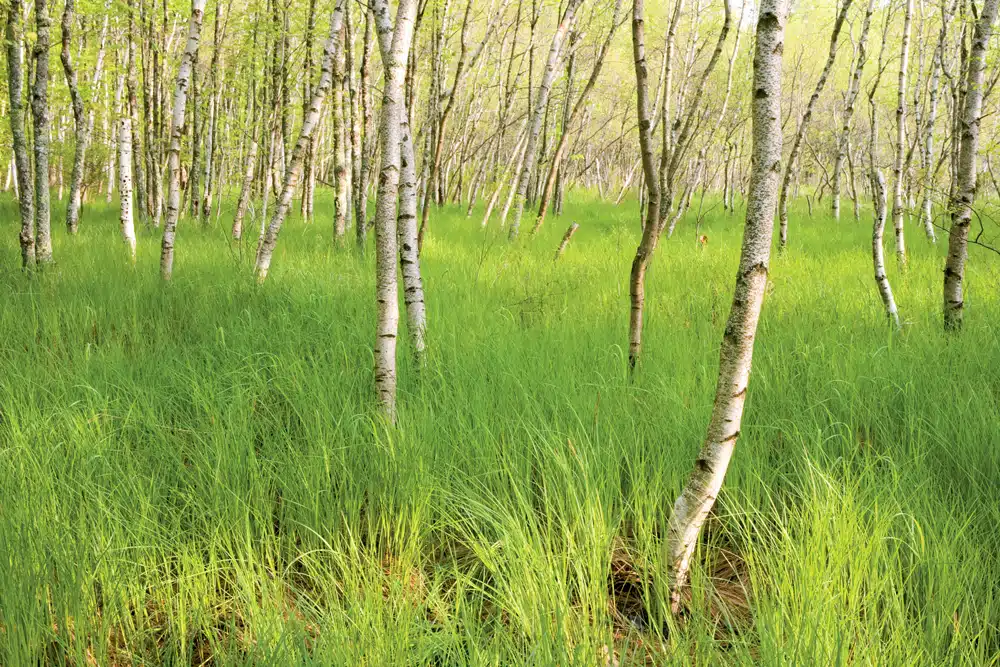
This graceful stand of paper birches in the Sieur de Monts Spring area of Acadia National Park “shows a very different side of Acadia,” Monkman says. “It’s not all about granite and rock—the forests are also pretty.”
Credit: Jerry MonkmanCredit: Jerry Monkman
Monkman’s photography trips sometimes include his wife and their two children. Here, his teen-age daughter, Acadia—named for Monkman’s favorite national park—navigates the Knife Edge Trail on Mount Katahdin.
Credit: Jerry MonkmanCredit: Jerry Monkman
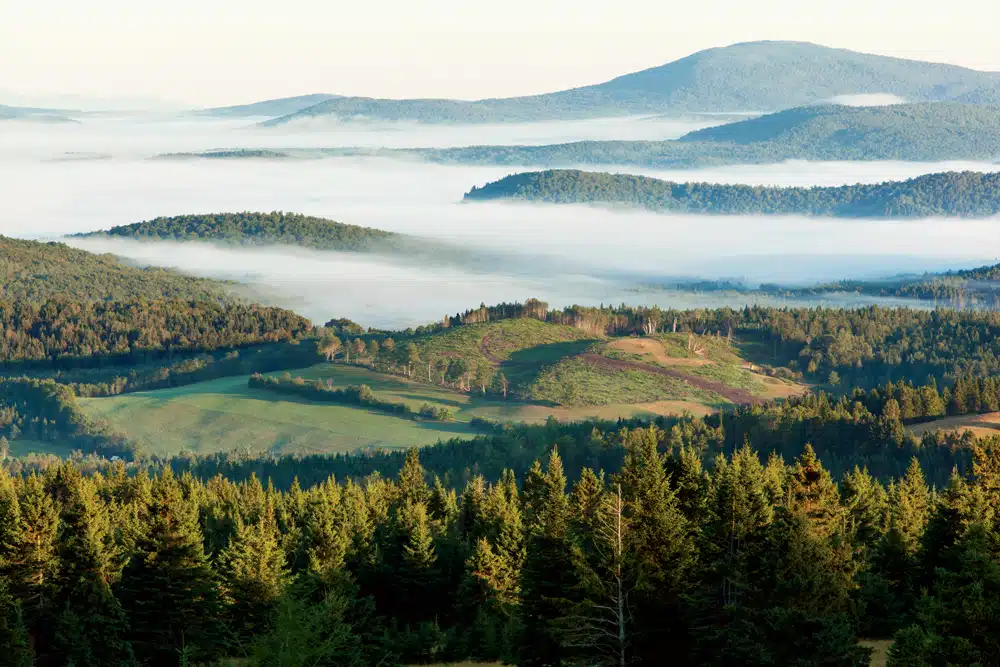
Monkman’s powerful images of New England’s natural beauty—including this mist-shrouded scene in Stewartstown, New Hampshire—have been instrumental in conservation groups’ efforts to fight the proposed 192-mile power transmission line known as Northern Pass.
Credit: Jerry MonkmanCredit: Jerry Monkman
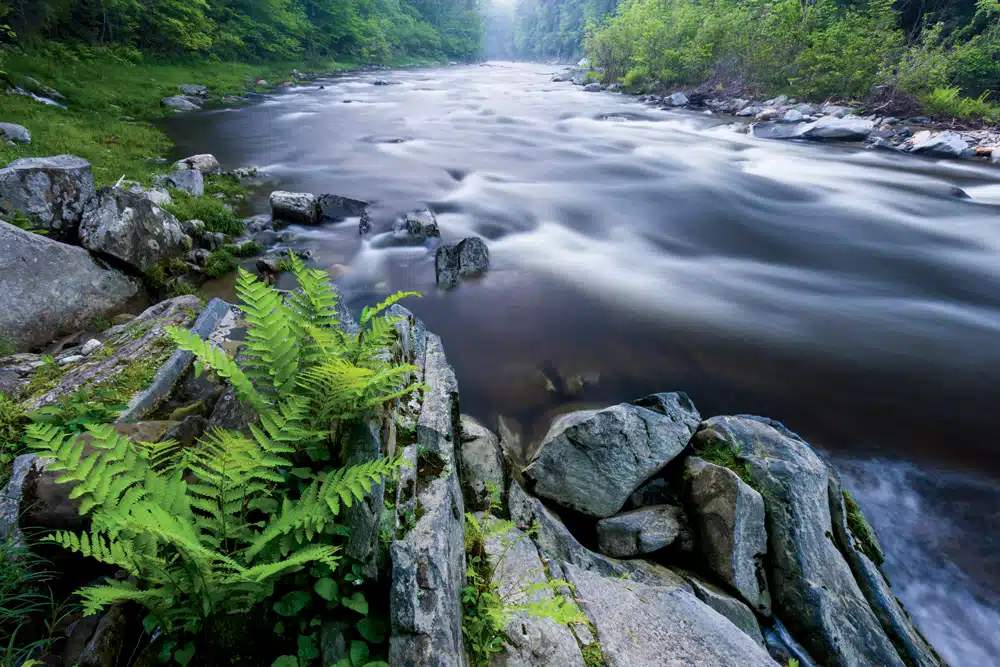
“I rarely get inspired by the usual photo-op spots,” says Monkman, who captured this picture of the Westfield River in Chesterfield, Massachusetts. “I followed the river for an hour before I found this scene of rushing water and the mood I was looking for.”
Credit: Jerry Monkman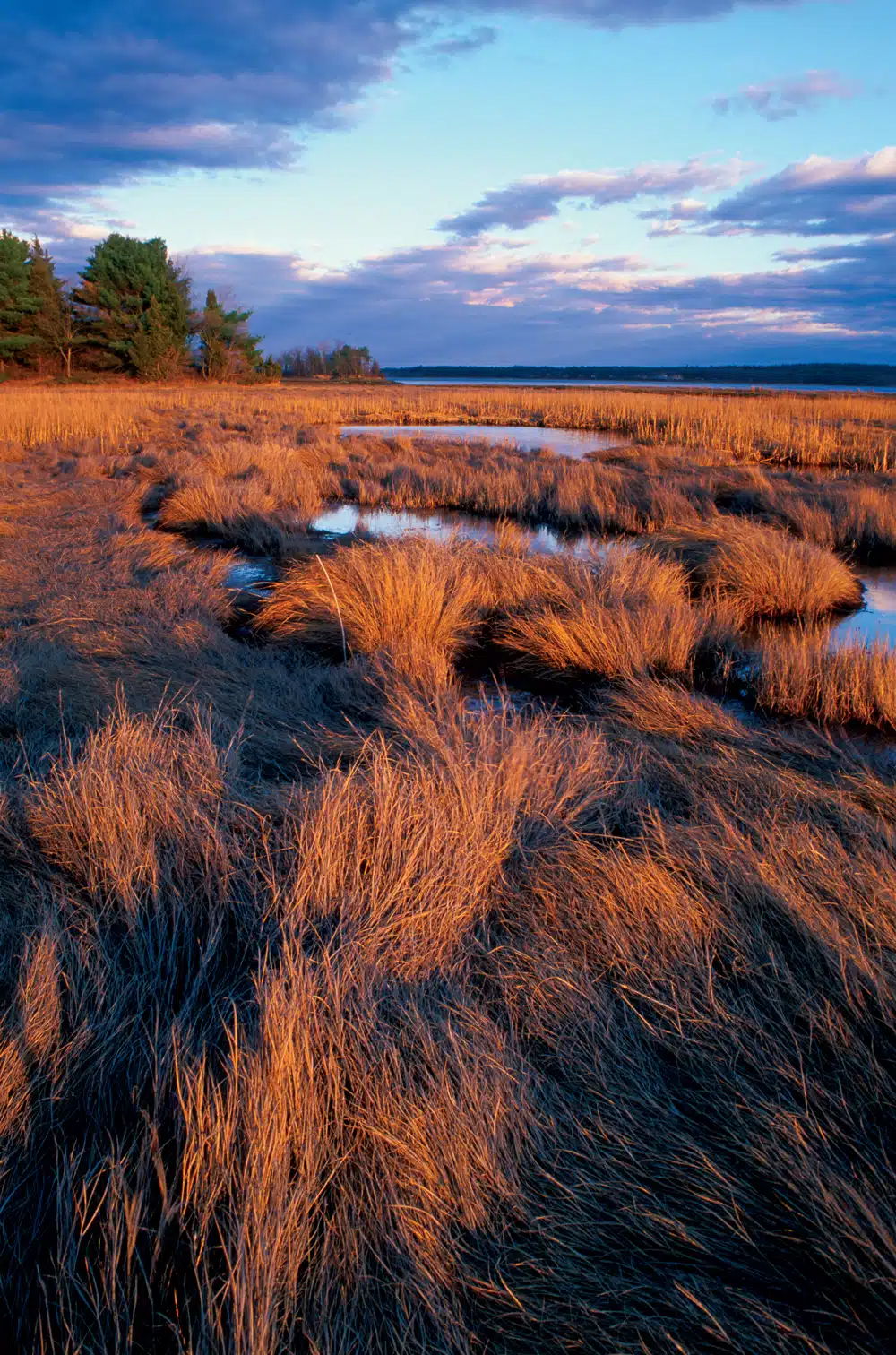



Thank you. The photos are some of the most stunning I have ever seen and the profile inspired me.