



Where Stories Dwell | House For Sale
At this classic 1750s farmstead in New Salem, Massachusetts, each passing era has left its own mark—or mystery.
By Joe Bills|Aug 08 2018|


The farmhouse at Hop Brook Farm began as a simple four-room dwelling more than two centuries ago.
Credit: Heather MarcusCredit: Heather Marcus
Tucked at the end of the upstairs hallway in the farmhouse at Hop Brook Farm is a little architectural enigma that one could easily walk past without noticing—as we did, twice.
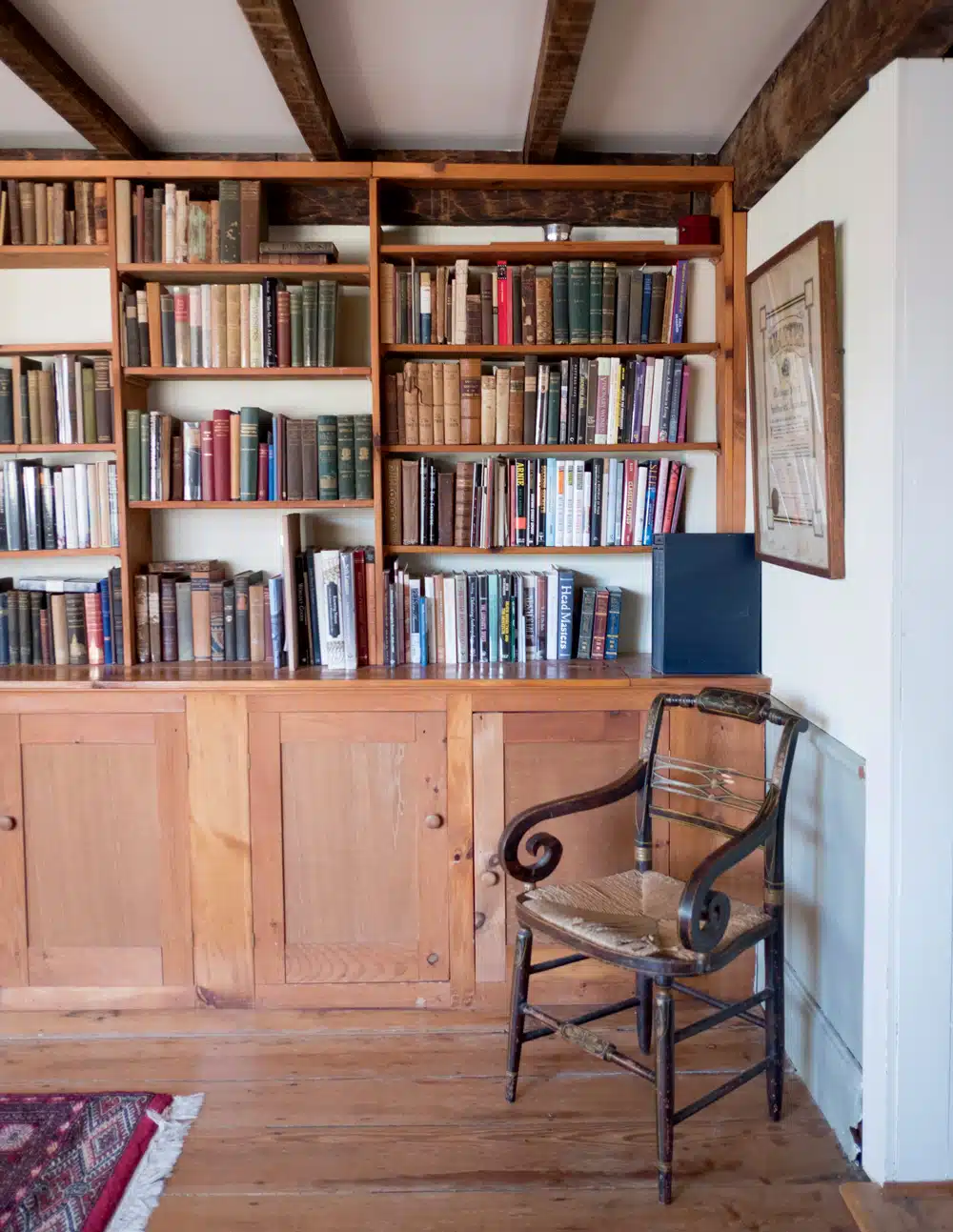
Having guided us through the grounds and the low-ceilinged, 4,000-square-foot post-and-beam house, owner Robert Cox was pointing out a few of his home’s historical quirks. He is the head of special collections and university archives at UMass Amherst, and his eye is drawn to details. There’s the “1798” chalked onto a chestnut beam in the east parlor, and a fragment of what seems to be 18th-century newspaper adhering to another beam across the room. “And did you notice the doors upstairs?” Cox asked.
Credit: Heather Marcus
We hadn’t, so moments later we were back at the end of the hall. And there they were: two fully framed doors, side by side, right up against the outer wall, both opening into the same bedroom.
While this may not be a Voynich manuscript–level mystery, it is the kind of sneaky brain-tickler that just won’t leave you alone. Why would anyone install side-by-side doors? Was it a joke? An oddball remnant of years of overlapping renovation? Was there a time when the doors led to different rooms? We surveyed from one side and then the other, as if we might find a clue that would crack the case. “I’ve got no idea,” Cox says, anticipating our question. “It’s a mystery I wasn’t able to solve.”
Hop Brook Farm is located on a sugar maple–lined dirt road in picturesque New Salem, Massachusetts, which was incorporated in the 1750s, the same decade the house was built. The village landscape is dotted with apple orchards that feed the annual Cider Days festivities, and from the Old Home Day celebration on the town common to the beautiful Quabbin Reservoir Overlook, New Salem could be a stage set for an idyllic New England scene.
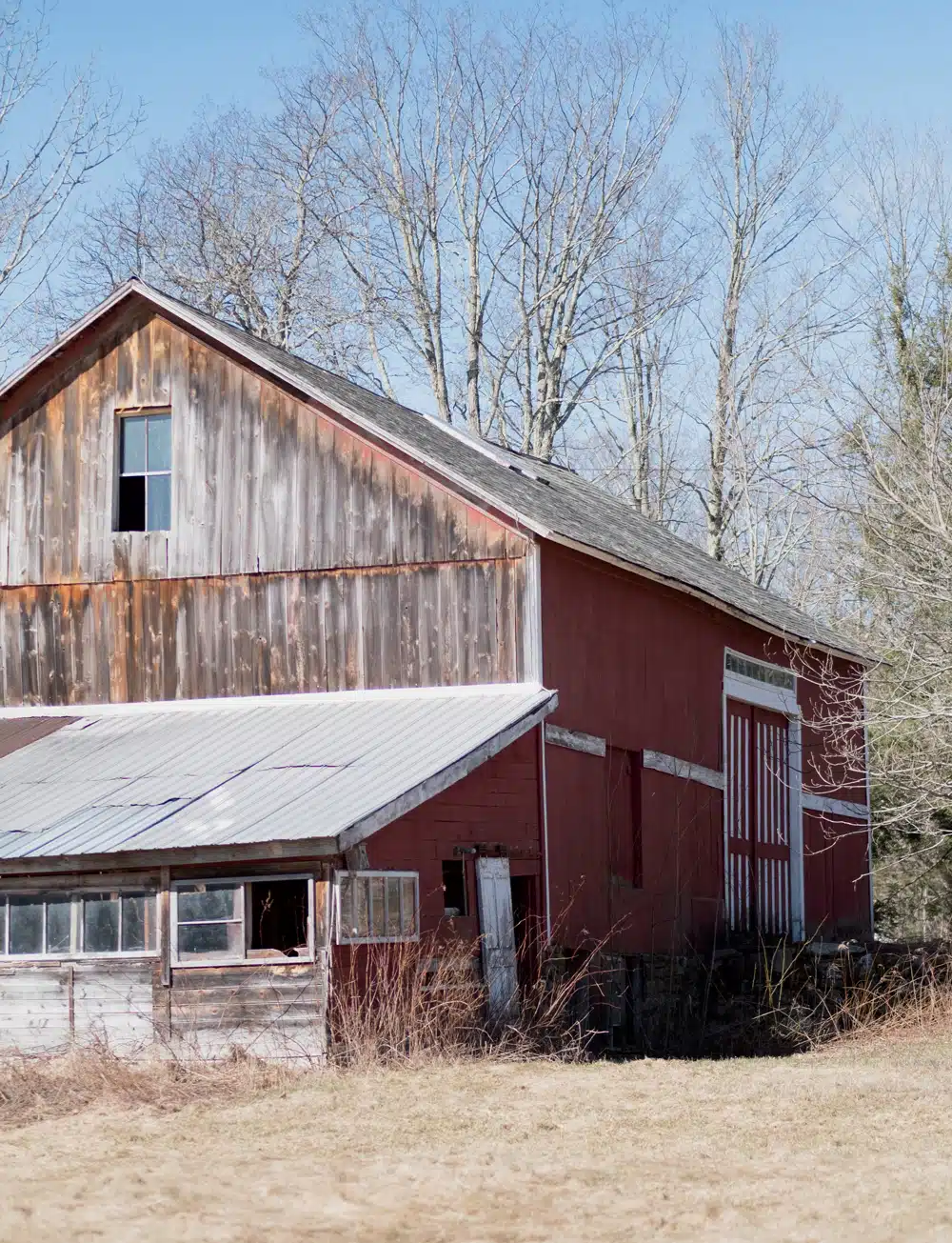
At first glance, the farmhouse is unassuming: yellow with white trim, situated behind a white picket fence and accented by a prominent stone chimney and an attached red shed, with a barn beyond. Just off the back porch, a clothesline spans the space between an apple tree and an ornamental cherry tree.
Credit: Heather Marcus
To locals, this place may always be the Paige Farm, in deference to the eight generations that lived here from the 1750s until the 1950s. The property’s history is well documented, all the way back to its four-room origins, and the Swift River Valley Historical Society has collected records and artifacts of the Paige family, including the wedding gowns worn by three daughters who all married at Hop Brook on the same day in 1906.
When the last of the Paiges moved out, Hop Brook Farm attracted a variety of owners, each bringing intriguing stories. First there was naturalist and historian David Wetherbee and his family. Then, in the 1970s, a gay men’s commune took up residence; in time, it morphed into an organic farming commune. Eventually the property was bought by Dean Cycon, who launched Dean’s Beans, his fair-trade-coffee roasting business, from here.
Cox, a self-described “recovering paleontologist,” grew up in California and was enamored of old houses early on. “I wanted to live in New England and I wanted a house that was built before the 1800s,” he recalls. “My first book was about spiritualism, so when I heard that the barn here [constructed in the 1930s to replace one that had burned down] had been built using beams salvaged from a spiritualist church, I was hooked.” He bought the house from Cycon in 2004.
Credit: Heather Marcus
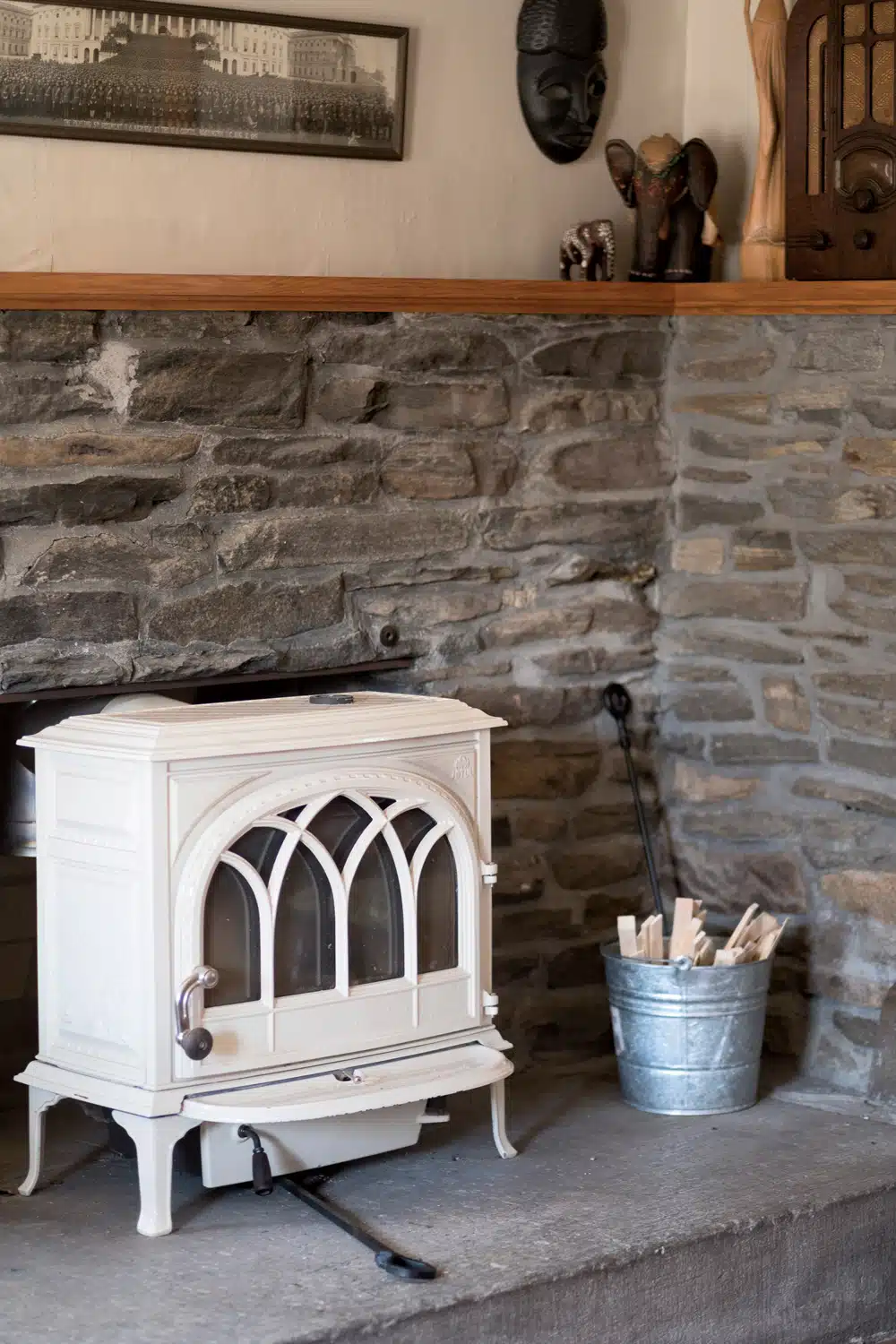
Under Cox’s stewardship, the kitchen, bathrooms, and septic, plumbing, and electrical systems have all been brought into the modern age. There has never been heat except on the first floor, although Cox was making plans to install the home’s first-ever upstairs heating when we visited.
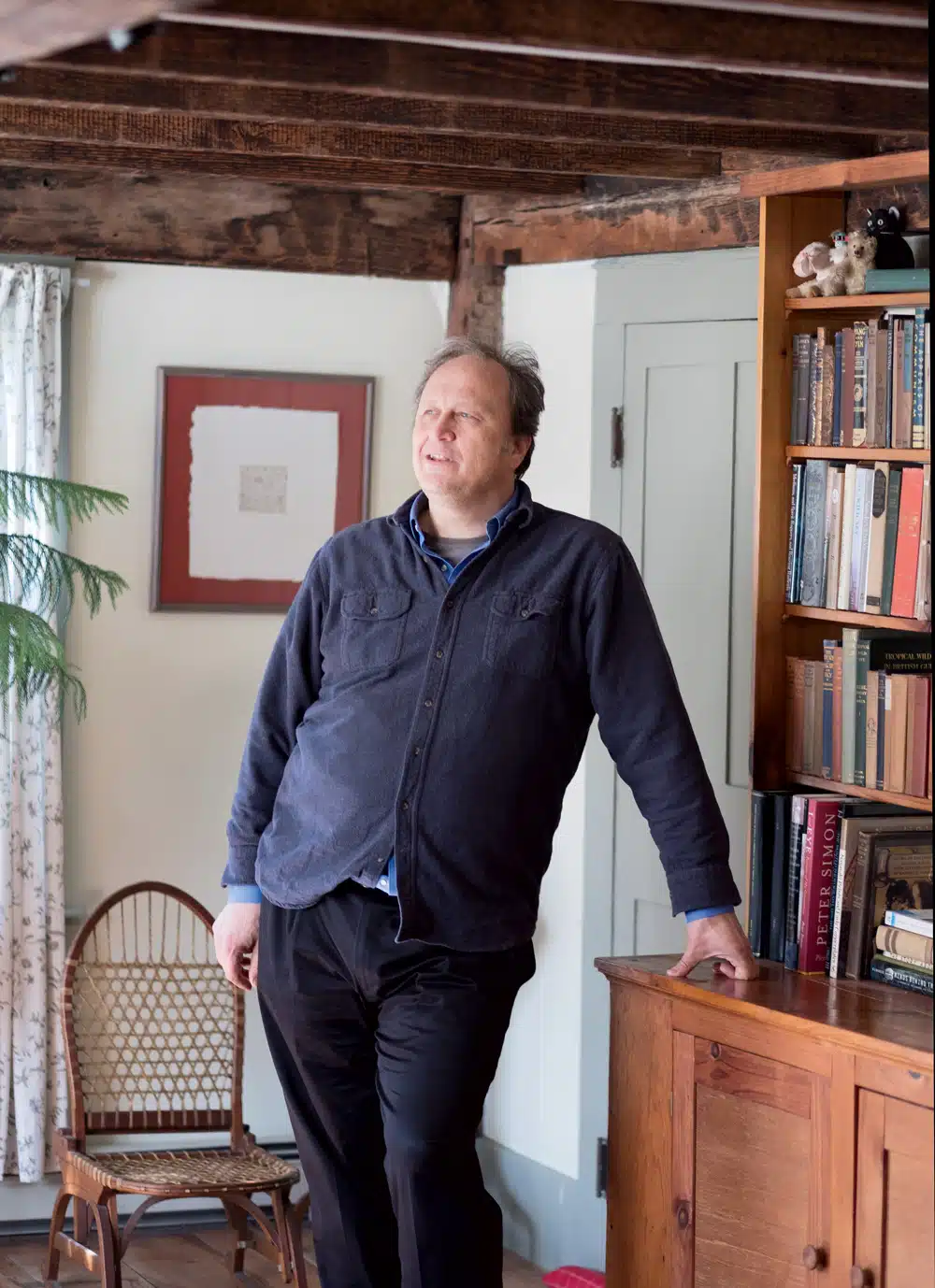
The upgrades create more comfort, but the most remarkable aspects of the house are the historic details that remain from each of its eras. “At first I was put off by that,” Cox admits. “I wanted a place that was 1750 and looked 1750. It’s nice that there are generations of rooms that show its whole history, but it took me a little longer to appreciate that. Now it’s what I love most.”
Credit: Heather Marcus
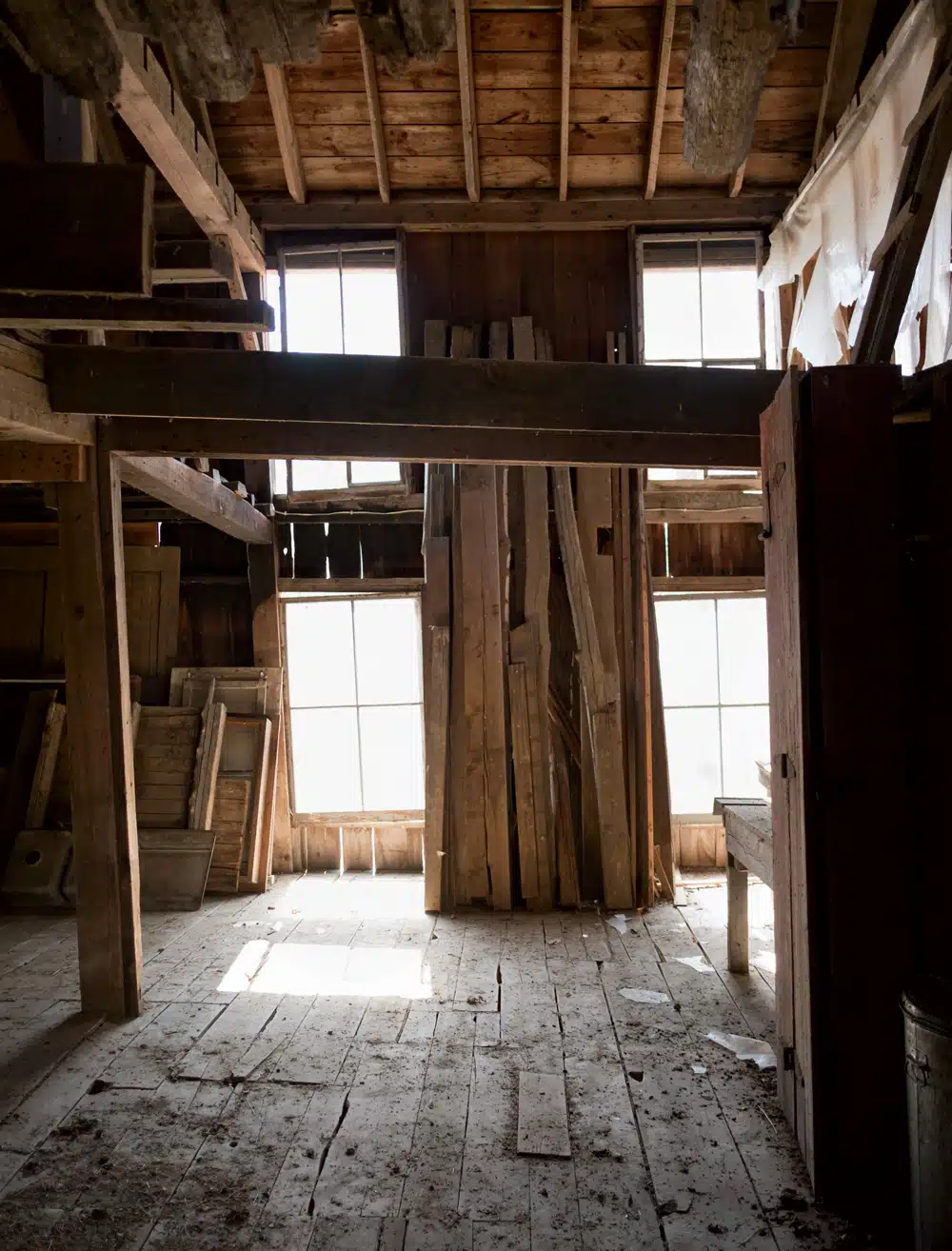
From the original feather-edge wallboards that run vertically rather than horizontally to the ceiling vents and remnants of coffee bins that still line the back wall of the connected shed where Dean’s Beans was born, every room has some aspect that sparks contemplation.
An array of outbuildings have come and gone through the centuries: a horse-powered shingle mill, a wood-press cider mill, a blacksmith shop, and even an elementary school. Cox has amassed a collection of artifacts, including sheep and cow bells and tools likely forged in the blacksmith’s shop. “I may take a piece or two as mementos,” he says, “but most of this stuff belongs here.”
Credit: Heather Marcus
Although he’s moving on in a new direction—recently remarried, he lives with his wife in an 1890s house about an hour away, in Easthampton—Cox hasn’t been quick to let go of Hop Brook Farm. “It’s hard to walk away from the projects and the mysteries and the treasures that haven’t been found. Hopefully someone else comes along who is just as intrigued by the possibilities.” —Joe Bills
Comprising a four-bedroom farmhouse, a barn, and a storage shed on about 15 acres, Hop Brook Farm is being offered for $409,000. Contact Michael Seward of Michael Seward Real Estate at 413-531-7129 or email michael.seward@comcast.net.

I am 83 years and my great gramma and grandpa …my gramma and grampa paige also live there…….spent many happy days and night there…
Maybe a hint to the mystery of the two side-by-side doors on the 2nd floor. There is an anti-bellum house in Ellenton, FL with the same idiosyncrasy – The Gamble Mansion. These doors are on the outside of the house at the 2nd floor level. The story told is that this was for the Indians would attack the house. There were rope ladders hanging down from the doors. The folks would scramble up the ladders and pull them up after them, and then defend themselves from this 2nd story. Two doors side-by-side meant that more people could get up the ladders at the same time. This room on the 2nd floor was just that, one room. It is possible that this house has been added onto so that the doors are now inside the house, not outside.
I lived in that house in the mid 1970’s when it was owned by David Wetherbee – lots of remarkable history and fascinating stories.
Hi Jake, I just reconnected with Sally Wetherbee and she said that her neice knew where you are. I’d love to reconnect. Call me at 617 281-0070. Julie Joy