



Soil Testing at Home | Homemade Soil Test Kit
Knowing the makeup of your soil is an important part of gardening. Here’s how to use a homemade soil test kit for basic soil testing in your own garden.
By Shelley Wigglesworth|May 31 2016|

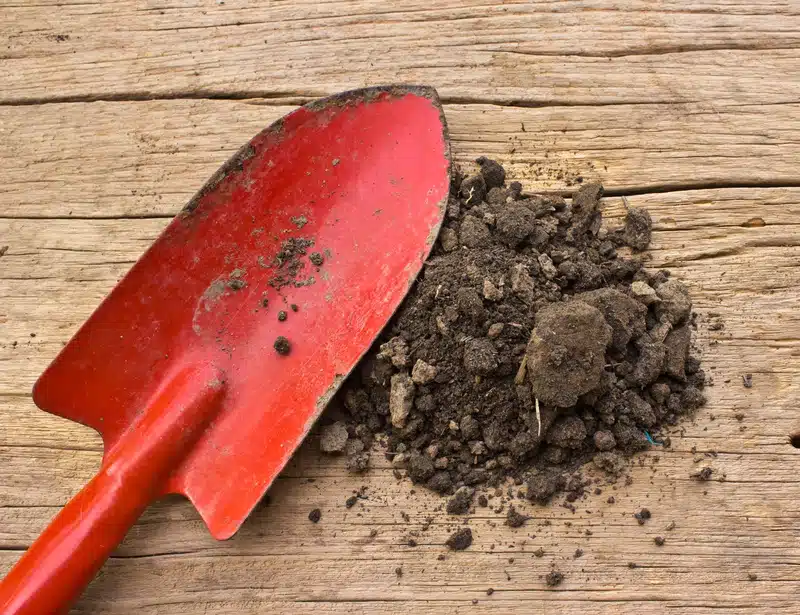
How to Test Your Own Soil
Credit: DreamstimeSoil testing will indicate how much sand, silt, and clay is contained in the earth where you plan to garden. When you know what your soil lacks before you start planting, amendments to the soil can be made to ensure optimum growing potential. Scientific soil testing goes a step further by telling you the nutrient and micronutrient content, and whether there is any lead in the soil. Here’s how to use a homemade soil test kit for basic soil testing in your own garden.
Credit: Dreamstime
SOIL COMPOSITION
Soil composition can be broken down into three categories: sand, silt, and clay.
Sandy soils lack nutrients. Sand particles are large and water drains quickly, leaching out nutrients. Sandy soils don’t pack well.
Silty soils are moderately fertile with medium-size particles. Silty soil packs tightly, especially when wet. The particles can get dusty when dry and can be blown away or washed away by runoff.
Clay soils are naturally fertile, and pack tightly. Clay soil drains poorly, stays wet longer, and dries hard.
The best soil will be composed of a combination of sand, silt, and clay, along with composted organic matter.
SOIL TESTING AT HOME | DIY SOIL TEST KIT
Soil Test Kit Supplies
- Clean Mason jar
- Clean spade or garden trowel
- Clean bucket
- Pinch of salt or powdered dish detergent
- Water
Soil Testing Instructions
- The first step is to get a good sample of the soil you are testing. Using a clean spade or garden trowel, dig down about 6-8 inches and remove a scoop of soil from several spots throughout the area where you’ll be planting.
- Mix the samples together thoroughly in a clean bucket.
- In a clean Mason jar, mix one part soil to two parts water.
- Add a pinch of salt or powdered dish detergent, cap the jar, and shake.
- Let the mixture sit and settle for a few days.
- As the mixture settles, the salt or detergent will break down the soil, revealing the composition. Sand will settle at the bottom, silt will settle in the middle, and clay will rest on the top.
- The thicker a layer is, the more dominant that particular component is in the soil.
SCIENTIFIC SOIL TESTING
For a small fee, you can have more precise soil testing done by your state university’s Cooperative Extension Master Gardener Volunteer program. This will give you a better idea of the nutrient contents of your soil. Specific recommendations on amending your soil can be obtained through the Cooperative Extension department in your state as well.
Resources | Cooperative Extension Offices in New England
Maine: https://extension.umaine.edu/
New Hampshire: http://extension.unh.edu/
Massachusetts: http://ag.umass.edu/
Vermont: http://www.uvm.edu/extension/
Rhode Island: http://web.uri.edu/riaes/extension/
Connecticut: http://www.extension.uconn.edu/
Will you be doing your own soil testing this year? Let us know in the comments!
SEE MORE:
The Difference Between Soil and Dirt | Gardening Advice
How to Grow Greens in a Bag of Potting Soil
Starting Seeds Indoors | Seed-Starting in Winter
This post was first published in 2016 and has been updated.





Thanks for letting me know how to use this.